This was a tremendously satisfying book. It started light and Wodehousy, but quickly got deep and complex. There were a few moments of delighted realization as I, the reader, got to know what was going on. The book spoke to the kind of reality I live in, or wish I did.
I think my very favorite part of this book was its treatment of Christianity, Christians and the church. It is rare to find fiction that has a nuanced, compassionate view of any of these. But I found the book to be theologically compelling without being the slightest bit prudish or preachy. There were real Christians, driven by real faith and supported by a church that had some Really Good Ideas. I’m not sure I’ve ever encountered that done as well anywhere else.
I am a gulper of books. I can’t help myself most of the time. But this is a sipping book – like a fine glass of wine.
Read if: you enjoy post-war-period English novels, you like a complex narrator, you would enjoy a nuanced view of Christianity, you like good books.
Avoid if: you cannot handle any sex scenes in your literature, you find books about the journey of the mind/spirit/soul boring and want more explosions, you are overly triggered by child loss.
Holy Week – the week leading up to Easter – is full of named days and church services. It starts with Palm Sunday, with loud Hosannas and praises and donkey-riding-reeactments. Then there’s Maundy Thursday – the day we celebrate the Last Supper. This is followed by the ironically named Good Friday, the day on which Jesus died. Then everyone comes out in their finery to celebrate the resurrection on Sunday, even those who only come to church once or twice a year.
The pastor prepares for Easter
If you know a church musician or a pastor, this week is something of a marathon. There’s usually a huge push… Palm Sunday has big spectacle, then there’s a service on Thursday (with communion), on Friday (in the dark and quiet), and on Sunday with the biggest party of the year in the sanctuary. For many, there’s also a Sunrise Service in the wee sma’s of Easter morning. If you’re a pastor, that’s five big sermons (or meditations, or whatever) in 7 days. If you’re an organist or pianist, not only is it a lot of music you have to put together but it’s some of your hardest and most important of the whole year. Most of the liturgical professionals I know are completely wiped out after this week.
The Good Friday service is my favorite of the year. In our church, it’s the same down to the word, year after year. The only thing that changes is the name of the president and the UN Secretary General. We read through six scripture sets, extinguishing a light after each is read until the sanctuary is in total darkness. (Or rather, lit only by the extremely bright light that illuminates our parking lot. The year that it cycled on and off during the service was memorable to me.) Between those readings is only music and your own thoughts and prayers.
I have gotten better at this, over time. The first few years, I could hardly sit still and think, looking over and again for stimulation or change – unused and uncomfortable with the silence of my mind. This year, I sat heavy in my pew and was surprised when the time came to read again.
The other surprise is that, in those few words read over and over, I can still hear new things. This year on Good Friday, I heard something I’ve never heard before. It was in the voice of those many people who ask Jesus, “Are you the Messiah? Are you the Son of God? Are you the King of the Jews?” Before, I only heard the leading, lying question trying to get him to implicate himself in front of the Romans in order to remove a nuisance. But this time, I heard another thing.
They really wanted to know. Moreover, some of those asking really, really wanted him to answer yes. This was the moment so many of those followers had been waiting for. This man whom they had watched work miracles – who a short time before had met with Elijah and Moses – would declare himself! He would be a second Moses, liberating the people from the domination of the Romans! He would show not just the hungry multitudes but the halls of power who he really was and what he could really do.
And it wasn’t just those Pharisees and soldiers asking and half hoping to hear a yes, nor only his disciples. Jesus is sent to Herod, who is totally excited because he’d been hearing about this guy and really wanted to see it for himself. If Jesus had given Herod anything to hold on to, he wouldn’t have been sent back to Pilate to die. Even if Jesus had just told a good story or two, or a minor miracle, maybe he would’ve gone on to great things within the Roman Empire!
All these people wanted Jesus for all these different things: for entertainment, for political need expediency, for rebellion, for leadership. Many of these people who looked to Jesus for deliverance were good people, who were asking for needed things. None of them were looking for Jesus to, oh, conquer death and provide atonement for sin. It just wasn’t on the agenda. Overthrowing the Romans: plausible. Dying and coming back from the dead: not plausible. (In this my reading of the Greek and Roman classics has been edifying. Virgil talks about Prometheus (Tityus), and the vast torment of being immortal while your liver gets ripped out and eaten every day. In their immortality the very power of those ancient gods is limited because – do what they will – they cannot die.) After a few hundred years of this happening every day, immortality might stop looking so good.
I have heard before how unexpected the path of Jesus was to his followers: how this was not the outcome they expected. This is not in the stories. You’d don’t lose all the way, and end up winning. You don’t quietly accept shame and ignominy. (I promise you now that silence is not how Odysseus or Aeneis or Xerxes would have dealt with being mocked and abused.) But I had never before heard that note in the voice of his accusers, betrayers and killers. They were hoping he would prove them wrong.
“Look at you now!” they yelled at him. “You said you were going to destroy the Temple and rebuild it in three days. Well then, if you are the Son of God, save yourself and come down from the cross!” Matthew 27:40
I had heard the mockery in it before. I had never before heard the half-hope that he would.
This is Holy Saturday. It deserves a cooler, more depressing name, like “Black Saturday” or “Golgotha Saturday” or “Despair Saturday” or “Holy crap he actually died, what do we do now?” Saturday. It’s the only full day that Jesus was actually dead. It always seemed to me like a day where were should just stop – like a day where we should rend our hair and mourn and walk around in a shocked trance.
Of course, I did nothing of the sort today. In fact, I had a lovely day that included a nice lie-in, breakfast in bed, a spring-flower walk, an Easter egg hunt in a local part (which was a dud), followed by an impromptu Easter egg hunt in my backyard with the neighbors (which was not) and a family movie. Great day, in fact.
But there in the back of my mind was the set-apartness of this day. If you go from Palm Sunday to Easter, or from Christmas to Easter, or from Easter to Easter… you miss the best part. On Easter, Jesus does something that humans could not do: to be raised from the dead. But on this Saturday, he was doing something the little “g” gods of mythology could not do: be human enough to die and be dead.
Tonight is dark with the grim settling reality for those who loved Jesus. That really happened. He really died. When we thought he would wage his mysterious eloquence against the powers of the world, he shut up and went silent and the fickle crowds abandoned him – including us, to our everlasting shame and horror. We sold him out. We fell asleep. We lied about knowing him. We shouted “crucify him” from the crowds and threatened a riot. We gambled for his clothes and put sour wine on a stick for him. We made fun of him. We did little to be proud of this week.
But tomorrow will come with the vast surprise of resurrection (as it has every year for almost 2000 now), and a confusion of pancakes and chocolate and bunnies and preludes and trumpets and ham dinners and nice dresses and really tired clergypeople with adrenaline highs. We will take the purple off our communion tables, welcome back whatever we gave up for Lent, and catch the baseball game in the afternoon.
But – hopefully – we will remember that the miracles we look for are not always the miracles we get. The miracles we get may be far bigger, far more profound, and far less predictable, and less comfortable, than we ever dreamed.
We now interrupt this epic for some sporting news....
In my last post, I talked about how our long-suffering grandparents (and great-grandparents) dug deep to offer comfort and hope to their erstwhile WWII enemies. But the second part of my reading that really made me pause were the words “sacrificial offering”.
I’m currently reading Virgil’s Aeneid, and have recently read Homer, Herodotus & Thucydides. Basically: I’m up on my ancient Greek history right now. These ancient texts offer a different context for some of the more contemporarily mysterious passages of the Bible, especially around sacrifices. Throughout the Aeneid, offerings are made or promised. The very best of livestock are repeatedly sacrificed on alters to various gods. (My favorite was a lily white sow suckling 30 lily white piglets which he sacrifices to Juno, which was totally a waste because she has it in for him. The sow was a combination augury-fulfillment and offering.) Somehow these seafaring travellers find the ability, time after time, to come up with appropriate livestock to offer to Apollo or Venus or their ancestors.
For us, today, sacrifices and offerings are both very abstract. I, for example, have sacrificed my consumption of candy this Lent. I sacrifice three hours a Sunday to worship the Lord (and hang out at coffee hour). An offering is a slip of paper with a few numbers written on it slid into a tasteful envelope with a scripture on it. These are my sacrifices and offerings.
The sacrifices and offerings of Jesus’ world, of that Mediterranean civilization, are far more concrete. When Jesus comes of age, his parents (poor folks, not like Aeneas), sacrifice two doves (Luke 2:24). These offerings are killed and eaten by others. Hard enough. But consider that livestock were not only today’s food, but tomorrow’s hope of food. Those 30 piglets killed with their mother represent forgone bacon and ham and pork tenderloin to people who were probably constantly hungry, and for whom meat was a profound experience. They are a waste – the finest of herd stock cut short and killed simultaneously in an age with limited ability to preserve meat. Their sacrifices consume capital – like us withdrawing from our 401K and paying the penalty.
I can’t help but think this idea of sacrificial offering carries over to that early “One Great Hour of Sharing”. Those folks were rebuilding a country and economy. They were finding capital to start businesses and families, to buy houses and maybe radios, tvs and cars. Their sacrificial offering, in the spirit of the ancient Mediterranean offerings, came at the cost of some prudence.
I look around and see a society where, increasingly, capital is the way to win and being labor is the way to lose. The work of your hands can earn little compared to the work of well-managed liquid assets. In that context, the sacrifice of capital is even harder than when you could just work to make it up.
In the Aeniad, the offerings and promises of offerings often swayed the gods to listen. They did remember them in their conferences together, and when deciding whether to interfere. They did listen when someone REALLY needed to make a spear-throw count. Without this context, and with 2000 years of cultural expectation behind me, it would be hard for me to hear and understand how radical my desert God and his carpenter son really are:
The sacrifices of God are a broken spirit; a broken and contrite heart, O God, you will not despise. (Psalm 51:17)
But Samuel replied: “Does the LORD delight in burnt offerings and sacrifices as much as in obeying the voice of the LORD? To obey is better than sacrifice, and to heed is better than the fat of rams. (1 Samuel 15:22)
We just reassigned our church officer duties in January. I went from chairing the Hospitality Committee to being a part of the Stewardship Committee. As part of my new responsibilities, I needed to delivery the inaugural “Word for Children” in our big build-up to “One Great Hour of Sharing”. This is an ecumenical offering – usually coordinated with Easter/Passover. Many different denominations (and even religions) participate in One Great Hour of Sharing to support shared goals of feeding the poor, responding to disasters and helping those in poverty dig their way out.
I was doing some background reading for my big delivery, when I was struck by the story of how the offering began. The tale is this: just after the conclusion of World War II, a group of church leaders got together to discuss the plight of European and Asian countries after the complete devastation of the war. On a Saturday night, they broadcast “One Great Hour” – a call to all the American listeners to make a “sacrificial offering” in support of those in Europe and Asia who had suffered in the war. The listeners were called on to go to their churches the next morning and give their offerings.
Reading this, I was completely caught up short. There so many things in this to give pause, to cause a rethinking. I imagined what it would be like to be one of those radio listeners. It was Saturday, March 26th 1949 – 10 pm eastern – when the broadcast came over the radio 1. An appeal went out for that sacrificial offering. I think of those men and women listening. They had just emerged from what must be the hardest 20 years in our nation’s history. These were people for whom the Great Depression was no distant memory, but as far away as the ’80s are to us. During those grim years, they had been homeless, or feared homelessness. They had taken in relatives. They gathered scrap metal for sale, made a pot roast last a week, and gone hungry. They had walked the soles through on their shoes and resewn old dresses over and over to try to make them last. They cut the buttons off shirts that had truly been worn through, used the rags, and reused the buttons on a new shirt. They had made great sacrifices.
Then, with the bombing of Pearl Harbor, these same people had been pulled into the great incommunicable horror of war. They spent whatever money they had on war bonds. Sugar, silk, rubber and other commodities were rationed. Front lawns were converted to victory gardens. But this was the smallest part of the sacrifice. The greater part were the farewells to fathers, brothers, husbands, sons, cousins and friends. A generation of young men, knowing well how fatal war could be after the previous generation’s “War to end all wars” shipped out to Europe or Asia. In the best case, the sacrifice was of years of youth. In the worst cases, the ultimate sacrifice was given. And in the middle, men came back maimed and damaged, to live with their wounds for the rest of their lives.
So those radio listeners on March 26th were people who knew sacrifice, who had looked it in the face, who had watched tremendous sacrifices made by those who had not made it back to the living room for a Saturday night broadcast.
And then the civic and religious leaders had the courage – the gall – to ask these men and women who had already given so much to give a “sacrificial offering”… to benefit the very enemies whose armies had killed brother and son, husband and father. A people just emerging from want and scarcity were asked to dig deep for people they had every reason to resent.
And they did. As many as 75,000 churches participated. The sacrificial offering was made to help rebuild Europe and Asia. (An aside … we have not since had a war with Germany or Japan, and not just because we defeated them. They are our close allies and friends now because after we militarily defeated them, instead of “sowing the soil with salt” after we did in World War I, we helped them build a country worth living in.)
This is interesting thinking in our current long-running economic difficulties. How many times have we heard that this is not a good time to ask Americans for sacrifices (or tax increases or donations or special offerings). We’ve suffered too much lately. We’ve lost too much lately. It seems a pale excuse compared to what our grandparents suffered and lost. What would a sacrificial offering look like for us?
Thanksgiving is an interesting holiday for me. For 11 years now, I’ve done a huge “feeding lots of people turkey” holiday at Mocksgiving. The result of this is that, despite my feeding-people, epicurian bent, I’ve never hosted the Family Thanksgiving. And now, of course, my inlaws are all pretty much in Atlanta and my brother considers Thanksgiving a weekend sacred to video games…. so. I don’t cook on Thanksgiving.
We’ve done a bunch of different things over the years. Back when I was young and judgmental, my husband’s family went out to dinner in a restaurant for Thanksgiving. The year Grey was born, we went back home. The first, only time I’ve been home for Thanksgiving since I left for college at 17. A few years we’ve done nothing. But I’m surrounded by awesome people, so when folks get wind of the fact we’re doing nothing, invitations appear. Several years, I went to the family Thanksgiving of a college friend. His mom is a fantastic cook, so I was sad when he moved out to California and it seemed… weird to invite ourselves without him. Last year and this year, friends from church have invited us. They have boys similar in age to ours, and are FANTASTIC cooks.
So Thanksgiving is a mellow, happy, friendly day. The last few years I’ve started a tradition of watching the Macy’s parade with the boys. I sleep in. Drink coffee. Don’t get dressed until noon. I rest. Relax. It might actually be the most relaxing day of my entire year.
Gratitude is an important part of not losing site of what’s important to you. I don’t do as great a job of it, but I’ve tried to teach my children to give thanks. Every night, as part of their going-to-bed, we have a prayer of gratitude. Grey usually just says that he’s thankful for “Everything in the universe”, although when pushed he’ll tell you he’s thankful for screens (DS, computer & TV).
But Thane has started this tradition now too, of gratitude. His favorite books are the How Do Dinosaurs books. He demands to know the names of all the dinosaurs. And of course, with the plasticity of a youthful brain, he remembers them. One of my ambitions this week is to get video of this. But at night, his litany of gratitude goes like this, Thane is thankful for … “Mommy, Daddy, Grey, Thane, Neovenator, Pachycephalasaurus, Protoceratops, Tapejara, Neovenator, Mommy, Daddy…” He can go on. It’s awesome!
One of the things I’m grateful for this Thanksgiving morning is that I have this venue to write down memories. Sometimes I look back at what was, and I’ve written down things I otherwise wouldn’t have remembered. I wouldn’t write if I didn’t know you would read this. I know this, since I tried for years pre-blogging. So thank you for being you, and reading what I have to say.
It’s a question we get asked often. “How are you doing?” Most of time time, the asker doesn’t really expect a response, past “Fine, and you?” In many circumstances, it’s a social faux pas to actually answer the question. On those other circumstances, looking into someone’s eyes and clasping their hand for an extra split-second to convey you really mean it, you might hear an abbreviated version. “My sister is in the hospital.” “I’ve been really worn down lately.” Sometimes you still get a stoic “fine” which translates as either I don’t want to talk about it, or I don’t believe you want to hear it.
I’ve been reading The Happiness Project by Gretchen Ruben lately, and it got me thinking about how I talk about my own state of being. She talks about how awareness and mindfulness of your own happiness — thinking of your blessings as you might call it — enhances and to some degree even creates your state of happiness. (Otherwise, I fear, happiness is rewarded retroactively. When things go bad you might recall that you were happy then, and didn’t even realize it.)
I’d been under the impression that I do a good job of acknowledging and being present in my joy. That’s how it seems to me, that when I am happy (which is not rare) I know my own happiness and hopefully radiate it back out to those around me. This has been a happy period for me, with unprecedented leisure (between jobs), a healthy fun family, small children in the most fleeting time of their lives, a good balance of things I do for others and things I do for myself, and an ample supply of coffee. I even set out to very intentionally NOT complain about how fast my break flew by or how it was still finite.
Then the other day my husband said to me, “You’ve seemed so unhappy lately.” WHAT? Really? Here I am, knowing that I am happy in my heart and thinking that it shows, and the person who knows me best is worried that I’m UN-happy.
So I pondered where this disconnect arose between what I know I am feeling (joy!) and what I am showing (stress!). There are a few things. I’ve been working on some challenges in my life where the only person who can really listen as I work through them is my husband, so he’s probably heard a disproportionate amount about those things. But perhaps mostly, I realized, it’s how I answer HIS questions about “How are you doing?”
With people I do not love dearly, I’m liable to give a very positive reply. “Fantastic!” or “Great!” But in the partnership of marriage? I get defensive about my happiness. On some subconscious level, I’m afraid if I tell HIM I’m happy or doing well, he’ll decide I don’t need his help and support. Even in the best of marriages there’s a certain jockeying for finite privileges, like getting to sleep in or who’s going to put the kids to bed when we both just want to collapse and/or do something fun. We handle these things pretty well, I think, but in my back-brain I’m convinced that if I tell him I’m feeling happy and well-rested, the logical conclusion will be that I should definitely do the tooth-brushing then. So instead I answer, “Well, I didn’t sleep well last night.” Or “I just got done doing another load of laundry” or instead of the “Fantastic!” a stranger might get, I reply, “Ok, I guess.” That “fantastic” is really the more true answer, but instead we get into a subtle competition about who’s more legitimately tired.
How sad. How wrong. My subconscious doesn’t even really have much to go on in this diminution of joy, either. My husband always does his share. But out of this defensive mechanism of mine, I’m hiding my joy in him and in the life we have built together. I’m not entirely sure how to resolve this, except to be more open and less defensive. To share more equally of my joys. To volunteer a little more brightly when I see or feel something that is good.
I am a happy person. I am living a happy life. I hope that the joy of it does not just lurk unspoken in my heart, but shines forth to my husband, my children and my community.
One of Gretchen’s blog posts that really struck a nerve was about the cost of being joyful in our society. She shared a prayer by St. Augustine:
I love it when two divergent streams of thought crash together in my head to create a new realization. This usually only happens when I’m taking in sufficient forms of new thoughts. Sadly, my intellectual diet is more than a touch anemic these days. I do miss college for a rich diet of new perspectives. Anyway, enough lamenting.
When I expressed interest in learning more about sales strategies as part of my “I’m bored at work, what new thing can I learn” phase that predated my job change, my husband bought me some books. One of them is Influencer: The Power to Change Anything. You really never know what you’re getting when you buy these books — all the copy about them is written by the same guy with the same vocabulary. Sometimes it’s a good blog post, in the form of a hardcover. (That was two books back.) Sometimes, it’s the completely obvious stated and restated. Sometimes it’s more narrative (I did enjoy “How To Make Friends and Influence People”). Sometimes the entire books seems to be about how IMPORTANT and LIFE CHANGING the lessons of the book are. Sadly, those lessons can usually be summed up in about 3 bullet points like:
Stop being a jerk to people, or they’ll get back at you
Eat fewer calories, exercise more and you will lose weight
Hamsters are funny
Anyway, the Influencer book falls into the slightly academic and actually somewhat useful category, with slight side trips into the obnoxiously-telling-you-how-important-it-is genre. One of the points it made was that we, as people, tend to over-rely on telling people things with words and not do enough with showing and demonstrating things. It talked about the influence of example, instead of lecture. I read, and pondered how to apply this to the difficult challenge of getting a 4 year old to actually EAT his DINNER already.
The next day, our pastor’s sermon was on Jeremiah. Jeremiah was a terribly popular prophet who went around telling the Isrealites that they were dooooooomed and that they had to shape up or Babylon would lay the smackdown on. Shockingly, they didn’t listen. Rod even mentioned that Jeremiah used some of the techniques discussed in the Influencer, namely visual metaphors and field trips. (Er, Rod didn’t make the Influencer connection. That was me.)
Anyway, that got me wondering. Is there a cultural bias in Western, Christian culture towards believing words are critically important in part because of this early tradition of prophecy? In the Gospel of John, Jesus is described as The Word, Logos (I’m going to get in trouble here — dear Greek scholars, be kind!). Throughout the Bible, words and speech are given special privilege and power, as they so explicitly are for Jeremiah. But that’s hardly the only place, “Thy word have I hid in my heart….”
I think it would be fair to argue that the Bible is the most influential cultural element in Western Culture. (I’m sure you could argue con, but it has to be up there). Does the Bible reflect a baseline human passion for words and speaking? Or instead, did a particular interest in language reflected in the Bible nudge Western culture towards an extra emphasis on the value of words and language — possible sometimes to the detriment of example and action? Are there other cultures where language is less influential or important, where actions or even visual arts are more important? Does Western society over-emphasize language at the cost of other effective communication?
My pondering continued into the offering. I have heard stories about times when powerful and eloquent speech moved hostile crowds to change their minds, their actions and their lives — moments when one person standing in front of the masses spoke and the world changed because of it.
I have never experienced that moment. My mind is not easily changed by rhetoric or blog posts. I consider the facts available and weigh them with my experiences and values. I think about things. I’m rarely caught up in the enthusiasm of a crowd. I’m not sure I listen well enough, and with a sufficiently open mind, to be changed by a modern prophet, should one arise.
We greatly weigh words, but do we listen anymore? Does the great cacophony of the modern age diminish the influence of any one set of words? What does it mean if we become immune to something we consider so critical to our understanding of the world?
Sometimes, figuring out the right thing is as hard or harder than doing the right thing. Take, for example, charity. Let’s say that you have $100 that you’ve decided to give to charity. Now what? What are your priorities? Do you give to the charity that is always bugging you (and, not coincidentally, spends a greater portion of the funds given to them on bugging people)? Do you prefer a local charity? Are you more interested in making sure people have food, or making sure animals in a shelter are not euthanized? Where would helping ensure a poor kid has a present under their tree fall in that spectrum? And what about the fact that $200 in a developing world can mean a matter of life and death for a child, where $200 barely scratches the surface of getting a politician whose policies you believe in elected? And then once you’ve decided that you want to help tsunami survivors in Indonesia, you need to figure out which organization is most likely to offer the greatest benefit to the actual survivors. This can be akin to rocket science.
I’ve certainly wrestled with this question a lot. Our church is by far our largest donation, which is likely true for many worshipers, and will continue to be true. I also regularly send a check to WBUR. I figure they are worth as much or more to me as my subscription to the Economist, and in a very similar way, so I almost see that more as a cost obligation than a donation. After that, I usually support the Greater Boston Food Bank. When Bad Stuff happens, I usually direct donations to help to the Presbyterian Disaster Assistance because I saw their work in Mozambique and know that they go about really smart disaster relief. I always make sure I mark my check for general funds, because it’s much cheaper and better to prepare for disasters than react to them (like stockpiling supplies in areas that have historically gotten cut off by flooding, to name one example).
But lately, I’ve been trying to “optimize” my charitable giving even more, and that’s required me to think about what is really important to me.
I’m particularly interested in:
*Decent quality of life for all the world’s people. To me that means at a minimum: basic healthcare, adequate water, sufficient food, safe housing, basic education
*Sustainability/climate change/making sure we all don’t die and civilization doesn’t collapse
*Reducing suffering for all people
*I also have a real soft spot for parents not having their children die. Every time I realize that people in other places love their kids as much as I love mine — but watch them die for lack of resources — my heart breaks into little itty bitty pieces.
Looking at those priorities, the most obvious solution seemsto be ensuring that every woman has only as many children as she chooses to have. Furthermore, helping women feel confident in having fewer children by making sure that the children she does bear have a good chance at surviving.
In America, we take as given our right to only have as many kids as we want. Don’t want more kids? There’s a myriad of options from the pill, implants, condoms, surgery or abstinence. Many of these options are NOT available to women in other countries, including abstinence. In Africa, rape is an ENORMOUS problem. Women often do not have the right to not have sex with their husbands, and in many war torn countries rape is used as a weapon of war. For a woman without contraceptives in place, this often means pregnancies and children for whom they do not have food, resources or energy. Many women still die in childbirth, leaving all their children orphaned. For other women, their only chance of feeding themselves and their children is sex work, which can often lead to more children and AIDS. Finally, nearly TWO MILLION children a year die of diarrhea alone. So parents in some cultures may have many children in the hopes that some will survive to adulthood to take care of their parents.
Shortly after I gave birth to Thane in a safe, well-stocked, well-attended birth in a sterile hospital with a bevy of medical professionals looking on, I read an article about an organization that was working to help make births safer by very simple safe birthing kits. You know, really advanced stuff like clean plastic sheeting and sterile razor blades to cut the umbilical cord. This same organization was also taking incredibly practical, sensible steps like creating ways to reduce diarrhea deaths and supporting the manufacture and distribution of female condoms that actually work and are affordable.
That’s when I decided that Path was my charity of choice going forward. For my giving priorities and values, this organization does the best job of making a real difference in people’s lives per dollar I can give. So for Christmas, the gift I asked for was the gift of reducing the number of parents who have to bury their children, or children orphaned by preventable causes.
What are your giving priorities? How do you decide between local or international giving? How have you found the charities you most believe in? Does the complexity of the question ever stop you from giving as much as you otherwise might? These women love their babies as much as I love mine
When you, dear reader, think of Christian values, which ones do you think are at the top for importance? I’d forgive you if you said sexual purity — some days it seems like all you ever hear from Christians in the media is talk about sex and how it’s bad. But no. Jesus says hardly anything about sex.
Some of the values I see most when I read the New Testament are:
– Being loving to all, including yourself
– Not being a hypocrite (especially not a religious hypocrite – for an example, Matthew 23:13 “‘But woe to you, scribes and Pharisees, hypocrites! For you lock people out of the kingdom of heaven. For you do not go in yourselves, and when others are going in, you stop them.”)
– Sharing what you have
– And today’s topic… hospitality.
As I understand it (and it should now be noted that I != Biblical scholar), hospitality was a critical virtue in the ancient world in which the Bible was written. There were few inns, and pretty much no restaurants, quickie-marts, C-stores, or even cars to take shelter in. The earlier you went, the rarer the inns were. So if you had to go anywhere, you relied on hospitality and that hospitality was a sacred rite and obligation.
For example, in Genesis 19:6-8, Lot welcomes two angels into his home: “Lot went out of the door to the men, shut the door after him, and said, ‘I beg you, my brothers, do not act so wickedly. Look, I have two daughters who have not known a man; let me bring them out to you, and do to them as you please; only do nothing to these men, for they have come under the shelter of my roof.’” Lot’s obligation as a host here trumps his obligation as a father and caretaker to his daughters (harsh, huh?).
Throughout the New Testament there are stories of hospitality. Jesus’ very first miracle (by tradition — this miracle is only recorded in John) was helping a groom out of a predicament when the wine ran short at his wedding – a failing of the expectations of hospitality. Jesus then goes on the ACCEPT the hospitality of the unacceptable. He sits down with and eats meals with sinners, prostitutes, soldiers, tax collectors (who were probably as popular as drug dealers are for us), turncoats and traitors. When the disciples go out to spread the good news, they are told to shake the dust off their feet from any town which does not offer them appropriate hospitality.
Hospitality is harder than it was, because we’ve lost the habit of it. We don’t invite the homeless to come eat dinner with us because they might be sociopathic kleptomaniacs who will sleep in our front lawns for the rest of our lives if they know where we live. Strangers to our land, the aliens who also populate the Bible, do not expect a welcome to our homes. Instead they book rooms in Motel 8 and buy food from the “Excellent Mart” we’ve never been to; and we glance away across the gulf of culture at each other on the rare instances our paths cross.
I think about this imperative to welcome and nurture when I set the table for company. We do sometimes feed others, although it is usually friends. I wish that I had more courage to be more outrageously hospitable, and welcome the too-talkative, the kind of weird, the left out, the unknown to share a meal with my husband and I, and our two screeching sons. I meet people in those few margins of intersection, and I wish it was ok for me to say, “You look cold. Would you like to come in and have some dinner? There’s plenty.” I’m afraid to. I’m afraid that they will be offended. What if they’re perfectly well off and see my offer as pity? I’m afraid of the disruption in my tightly slotted life. I’m highly cognizant that culture is constantly telling me to be more afraid than I am. I’m supposed to teach my four year old “stranger danger” and it’ll be all my fault if he’s abducted by a dangerous pedophile because I never taught him that people he doesn’t know are enemies until proven otherwise.
Still, I’m haunted by the hospitality I don’t offer. There was the man and his two children, trudging up the hill our house sits on too late at night. Where was he going? Did he have a place? He seemed so quiet, and they so subdued. Would he have welcomed some warmth in the darkness, or was he just going on an evening constitutional?
There was the other man with the Santa beard — his name is Hal — at the grocery store. He was there the entire time I was. I bought $175 worth of nutritious produce, milk, meat, cereals — a veritable bounty. He, after looking in the scratch-and-dent section and walking all through the store… he bought a jar of sauce. Was he lonely? Bored? Hungry? Broke? Did he have a place to go? I wish I had the courage to ask him to come home with me, and I would fix him up a nice dinner and we would talk and he could be filled with company and food.
Did you know that is simply not done? And as a woman and a mother, it is particular verboten for me to do it. Risking my self (and my sexual purity and property) is bad enough. Exposing my sons to such risk, and my husband to such inconvenience? Keep it to a smile and small-talk. Even that, I’m told, is risky and only marginally appropriate.
I’m afraid to even pray for the courage to offer hospitality, because what if that courage arrives? Never ask the Holy Spirit for gifts you will not accept.
I don’t know how to end this rather rambly essay on a snappy note. I will say this, however. If you tire of the tropes of Christianity, why not pay attention to a different virtue this holiday season? Instead of being sparkly pure and blameless, like I know you are, why don’t you try to be courageously hospitable? Risk a little in the cause of kindness. Whether that’s eye contact where you would usually look away, or asking the homeless person you see what their name is, or even inviting someone to share your meal with you, tell the tsking voices to be silent for a moment.
When I was in college, there was an evening service in our chapel. It was at 10 pm on Wednesday nights. The first semester I was there, still trying to figure things out, our chaplain left. But before he did, he taught me how to set up the service and how to sing the chants. For the next three and a half years, in close connection with the college organist John Anthony, I led that weekly service.
It remains one of the most significant spiritual experiences of my life.
We were a small , extremely ecumenical group that met late on those Wednesday nights. There was me the Protestant, a handful of Catholics, a Greek Orthodox girl and an agnostic. Harkness Chapel was always airy and dark on those nights. I’d enter in the back door and light the candelabras. They made a pool of yellow light below the vaulted ceiling. We’d begin in silence with muffled greetings. Then song, chant, prayer, more silence, song and chant again. We’d end holding hands and singing, before scattering back to our homework and brightly lit dorm rooms.
In the four years I was at college, I believe I missed fewer than five of these Wednesday night services.
During that brief period of velvet night, I felt peace, fellowship, contentment. I made room for silence. I listened. I slowed down. There was room for the Spirit to move in me and to speak to me. There was space for me to slide back inside my own skin, and remember who I am. There was a tremendous connection with those few other pilgrims, coming to find the same thing.
I suspect many of us want to get back what we had in college. There were our collegiate figures, our somehow ample time for fun, the energy of youth, the proximity of all our friends… heck, just getting to sleep in and have someone else do all the cooking. But the thing I’d like to get back from college is that service — that peace.
Happily, unlike my youth, this may be something attainable. I can aspire to this connection to the Almighty. As my living is concentrated down to the most necessary, I find I need to stop taking away and start adding. This is something I will add.
So. Next Wednesday night at 9 pm (a nod to my now-elderly status), I will open the doors of Burlington Presbyterian Church and light candles. I will sing “The Spirit within us moves us to pray”. I will make room for silence. And if you would like to come, I will smile and worship with you.

 Glittering Images by Susan Howatch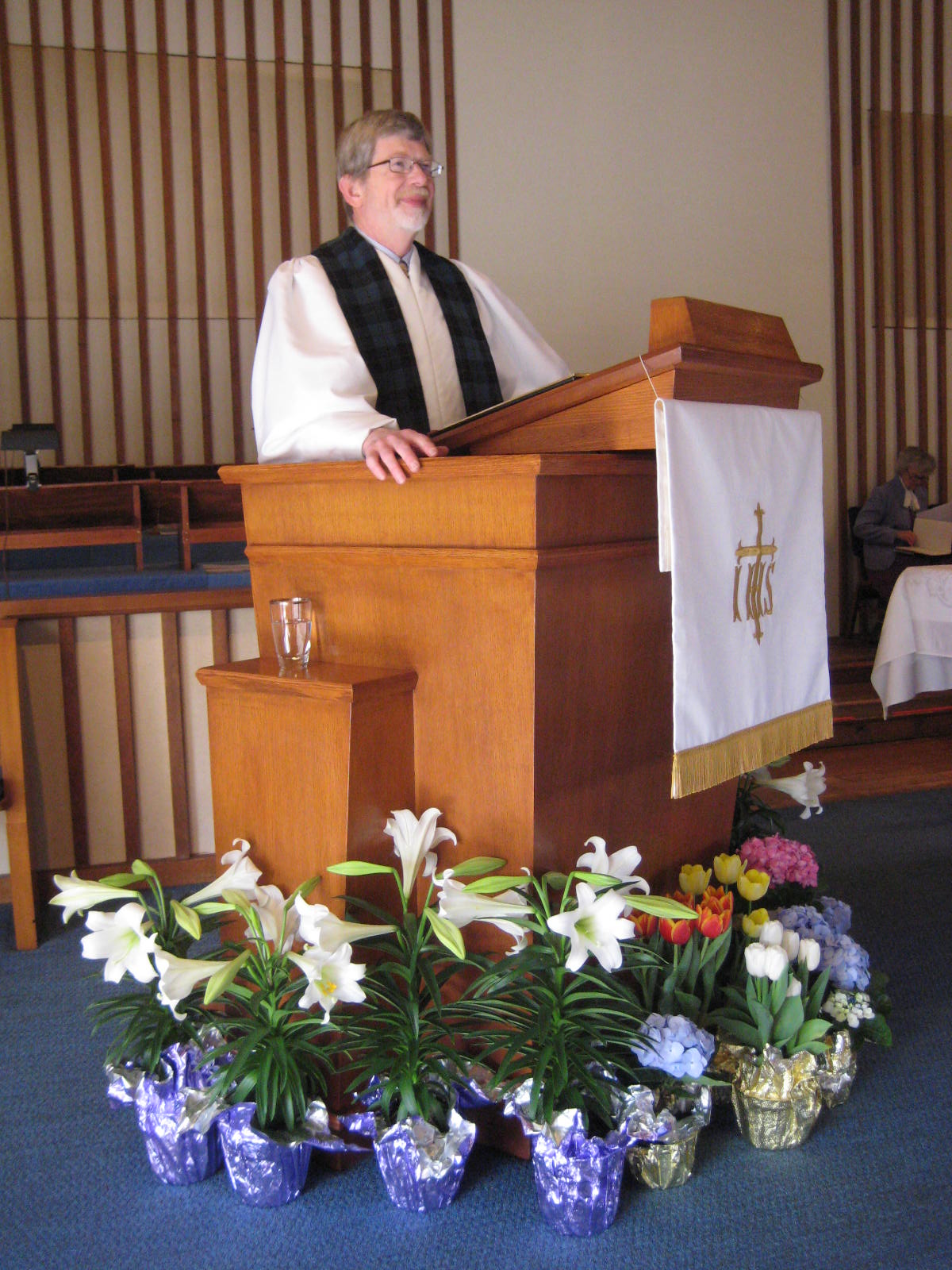




 My Truant Pen