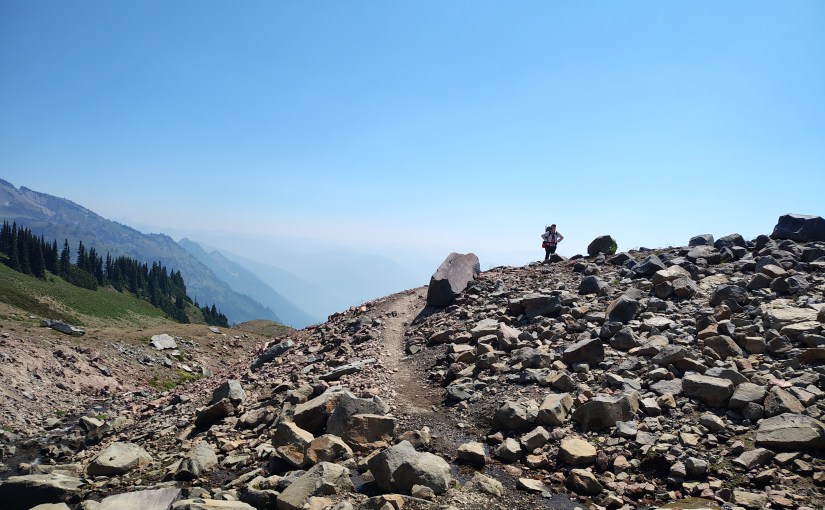
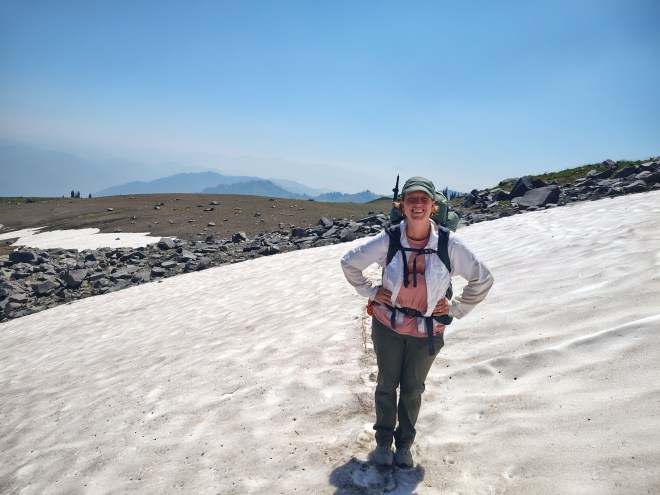
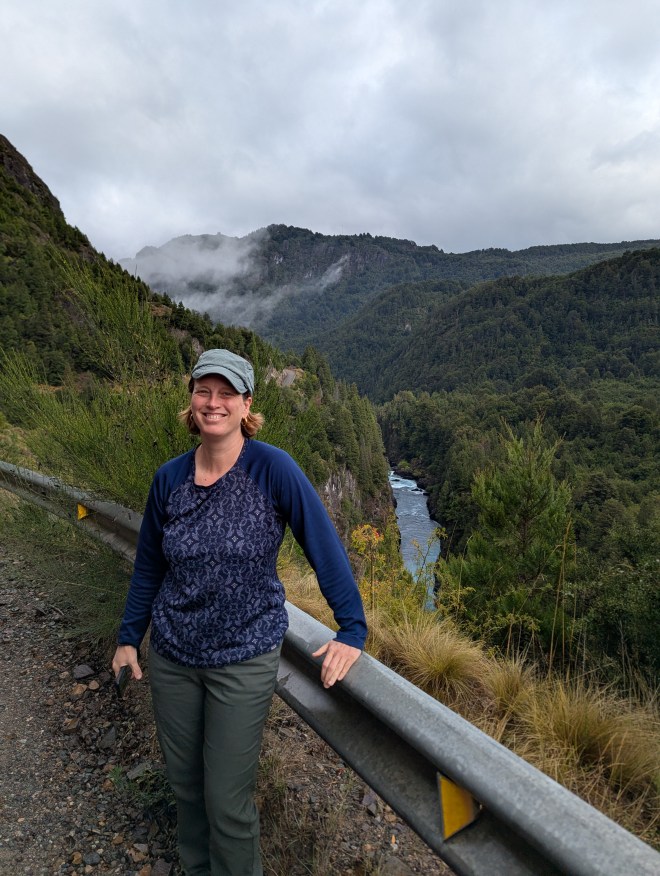
I’m an avid hiker – loving nothing more than to follow my legs to a place you can’t get to any other way and stand overlooking vistas you can only achieve with effort. Over the years, I’ve gotten a lot of comments and concerns about hiking. Is it safe to hike alone? What about bears? Did I hear about that person who died in the White Mountains last week? We spend a lot of time thinking about the risks of this hobby. I’ve taken Wilderness First Aid. We go out prepared with the ten essentials – and another 20 more “super usefuls”. We carefully review the weather, have at least two maps of the trail (and one in our head) and generally do everything we can to mitigate the risks of tackling remote, ankle-breaking trails for fun. Every time I go hiking, I take a big risk.
But one of the things I think a lot about is the difference between a big, active risk you take, and the kinds of risks that exist without a decision. If I don’t go hiking – what are the risks of NOT hiking? According to a 2018 study, “Overall, 8.3% of deaths were attributed to inadequate levels of physical activity.” [https://www.cdc.gov/Pcd/issues/2018/17_0354.htm]. A lifetime of not hiking, or not running on roads where you might get attacked, or not riding bikes where you might get hit by a car leads to a situation where you might instead die of heart disease, diabetes or the other curses of the inactive body.
Going outside and getting exercise are two absolutely proven mental health interventions. Sunshine, nature and exercise (which I get on those trails) have measurable positive impacts on mental health. “3% of deaths, equating to around 8 million annually, are attributable to mental health conditions.” [https://themaplesrehab.com/how-many-people-died-as-a-result-of-mental-illness.html]. So that trip to the mountains instead of staying home doomscrolling also reduces mental health related risks.
You might argue that a lot of these benefits could be obtained by going for a run around a nice, safe track without the risks. But there are aspects to the very risks of the rocky trails that also create protections. If you’ve ever scrambled up a rocky slope for a few hours, you feel it in the tiny little muscles in your ankles and feet – the little stabilizers that never get called upon on a flat road. Your balance gets better. You become more resilient to uneven terrain. Given that falls are a top injurer and killer of older folks [https://www.cdc.gov/falls/data-research/index.html] and hiking can help you stay steady-footed later, it seems clear that the upsides might outweigh the downsides.
Do people die hiking? Absolutely. But far fewer than a thousand people a year [https://imalive.co/data/hiking-fatality-statistics]. When someone does die that way, it makes the news. It doesn’t make the news when someone dies of congestive heart failure, alcohol poisoning, or the effects of a fall on a sidewalk. Put another way: hiking is safer for you than NOT hiking.
We don’t look at risks that way though. We look at the things you DO as creating a risk, not the things you don’t do. I worked at a place that had a risk log where decisions were written down with who accepted the risk of them. Did you update some software? Into the risk log. Adopt a new technology? Open a new facility? Take on a new kind of project? Risk log for you. But no one writes down “we didn’t innovate today” in the risk log or “we didn’t kick off a project to update our authentication system” or “we aren’t listening to our customers well” in the risk log. Action has an owner who takes responsibility. Inaction belongs to everyone and no one.
So I’ve started to think hard and long about the risks of NOT doing something, in both my personal and work life. What is the risk of NOT going for a promotion, taking on a big project, or looking for a better-fitting role? I thought about this a lot in the context of leaving Google. I’d been there 11 years. I knew how things worked. I had friends and habits and I had been continually employed there for over a decade. Of course it would be “safer” in this really tough economy to just stay there and hunker down, right? The counterpoint was the steady erosion by layoff that is endemic across the high tech industry. It felt like a week didn’t go by without some layoff, some friend gone, some email suddenly bouncing back. The frenetic pace of project changes made it feel like a huge game of musical chairs. So far I’d always been in a seat when the music stopped playing – but I couldn’t guarantee my luck there would hold. There was always the chance I’d wake up some morning to an email letting me know it was my turn.
I truly believe that it was safer – for my long term and short term career – to find a company whose mission and leadership I’m really excited about. It’s safer to work for a company that not only needs me, it KNOWS it needs me, as opposed to the anonymity of a role inside a behemoth. The freshness of the new business and expanded role help invigorate me for the next chapter in my career.
How much do you think about the risks of “not”? When you’re contemplating something that feels dangerous – either a perilous mountain trail or career change – how much time to you spend imagining what the risks are if you don’t change anything?
There are like a bajillion problems in the world today. Exactly what those problems are often depends on which side of an increasingly deep ideological line you stand on. But some of the less controversial problems – the ones most of us agree are problems are things like:
Increasing isolation & loneliness. Across ages and locations, people have fewer strong and weak connections, and spend less time with other people.
Powerlessness. The belief that it doesn’t matter what you do, the things are going to happen to you regardless of your efforts.
Indoorism. A lack of exercise, sunlight and nature, leading to a cascade of depression, physical challenges and unmooredness.
I was walking along the Greenway a while back (which always reminds me that progress can feel hopeless and still happen), and just hating the knotweed, oriental bittersweet, porcelein berry, poison ivy and various “dangerous or invasive species” that own the disrupted soil of the rail trail. Attending a meeting led to giving a presentation on the topic, and then a walk along the Greenway, and then, well.
This ball o’ trouble will not pull down the trees now
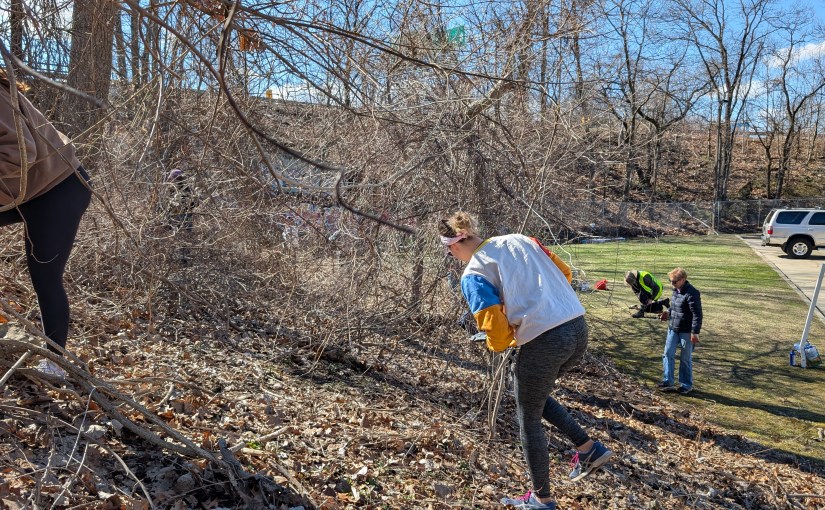
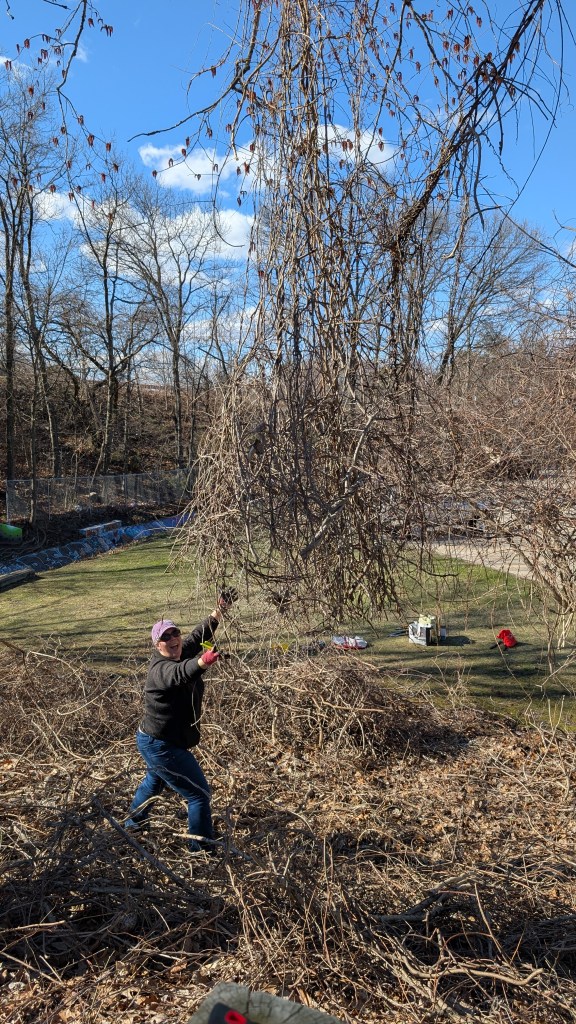
I realized that the way you start to cure those particular problems I highlight: isolation, powerlessness and distance from nature, well they would all be addressed by a regular invasive species removal day. My thought was this: set up a regularly occurring and predictable time to remove invasive species. Have a bunch of people spend a few hours working together, side by side, in the sunshine. Discover that even 90 minutes of 12 people tackling invasive oriental bittersweet can clear a quarter mile swath of sward along the trail, with the incredibly satisfying snip snip snip of winding vines freeing beautiful old trees from their crushing burdens. Then adjourn to your local watering hole (supporting local businesses) for a diet Coke or beer and watch people around the table swapping contact info. Repeat the next month, with Japanese knotweed. Hit up the new apartment complex next to the Greenway to invite residents there to join you in the removing/connecting plan, and watch a whole new community form. And we’ll do it again next month.
It’s so easy to be heartsick and paralyzed. It’s so easy to think the world is what you see on a screen. It’s so hard to meet new friends. But when we get some sunshine and exercise, and we meet new people who share an interest in defending trees from invasive vines, and we can see with our eyes that our work makes a difference, maybe we can start to rebuild the fabric of our community… it’s a beautiful thing. You can join us for the next work session in May. Or you can find your own local group trying to make good things happen (it warms my heart deeply that so many communities have organizations like this – how much work and love and hope go into an organization like Keep Stoneham Beautiful or Stoneham CAN), and see if there’s an invasive species removal (or bulb planting or gleaning or trash cleanup etc.) you can do in your community.
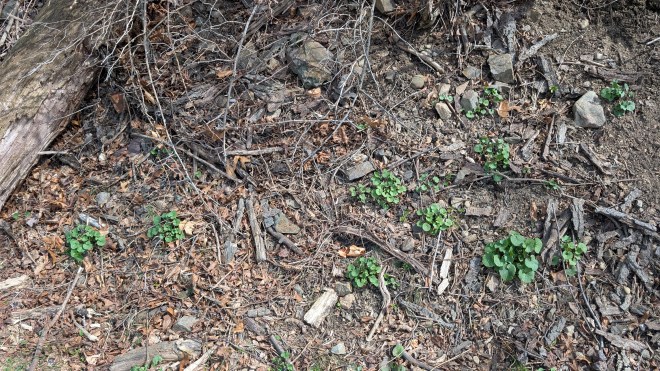
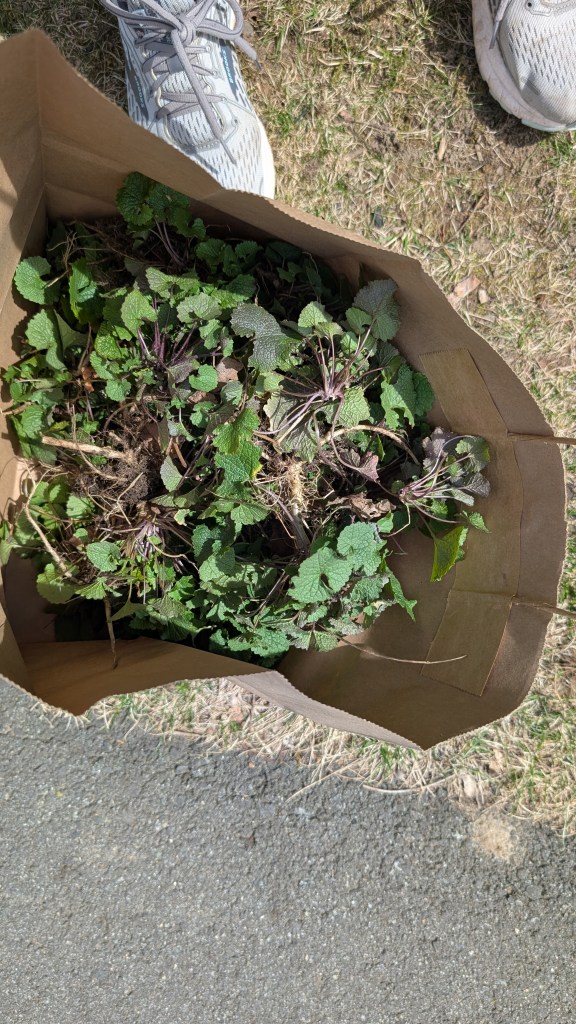
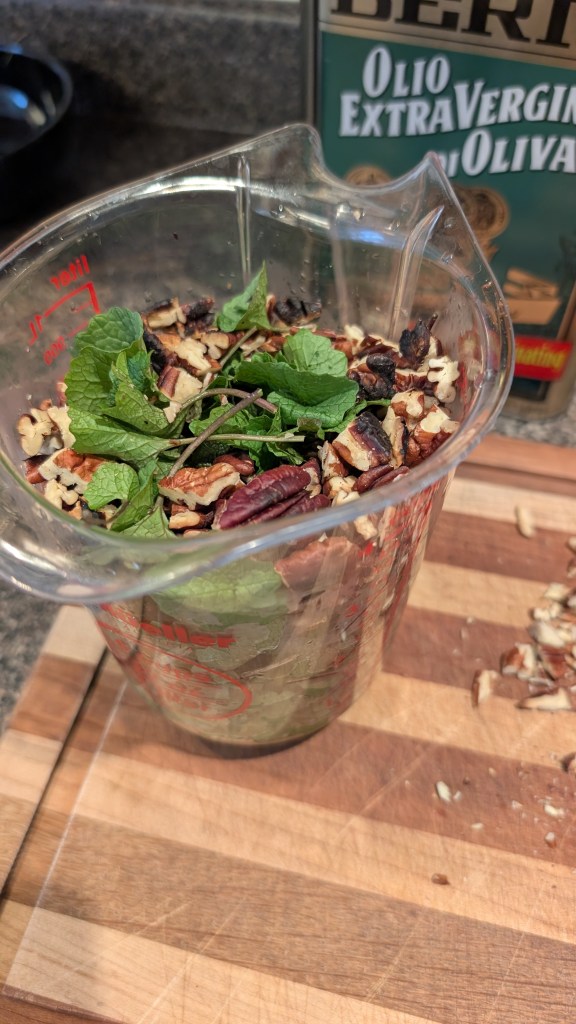
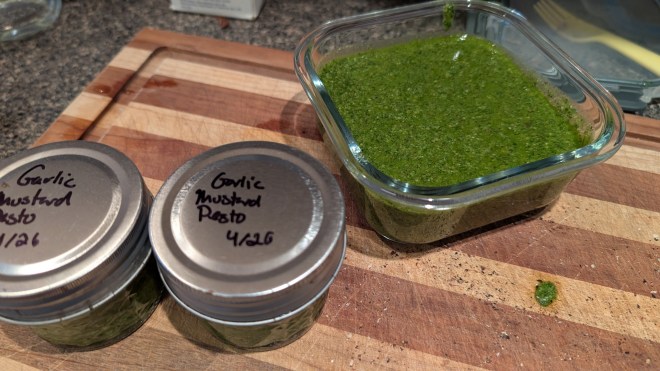
On the theme of invasive species, I noticed the invasive garlic mustard was basically the only green to be seen while we were tackling the bittersweet. So I decided today was a good day to make garlic mustard pesto. I did the opposite of good forage technique (totally eliminated from the areas I was working, took more than I could use), and then spent way too much time cleaning it. The pesto is such a brilliant green! I think it’s going to be delicious on tonight’s pasta.
The invasive garlic mustard in situ – it’s a biennial, and I think this is year 1. I pulled ’em up from the roots.A bag full of garlic mustardThe cleaned leaves, with oil and pecansThe finished pesto – absolutely bright green. The jars are headed to the freezer
We are in this wonderful phase in life, where our caretaking responsibilities are small, our financial resources are just about peak, and our bodies are still capable of doing intense athletic feats. And so in our adventures, we’re taking full advantage of it.
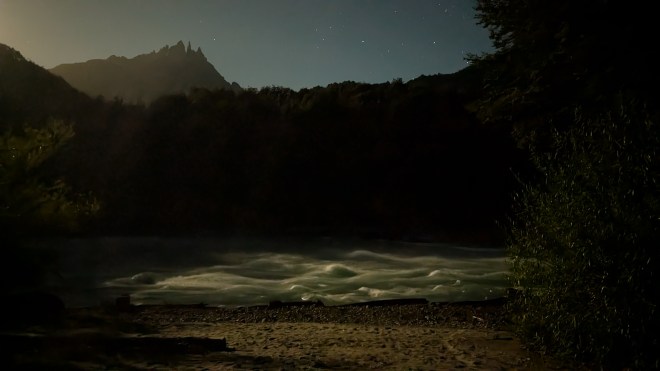
The Futaleafu by moonlight
Our most recent journey was destined to Patagonia. If you ask most Americans (in my small sample size) what they know about Patagonia, most of it has to do with moderately expensive clothing. A few will recall the quick line from the Princess Bride about the Dread Pirate Roberts “living like a king in Patagonia”. There are a few hints and trickles of the region in our lore, but not many. So when we decided to go to Patagonia, it was only with the haziest of ideas of mountains and hiking and wild rivers. So we reached out to Jane, and it turns out she lived in Patagonia for 2 years, so knew all sorts of secret gems.
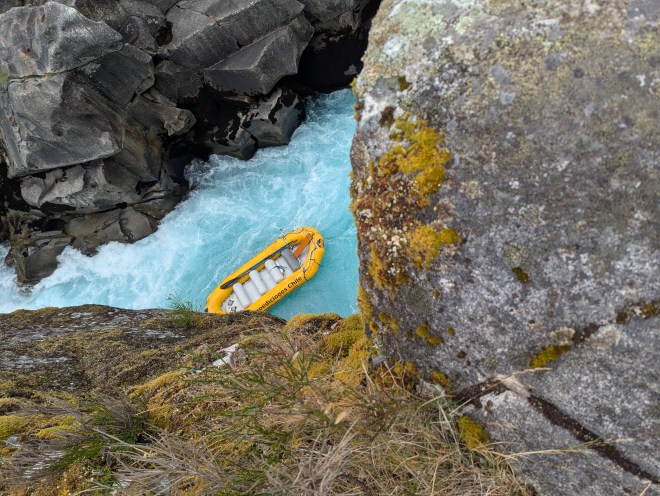
Wait, we’re rafting that thing down there??
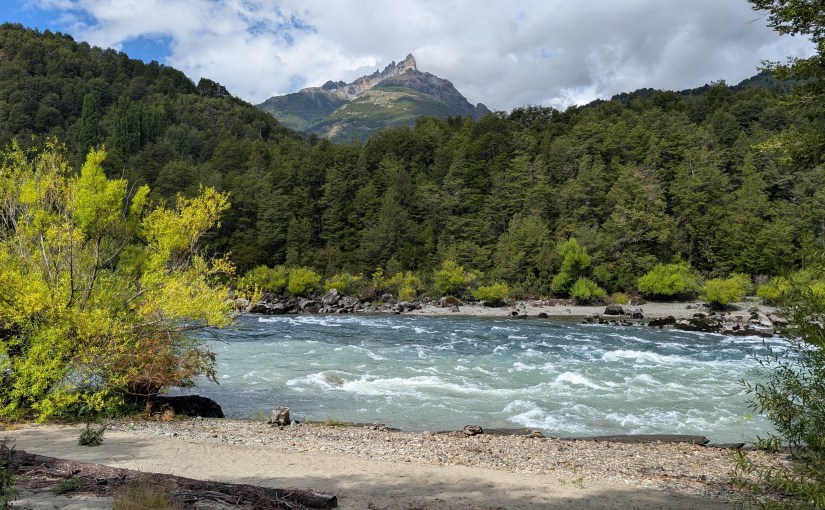
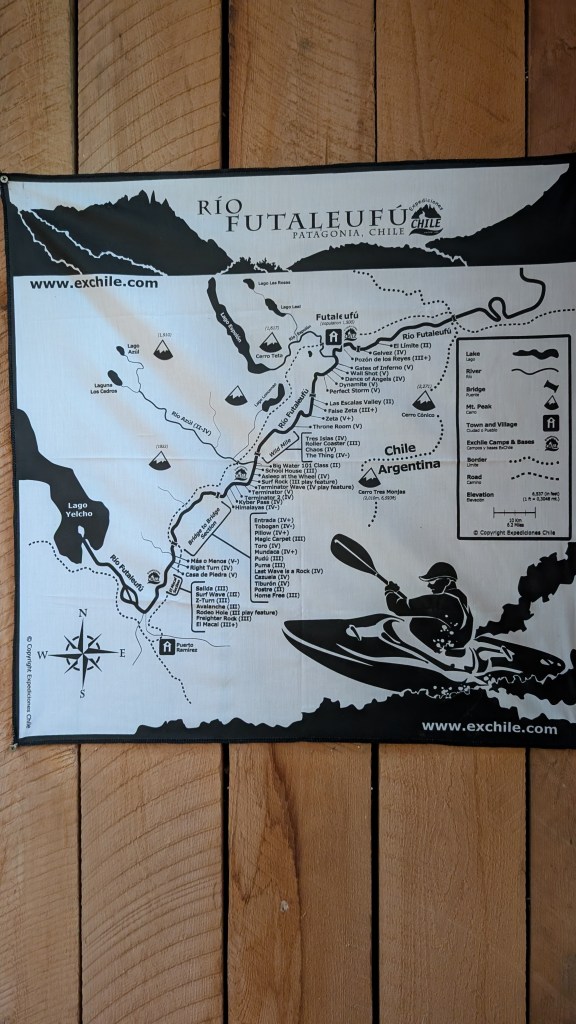
We came in through Buenos Aires and spent a few happy days in the warmth of the city before boarding a local plane for adventure. We were picked up at the tiny airport in Esquel by Chris Spelius, our gracious host, and a truly legendary kayaker. After a quiet but lovely night in Trevelin, we crossed from Argentina to Chile on a dirt road in an incredibly scenic valley. Not to long after that, we turned off the “main” road to a forest-service type track next to this incredibly blue river where we’d spend the next week, the Futaleafu (which means “Big River”).
The bottom half of the “Z” of Zeta
At the banks of the river we swapped our civvies for wetsuits (and a wool layer underneath), and met our phalanx of guides. It was just the two of us in the whitewater raft, but we had a deeply skilled guide manning the big sweeping oars (Pedro) and three rescue kayakers (Chiloe, Kris and Juan). This seemed a little like overkill, but we soon learned why. The whitewater was super fun to run, and the scenery we passed through stole my breath with its rugged beauty. But down the river we disembarked for some lunch and a portage. I am a mountain girl. I can talk about every peak in my world. My friends and I can and do discuss specific trails at great length and specificity. But here I was living in a river world, and we had run Las Escalas and Son of Zeta, but Zeta is a class v+. If there was such a thing as a VI, it would be a VI. It has been run (by Chris among others). But it was very tricky. The rocks were slippery and a fall would be catastrophic so we stayed low and safe, enjoying our hot cocoa and incredible fresh tortilla wraps while the four guides the walked the kayaks across the trails and laid all the complex ropes to portage the raft down the river. It was fascinating and slightly terrifying to watch the process that required them to clip into harnesses just to place the ropes. The degree of their expertise and problem solving was immediately clear. There were a few exciting moments, but the raft made it down the river. We portaged the Throne Room and ran the rapids on the Wild Mile: Tres Islas, Roller Coaster, Chaos and “The Thing”. (The rapids names are super fun – I think my favorites for the river were “Asleep at the Wheel” and “Last Wave is a Rock”.)
It was a looong way down and hard to even get close enough to see the waters below.
We stepped directly off the rafts onto the isthmus where we’d be living for the next week, at the confluence of the Futaleafu and Azul rivers, where the sound and presence of the waters is the heartbeat of life.
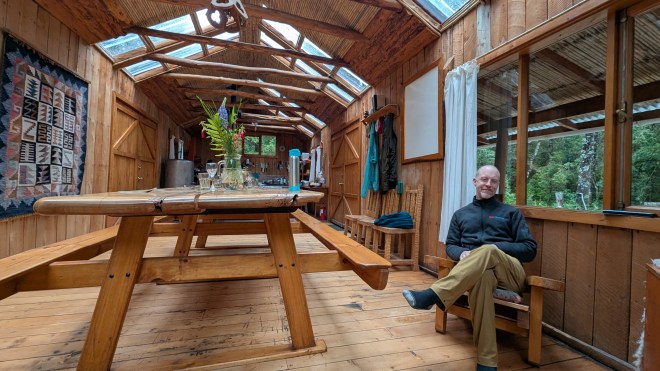
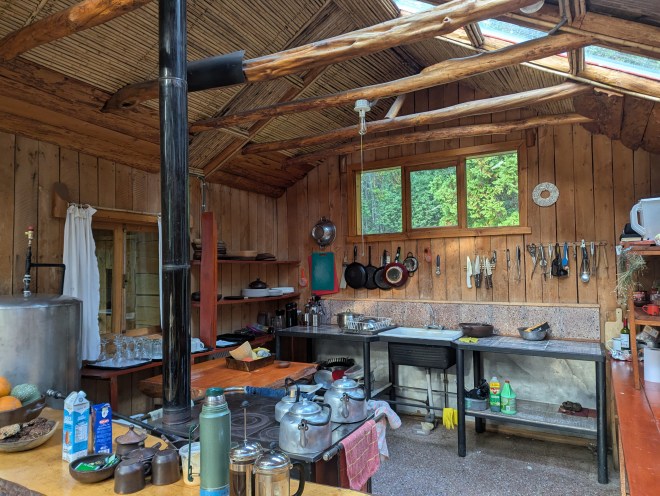
The great room, looking all scenic and rustic. It was the heart of the camp.
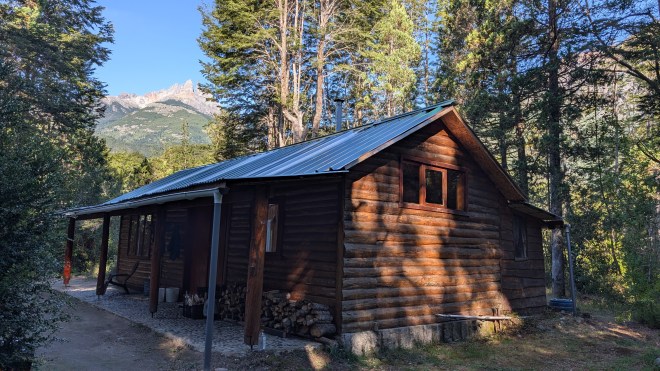
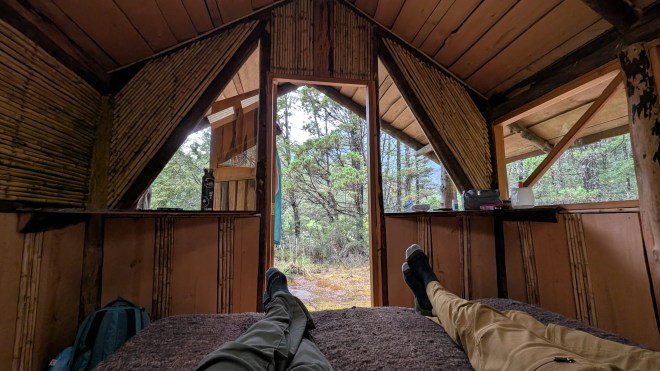
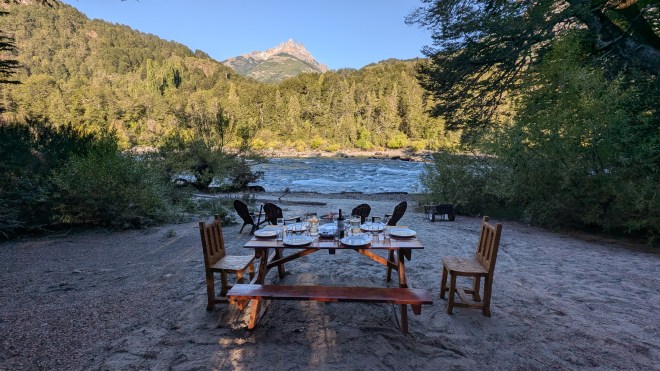
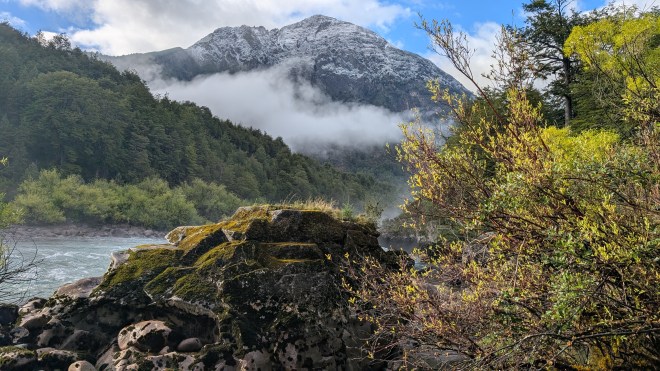
The camp – Tres Monjas or “the Three Nuns” for the overseeing peak – feels like a fantasy come true. My fantasy specifically. There’s a great house with the kitchen and a big table, surrounded by big windows. It’s home to one of the two wood stoves, which prepared all of our food and also heated the water for one set of showers. There’s the wood sauna, dark and warm, that provided heat for the outdoor shower that was everyone’s favorite (and the next-door massage room). The bathrooms were in the middle of camp, with spectacular unencumbered views on all sides. And then there were cabins all dotted privately through the isthmus, in sound of the river. They were unheated, but the thick woolen blankets meant that even when it dropped to freezing we were toasty and comfortable. There was exactly one place where electricity intruded – a charger for phones in the great room and a single lightbulb above the kitchen to allow cleanup in the gathering dark. There are few places in the world further “away” than this confluence below the Southern Cross where the waters of the Andes sprint towards the sea. Towards the middle of the camp is a sandy white beach on the Futaleafu where the Tres Monjas spin their spires above the blue waters. There’s a lovely table there, some chairs, and an ever-changing view of the mountains. Every time I passed, I had to pause and see how many of the spires were out.
Putting up your feet. Weirdly, there were NO bugs.
We all ate together at night, with a pair of taper candles on the table lighting the conversation. Usually the main topic was “what are you going to do tomorrow”, with a good amount of top-quality story-telling and raconteur added in. (You are offered the choice of eating by yourself or joining in the group – so if that sounds horrible to you for your vacation it’s not required. But it was truly one of the high points for me. These people have STORIES.) We were the only guests at the close of the season, so it was really what we wanted to do.
The great room is where all the gathering happened
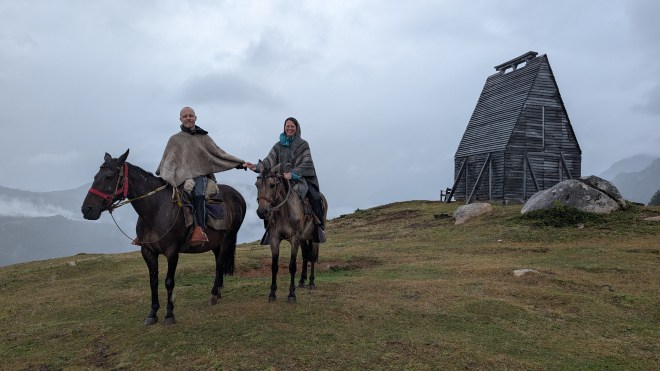
Our first full day was horses. We crossed the Futa on the Catamaraft and walked up a hidden trail to the Condor’s Nest, where we were met by a quiet woman with four horses. If the Sahara was fast stallions across the flat desert in the heat, these were mountain mares and well equipped for the mud and rain of our path up the mountain. One of my great takeaways from this trip is how freaking amazing wool is. Wool under wetsuits meant wet but not cold. Wool in the rain is astonishing. Jacinda had two woolen ponchos for us to wear. I was like “I’m fine I’m wearing layers and rain gear” but as I went up, I realized that actually that sounded great. We emerged through forests and fields to this medieval-feeling fairy tale of a meadow with a steep wooden building “The Indulgence” and overlooked the Throne Room rapids we’d portaged the day before.
Those ponchos are CLUTCH. Truly amazing.
Weather in Patagonia is similar to Alaska – not all that reliable or warm even in summer. The second day was unsettled, so we decided to go to the Escolon River (which is significantly less white-water) to learn how to handle kayaks under the tutelage of two terrific kayakers (shoutout to Pablo and Kris!). We were on “duckies” which are inflatable kayaks that are pretty tough to overturn (and don’t trap you if you do turn over – you just fall off). We learned basic skills – how to ferry, how to cross, how to use the current to turn you, how to move back and forth between still and moving water. The weather held, and we had a beautiful day down the river. When we hit the sandy beach we were going to take out on, in calm waters, we got promoted to the hard-shell kayaks and spent a happy half hour half-drowning ourselves to learn how to right ourselves if needed. The next day would be all rain, and all whitewater kayaking.
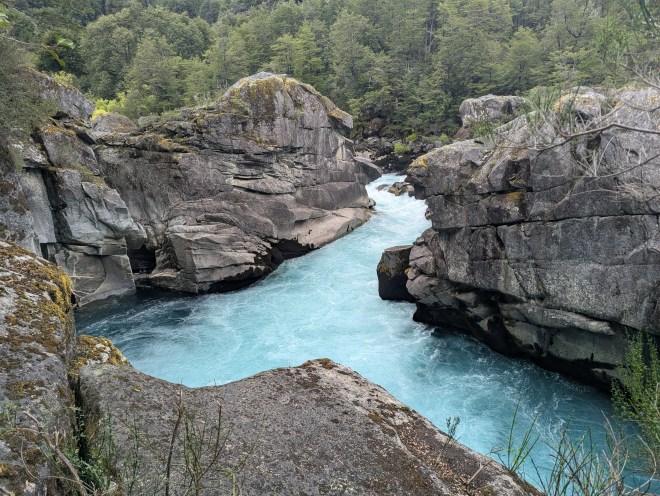
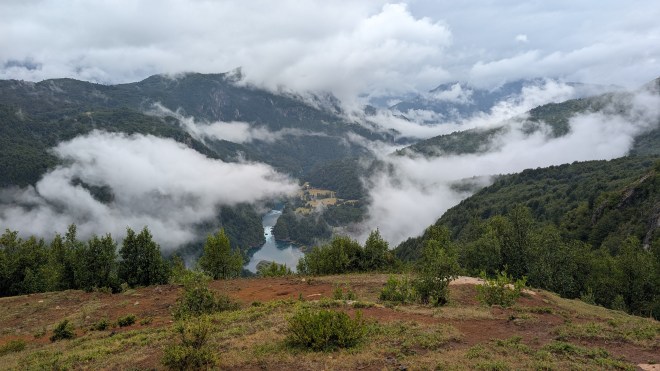
Looking down at the Throne Room rapids
My husband and I both really love learning new skills. This probably doesn’t sound like vacating to some people, but the refreshingness of learning something totally new under extremely skilled instruction. So when we headed back to the Escolon (in one of the kayaks that Chris helped design) in the pouring rain, our pickup driver thought we’d be out an hour… but we stayed four in the pouring rain in the river tackling a Class 1 over and over again, learning how to make our way to the eddies, keep our noses pointed to 11 or 1 as the direction warranted, to turn fast, to lean in, to read the water. It was exhilarating, although at some point my arms let me know that I’m mostly a LOW BODY athlete and they are not USED to this kind of exertion. We dunked ourselves a few more practice times before piling towards the in-town bunkhouse to warm up with more excellent hot cocoa and lunch.
I consulted this often
Let me take a moment to talk about the food. I’m hard to impress. I like to eat out, I like to cook, I’ve had a farm share for years, Boston has a fantastic restaurant scene. I’m not picky though, and I can keep body and soul together with almost anything. So I didn’t have high expectations for a cabin in the middle of the woods where the cooking was done over a wood stove. OH MY GOSH. People. This chef, Evelina and her helper Sophie, would put many top ranked Boston restaurants to shame. My husband has lactose intolerance, and she made sure that every single dish was no problem for him. All of the food, gnocchi, steak, breakfasts with pancakes and oatmeal and eggs, lunches … all of it was spectacular. It was incredibly high quality, made from super fresh ingredients. Folks, she turned out tiramisu for dessert on a wood stove. What sort of wonder-working is that? I’m not saying you should go here just for the food. But dang, it would almost be worth the trip.
Where the magic happened
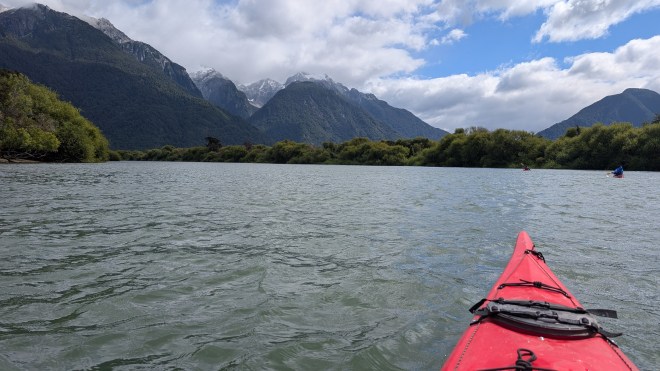
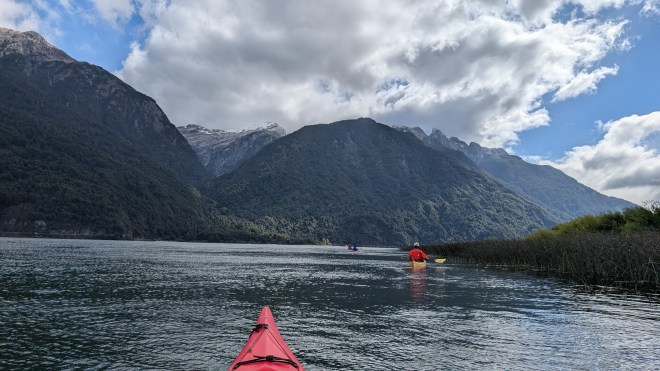
After our waterlogged day of whitewater rafting, we were ready for some sea kayaking down the still, broad portions of the Futa to Lake Yelcho. I figured this would be easy – the current would take us where we needed to go and a nice placid lake sounded great. We got into our third kayak configuration in as many days, and set off down the river. The views on either side were utterly spectacularly distracting. The joke had become that I would always go wherever I was looking (which was bad when I was, say, trying to avoid overhanging trees). If that were true, I would have been high up in the mountains, poking at the toes of glaciers in carved-out cirques. But I started to notice that, um, there was a bit of wind. A lot of wind actually. I was moving backwards if I wasn’t paddling in fact. This might have been the best abs and arms workout of my whole life people. We battled the winds all the way to the island where the waters of the Futa divided. To our right, it was as though a herd of horses stampeded across the lake, the whitecaps were so high and daunting. We went left, and just before we emerged from the protective estuarial reeds, Kris and Pablo gathered round. “We can use a tow rope. But once we get into the lake, it’s going to be important that you keep going, keep your nose at 11, and then we’ll turn at the shore and come down. We’re headed for that beach over there.” It didn’t look far. But we couldn’t go straight – we had to go up up up and edge our way across before letting the wind swing us around. Going broadside would invite waves to crash into us, and this was going to be inconvenient to be rescued in. I gathered all the strength of the soggy noodles that had replaced my arms, lamented a minute that I would not be able to stop to capture any of it, and started my fight across the lake.
It was not as still as it looked
FYI it’s generally considered poor form to kiss the ground when you land. I was never in any peril, but I certainly tested myself against the waters and found that their strength was greater than mine.
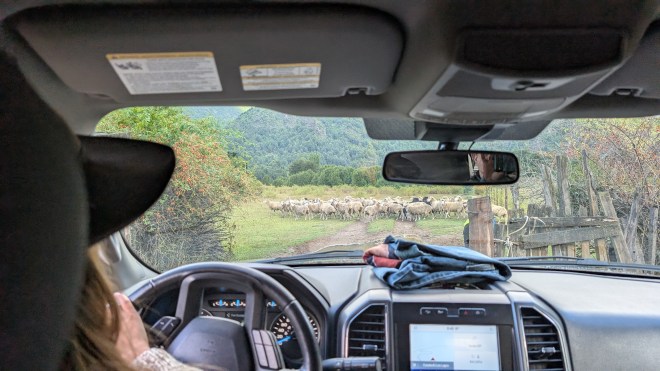
When I stopped to take pictures I started going backwardsTraffic problems like this were common in the region
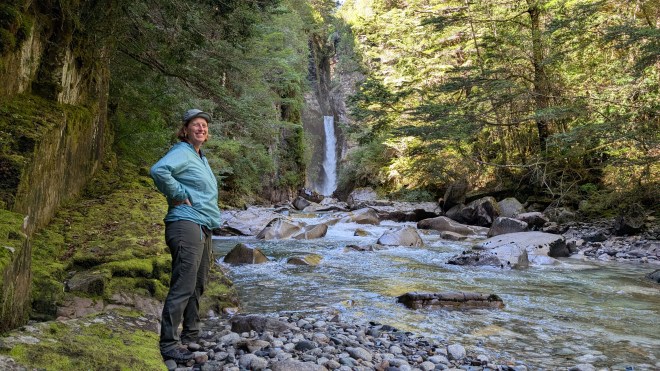
Our last full day we decided to dry out. The sun came out in full glory, and the whole place just hummed with beauty. My husband decided to spend the day in camp, trying out the hammock, exploring and generally actually relaxing. Six of us headed across the river to meet up again with Jacinda (and her 8 year old daughter) – including Sophie out for a bit of a holiday. Rumor was there was a waterfall that had been recently discovered with a new trail cleared for it. Patagonia has not been settled all that long, and it’s sparsely settled. As I understand it, even before the coming of Europeans this area had few inhabitants. They called it the Green Desert. So I took a mare until the trail got narrow, and then we hiked in a few miles to a waterfall that almost no one has ever seen. There were two actually, a small cascade that reminded me of nothing so much as the old Herbal Essences shampoo bottle and a 30 foot brilliant waterfall, crashing into crystal clear waters below. We had a picnic there in hidden canyon, carefully supervised by two very good puppies.
It was really tall, but I’d gotten wet enough and didn’t care to do what it took to get closer.
The last night, we all ate on the beach with a fire in the clement weather. The folks at Expediciones Chile were not any longer “the staff at the resort we stayed at”. They were friends, humans, people whose stories I know and care about. I have come to know them, and be known. It’s actually hard, wondering how they’re doing and missing them. (And the food. And the mountains and rivers of course, but really the food.)
Kris spent like an hour with a level getting the table perfect. He and my husband also spent a happy hour working on knots for the pull in the light in the great room.
After a long return flight, I’m back once again in the world of cold and snow and politics and cell phones and AI and all the things. But a part of my heart is still on the Futeleafu.
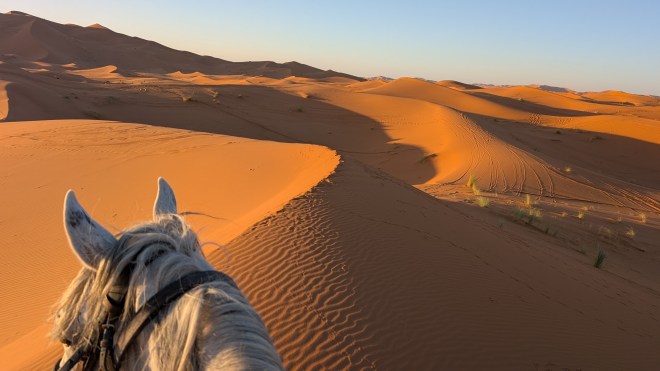
I was flying at full gallop over vast black stone desert on a white stallion named Ayyur – moon in Berber. The red dunes of Erg Chebbi rose over the horizon, and as we drew closer the minarets of Merzouga rose above the heat shimmer like a mirage. “Zir” I murmured, and the already fast strides of the stallion lengthened until the hoofbeats behind me started to fade.
The scene I saw
This is not the opening line of a romance novel. It is, in fact, a moment that I lived through on Friday, in the life I actually live. It was also one of the most remarkable journeys of my life.
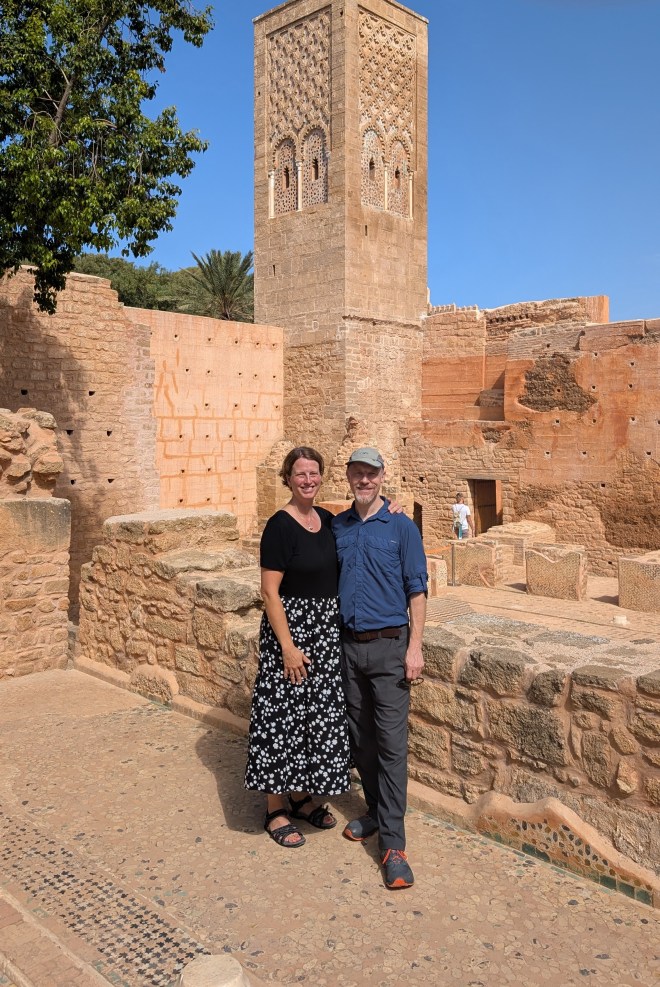
The Chellah Necropolis in Rabat
My husband and I celebrated 25 years of loving marriage this summer. We’d thought of going to Italy, but couldn’t quite settle on what or where – the possibilities seemed too endless. But I read an article about camping and riding in the Sahara and I thought of the brief and brilliant glimpse I’d gotten a few years prior. I’ve never worked with a travel agent before, but I just felt overwhelmed by trying to find the thing I wanted that would be safe. (I was originally thinking of Algeria, but the terrorism warnings daunted me.) So I knew of a travel agent – specializing in adventurous crazy trips – and I reached out to her to see if she had some ideas. Jane totally came through for us! She put together a brilliant trip for us, finding some amazing options I would never have found in a month of boring-meeting Googling. (And amazingly the trip was much less expensive than when I had planned a similar one a few years ago – cooler stuff AND less $$!)
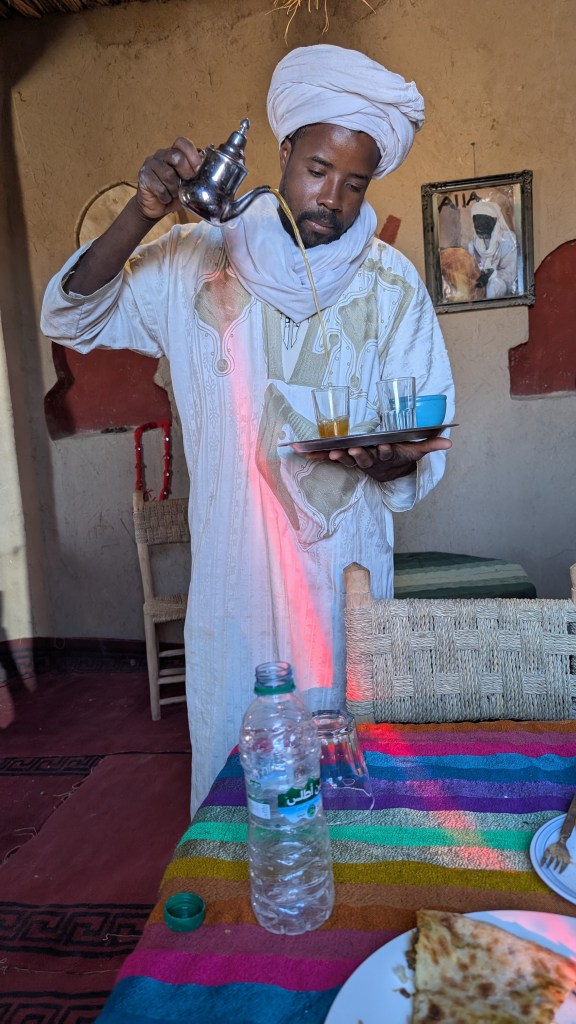
Lunch at the Cafe Alla where we encountered “Berber Pizza”
We had a great time in Rabat, but the adventure really began when we stepped out of the Jardin des Marzouga to an alley with three horses in it. We have ridden horses a few times before – but I’m not sure I’d ever galloped (at least on purpose). We’d taken a single lesson ahead of time. We packed our bike helmets and gel saddle seats (brilliant addition), but here we mounted our horses, abandoned our luggage, and started our adventure. It was tentative at first. How do I make this thing go left? Right? Faster? Slower? We tried our first gallop and the ground seemed to move very fast, very far below me. After our first lunch, a multi hour affair while our horses rested and were cared for in the heat of the desert day, there was a horse swap. I’m not sure what was up with my first horse, but it was scratched and I was give Ayyur. (My husband was taken from Ayyur and this is a great sacrifice of love that he barely complained about.)
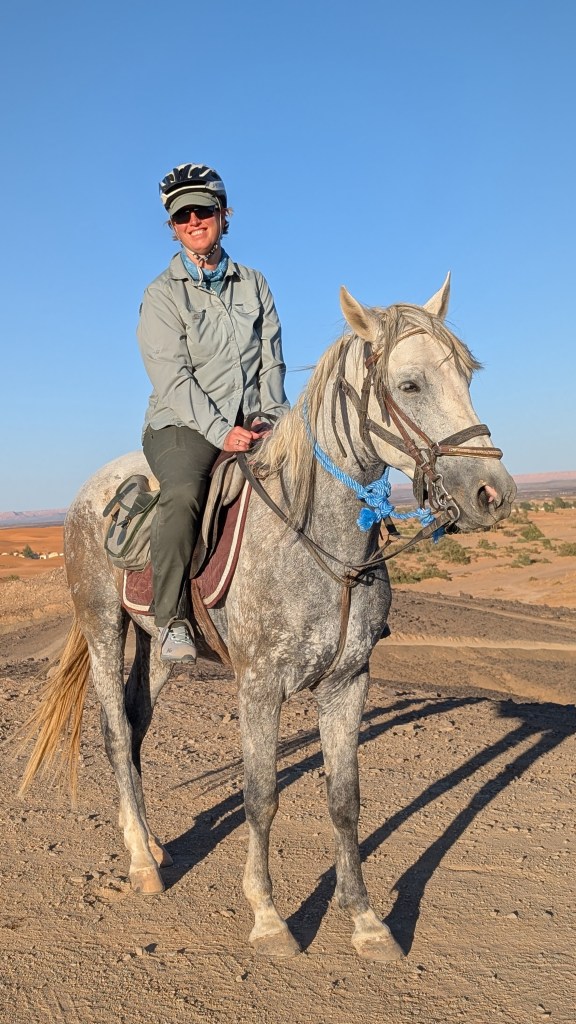
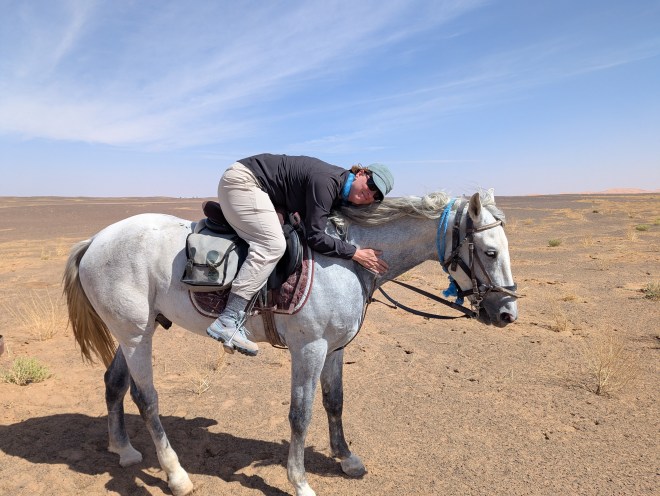
Ayyur and me
Ayyur is an Arabian/Barb stallion, and an absolute dream. He loves to run, and to go straight and fast. He was an easy horse to ride with a fast walking pace and faster gallop. I never had to tell him to go fast or go faster – my husband behind me would say “Zir!” to his stallion and Ayyur would break into a trot (which… Adam’s horse Sultan required a lot more cajoling to go fast and had a slower walk, so it wasn’t uncommon that he’d be trying to catch up).
The best view in the house
My friends. I have read fantasy novels all my life. I love historical fiction and fiction fiction and historical history. All these things involve horses. Much of the history of the last 3000 years horses have played critical roles. The very first chapter book I ever read was called “First To Ride” and was about the first person to tame a horse. Horses are in the Iliad (extensively). They play a role in almost every major battle, exploration, or journey. How many times have I read about horses, and riding horses, and horsemanship? But it’s all been theoretical. In America, they don’t let folks like me with little experience gallop across deserts (I’m sure for good reason). But to be on the back of a horse that loves to run, in the middle of a trackless desert (we started galloping only on soft sand where a fall was much less likely to end in tragedy). It was like seeing the sea for the first time, or actually touching snow after a lifetime spent reading about it. The power and speed and connection is unlike anything I do in my regular life. I am still not a horsey person, per se, but I get it now.
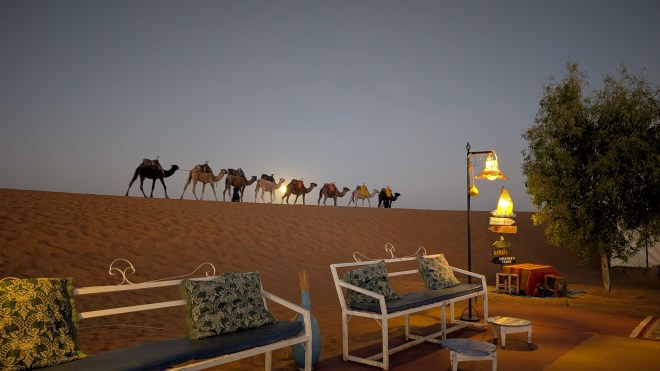
Goats watching moonriseJust regular old camels by moonlight
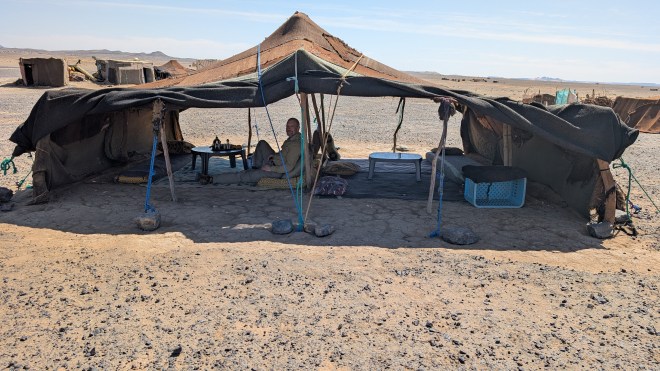
While I can and will wax rhapsodic about my mount, there were a couple other really high points of our journey. We spent 4 days with our horses and guide, Yassine. One of the lunch siesta breaks we spent under a nomad tent on a plateau between the dunes and the closed and highly monitored Algerian border. There were a number of nomad camps we passed that day – they were all very neat and orderly, but looked so hot and comfortless. I can’t help but think there are some stories there.
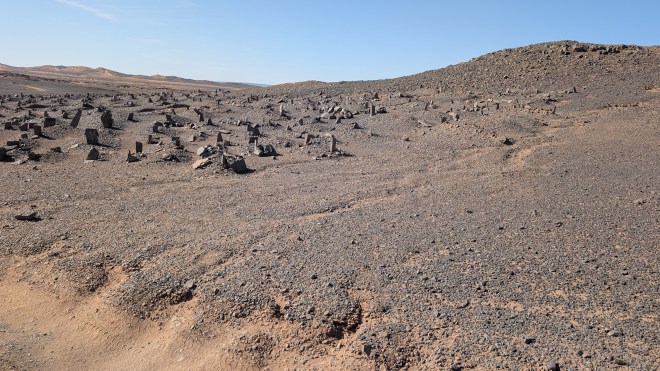
Amazigh graveyard – for a mining town that was vanishing into the sandsSiesta in a nomad camp
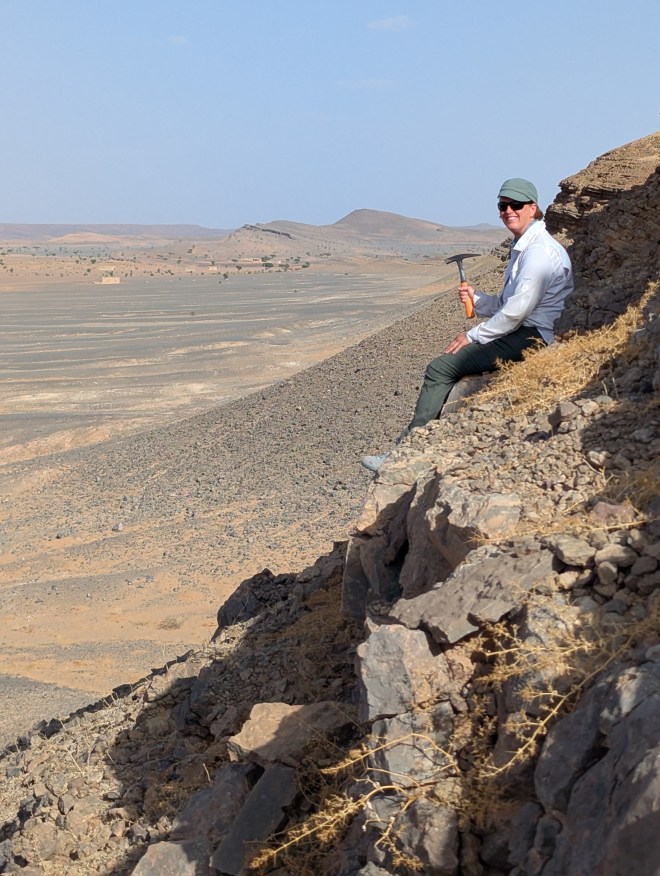
One of the afternoons we abandoned our guide and went with a geologist on a quest for fossils. The amount and variety of the landscapes in the Erg Chebbi is astonishing. And we were treated to seams of Ordovician, Devonian and Silurian fossils. You didn’t have too look too hard to find them. They’re being actively mined by hand with folks deep down in holes. We got to see a bunch of different kinds of fossil fields, and I hiked a small mountain.
Getting up was the easy part. Getting down… I was half tempted to use that hammer as an ice axe.I have never seen such a dimensional fossil. This one was in process of being liberated from its surrounding rock
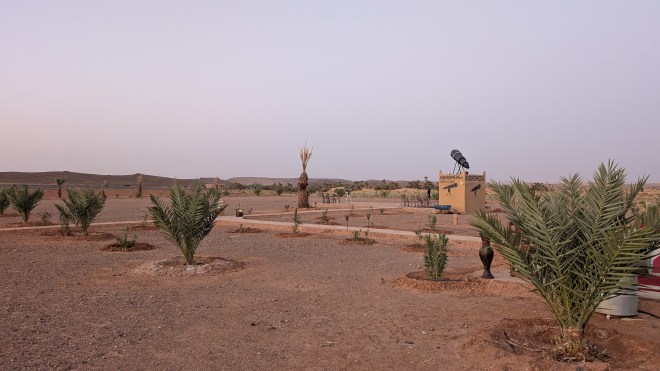
After one brother (Hamid) finished teaching us about geology and fossils and showing us some of the incredible natural history of Morocco, he brought us to the most remarkable desert camp we’d seen: Andromeda Astro Camp. This entire camp is constructed around the stars and the need for dark skies. The meal was carefully planned around the arrival of real dark and the moonrise. All the lights were pointed down, and dimmed as we were walked by brother Moha through the constellations and stars – both the traditional western versions and some of the Amazigh legends and sky-scenes. The camp was so incredibly amazing and comfortable that Adam and I were bummed that we weren’t staying there. I would HIGHLY recommend to anyone who values quiet and dark and learning.
Watching the sun set from the Andromeda campAndromeda Camp
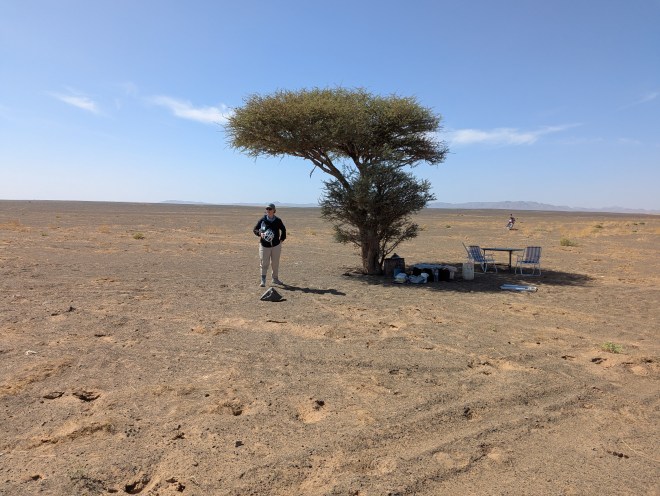
That night, though, we were slated to spend camping wild (instead of glamping). Hamid drove us through the dark night across trackless deserts, with the moon chasing behind us. As we got closer he started slowing down, being guided in to the spot by a blinking flashlight wielded by Yassine, our guide from Merzouga Horse Riding. He’d set up our tent and a table in the interstitial dunes between desert and oasis. It was amazing. We sat in the dark of the night, drinking Moroccan mint tea (or as the joke we heard in nearly establishment named it, Berber Whiskey), and marveling at what our lives were in that quiet moment. Truly, it’s hard to express the peace and contentment from being honestly tired, greeted as a welcome guest wherever you go, climbing mountains, riding horses and listening to the desert winds. I never wanted to leave. To fall asleep in true quiet and dark, with the only sound being the nickering of the horse you’ve started to love picketed nearby. Well. It’s hard to explain how incredible that was.
The campsiteIt was even more peaceful than it looks
There is so much more to be told, and felt. But I do not wish to bore you. I do want to remember every bit of this trip. And I do want to commend to you the wonderful things we found there –
* Our travel agent, Jane, who put this all together
* Merzouga Horse Riding – the kindest guide, the most incredible experiences, and possibly the best horse out there
* Andromeda Star Camp – doing cool stuff that is different from the standard and requires courage and conviction. To value darkness and silence in a brightly lit, noisy world is precious and rare.
Our lunch spot the last day
Drop me a note if you want more details! And if you want to see what I mean by a gallop – here is one (I’m the one way ahead).
I’ve always loved the idea of gardening. I was deeply influenced by the books available to me as a girl, and one of my spring favorites was “The Secret Garden” by Francis Hodgson Burnett, which spoke of the healing power of green and growing things, friendship, gardens, sunshine and good food. Many of my views of the world have shifted since I was a 9 year old in a farming town in Eastern Washington, but I still hold the virtue of those things.
As a side note, I think the current generation (and my more urban colleagues) just do NOT understand what it was to be book constrained. I’d read out the school library within weeks – at least of books interesting to me. The library in our town had a librarian deeply suspicious that we could possibly be reading what we were checking out, and wasn’t that much bigger anyway. We used to drive once or twice a month for an hour to go to the “big city” (editor’s note: NOT a big city) to go to their library. My sister adjusted by vastly expanding the realm of what she was interested in. I, on the other hand, read the same books over and over and over again.
Anyway. Love of gardening, right there with my love of survival (My Side of the Mountain) and love of native culture (Naya Nuki: Girl Who Ran). But alas, I am no gardener. Not least because I’ve spent the last 20 years with a farmshare, and the LAST thing I needed was more zucchini. But the urge. The urge is still there.
We are in the Zeno’s Paradox stage of our year long home renovation project, where we’ve been a week away from done for a month or two now. (Stupid rain. Can’t paint when it’s raining.) But I finally decided that a garden couldn’t wait on trivialities like whether we had gutters installed. I did mostly wait for them to lay our new walkway (due to the excavating). But my plan was to replace what had been a front yard with a front garden.
We lost quite a bit of the front growable area due to doubling the size of the room that was our front porch and is now our solarium and balcony. It was already postage stamped sized, and mowing it took more effort to lug the mower from the back yard than to actually push it around. Resodding seemed like a mistake for such a small area. But it’s quite shaded, and a little hilly. And there are gas lines, sight lines, sewer lines and a brand new Cultek rainwater system to think of. I decided on three governing principles:
1) Shade
No pretending it’s full sun. It’s not full sun. Parts of it are a lot closer to full shade. Don’t even try to tell me that the 30 minutes of direct sun it gets between May and September on sunny days = full sun.
2) Edible
I am not doing the farm share this year. So my tolerance for a harvest is higher than it’s ever been. In fact, I don’t quite know what to do with myself if I don’t have an excess of some sort of produce. I’ve been thinking about my favorite parts of the process. I love making jam, which there are plenty of stuff that suits itself to jam. Making pies likewise is vastly appealing. But I’ll add to the the list syrups, which I like to add to seltzer water in lieu of a soda. And also the fruity toppings for cheesecakes. So things like serviceberry, aronia (chokecherry), or rhubarb. I’ll have a few things to do with them.
3) Native. At least ish.
I’m on a quest to eliminate invasives. But also, there’s an entire lexicon of American native fruits and vegetables we don’t eat. Not because they aren’t tasty, but because our colonial forebears preferred their familiar versions. Johnny Appleseed walked across our country spreading (cider) apples, but pushed aside the pawpaws that had been eaten in those places for millenia.
And then of course, there’s beautiful. Sometimes a girl just needs some peonies.
I spent the winter poring through seed and plant catalogs, making purchases that would come as a complete surprise to me several months later when they finally shipped. And then I discovered that Mahoney’s Garden Center had all those obscure natives and some I had not dared to imagine would be purchasable, that were only on my foraging list.
Here’s a quick rundown of what I put in my garden, so far. Let’s see what survives.
Shadblow Serviceberry Shade, edible, native
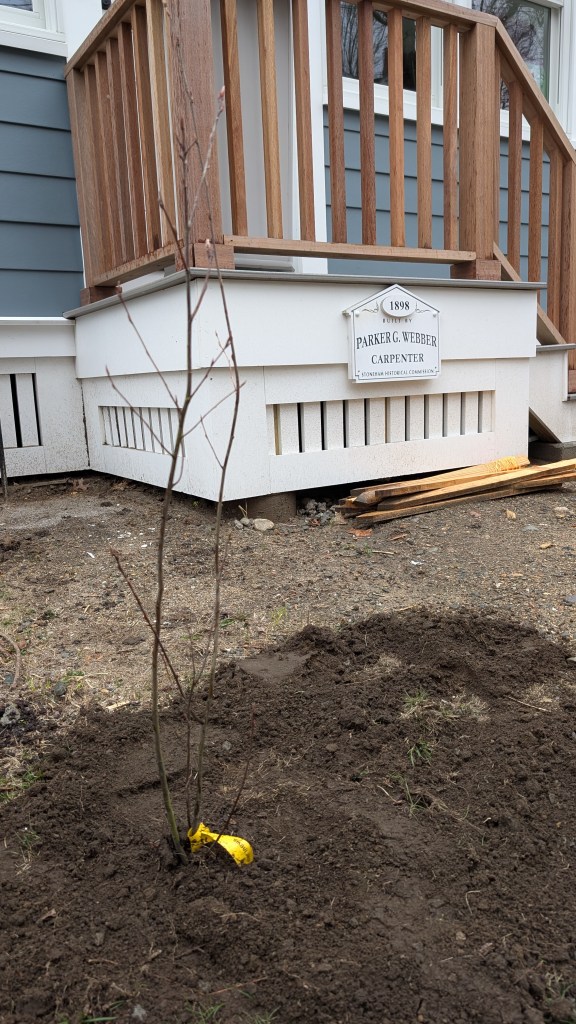
I only get one tree in this space, and I’ve dedicated my one and only shot to the serviceberry. The serviceberry (or Saskatoon or Juneberry) is both edible and delicious, with a rich heritage. If you don’t bother picking it, the birds will do it for you. It’s a favorite. It’s also a beautiful tree in blossom and in fruit. It doesn’t get too large (12-14′), and has beautiful flowers. I mean, I already have three pawpaws in back. I could stand more variety. I’ve, of course, never HAD serviceberry, so hopefully I like it! It will likely be several years before I see anything. Doesn’t look like much – but remember this in a few years.
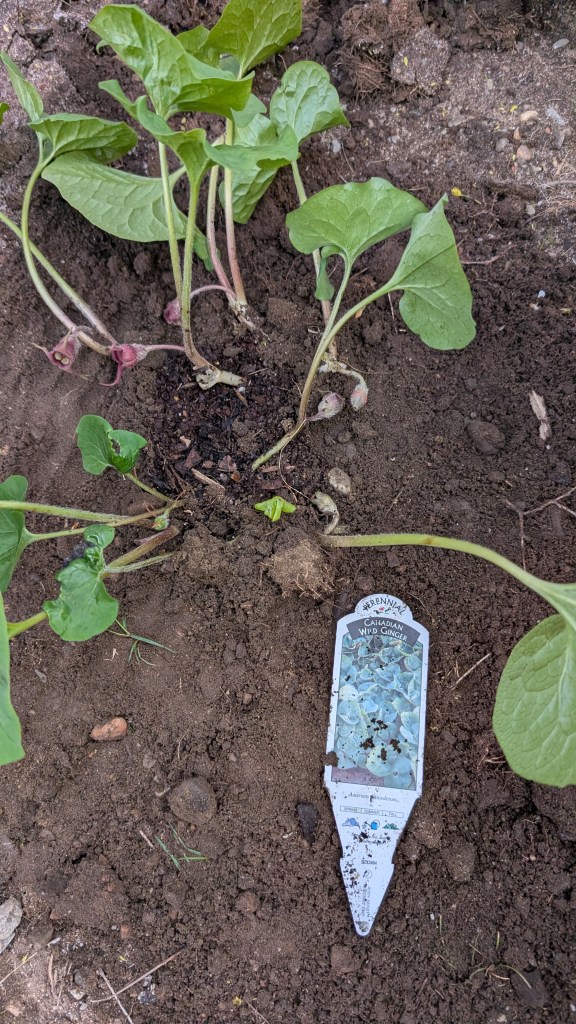
Canadian Ginger Shade, edible, native
I was SO EXCITED when I saw this at the garden store. I hadn’t even thought to have it on my list. But it is a shade lover, ground cover with a strong edible contingent and really weird, cool flowers. I’ve been thrilled at how it immediately bounced back from transplant and got right on the growing business. I’m not sure how much actual ginger I’ll get from my little garden, but it’s the possibility that matters, right?
It now looks like it’s never lived anywhere else.
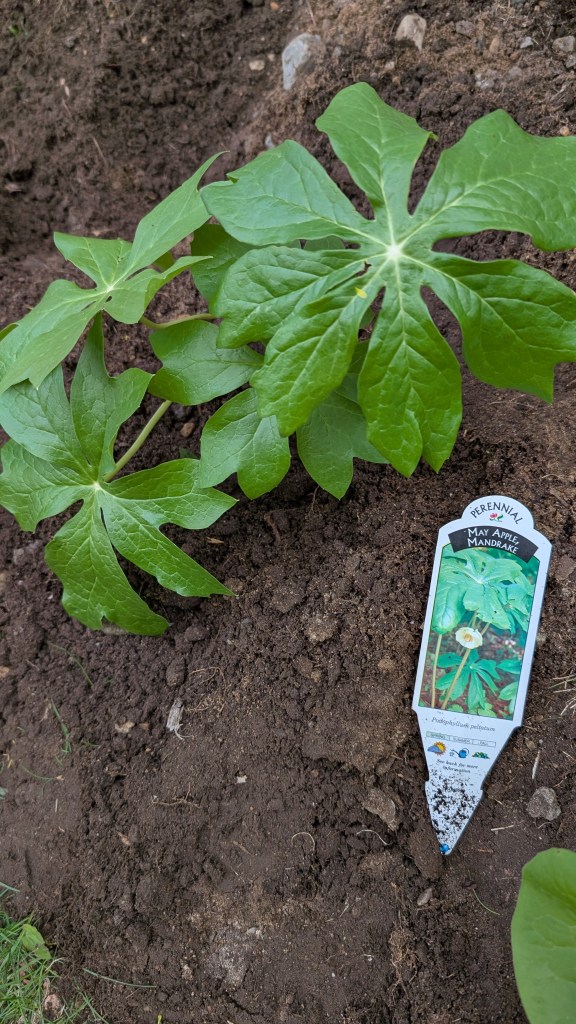
Mayapple Shade, edible, native
This one has been on my “want to forage” list for a long time. I’ve found it twice – but neither time has the fruit been ripe. I love the cool shape of the leaves, and I had no idea it was possible to purchase for a garden. This one is having a harder time acclimating (I actually think it’s getting too much sun, which will improve when the serviceberry is less stick-like). I doubt I’ll get any fruit this year, but it will be a lot easier for me to get the timing right when it’s literally out my front door. I went from excited to unreasonably-excited-for-an-adult when I learned it was a MANDRAKE. I mean, share some awesome with other plants, mayapple. I adore those leaves
Rhubarb Edible
I really don’t like hostas. But they play an important role in the garden, where that role is “relatively low mounding green thing that doesn’t get in the way of the pretty plants”. But when I was pondering whether the local farmer’s market would open in time to get rhubarb this year (it’s often almost over before they’re open) it occurred to me that I could fill the ecological garden niche of hosta with a plant I liked a lot better. Plus, it’s ready for preserving before I get overwhelmed in fall! But it’s an Asian native, and needs close to full sun. Grey loves eating raw rhubarb.
Native flowers
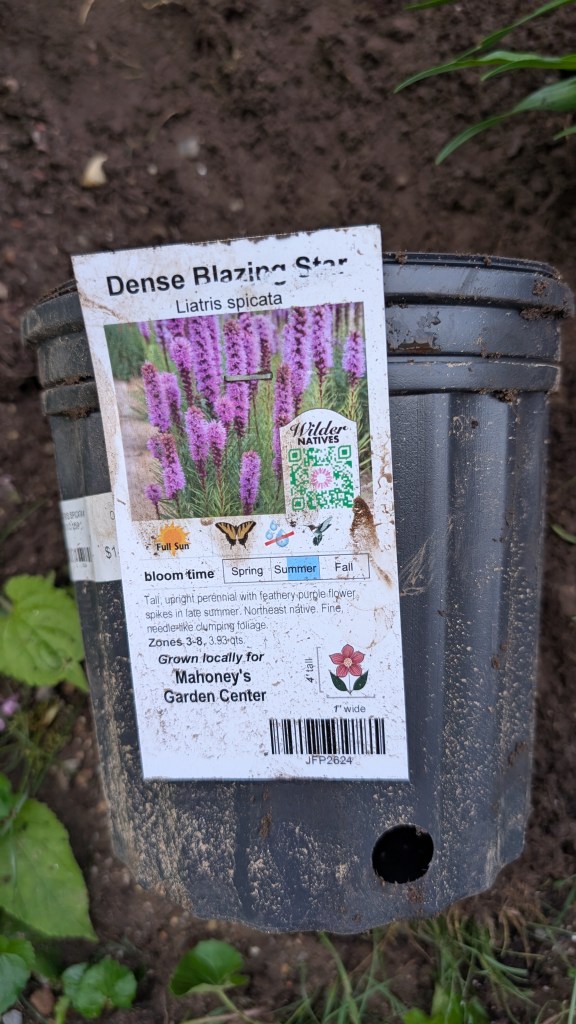
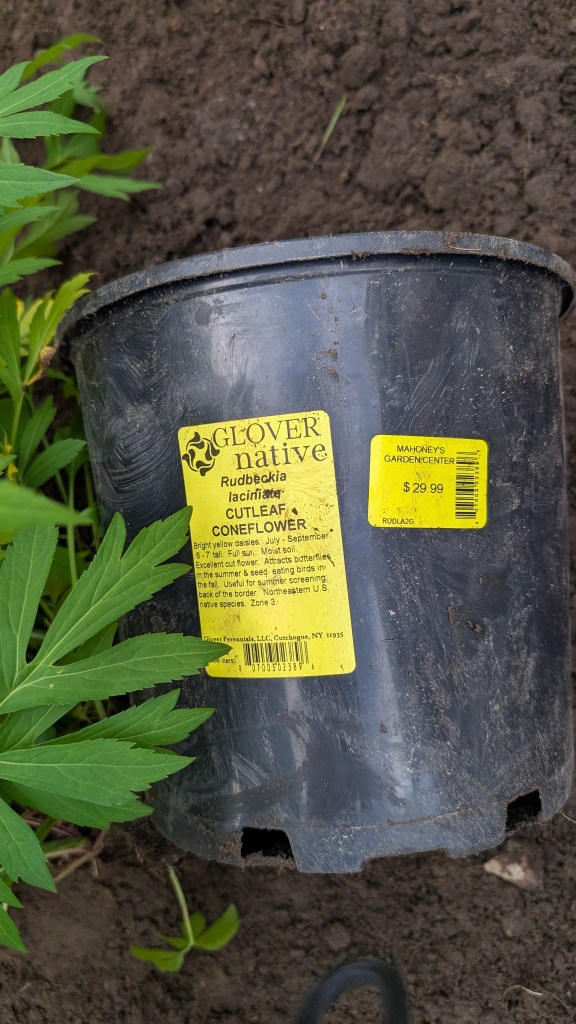
There’s variation in JUST how much thinking I did. Some of these I thought about a lot. Some were like thinking of a perfect friend for a job. But I also went to Mahoney’s and just bought some native local flowers that looked cool. On that list I have Blazing Star (which I’m not sure I’ve ever even seen), Stonecrop which I had before and is never without bees, Shasta daisies with their long bloom, and a monumental cutleaf coneflower which I might not have read carefully enough gets 6-7′ tall. I planted that in front of the hose. We’ll find out which are friends, which are foes, and which doe well in their roles.
Just Pretty
I managed to rescue our bleeding heart from before construction. I think it got dug up and replanted three times. But while not going gangbusters, it survived! Also, well, you have to be pretty hard-hearted to create a garden and make no room for peonies. I planted creeping phlox all around the edge of the garden.
Strawberries & lupine
Over on the other side is my “kitchen garden”. Lupine doesn’t really count as native since I got a copyrighted cultivar (that was before I had my rhubarb revelation or things might have gone differently). But I have such fond memories of the alpine lupine on Mt. Rainier, and it’s taller brethren in my Washington home. I had another stroke of brilliance that surrounding the lupine with five different varieties of strawberry, for a summer where there will always be a mouthful, and to find out what does well in my spot. I took a picture of each strawberry in situ so I’d be able to identify it later.
Walkway
Around the beautiful stones carefully laid down by my handsome husband, I planted four varieties of creeping thyme. The thought is that when mature, each step home will release a rich fragrance. They can handle light traffic. And it will help prevent erosion, right?
Kitchen garden
Abandoning all thoughts of natives, my herb-centric kitchen garden includes: two kinds of basil, chives, garlic chives, parsley, mint contained in a pot, celery (I’m curious), dill, rosemary, arugula and an actual planting of thyme for culinary purposes (although you can use the creeping thyme). I would plant cilantro but man that always bolts SO FAST! My kitchen garden
And now I’m at the phase where every day, sometimes twice I day, I’m staring at the new leaves on my serviceberry, or pondering if my new peony just grew another inch. Is my mayapple acclimating? Are there any hidden strawberry blossoms? It’s such a glorious and hopeful waiting, the new garden. And in a month or so, after the 4th, I’ll go again to Mahoneys and come home with more summer treasures for my waiting garden.
Select Board:
Heidi Bilbo
Ryan Foreman
Alternate: George Seibold School Board:
Cory Mashburn
Alternate: William Fogarty Planning Board:
Brianna Kelly
Alternate: William perry Housing Authority:
Danielle Connolly
Alternate: Kevin McLaughlin
Reasons and details below.
Override
I’m voting yes for the override.
If the override fails, my son will not be able to take French his last two years of high school, and won’t have an opportunity to take AP French. That’s the smallest of the impacts – but almost all of us have some area where it will hit home, and that’s mine. Stoneham has never passed an override, so where our neighboring communities have some slack or fat to cut, we’re already massively under-resourced. We already have many fewer police officers, fire fighters and DPW workers. If we don’t pass this override, the situation will become worse, and people with options will be less likely to choose to live in Stoneham. This can lead to a spiral as home prices go down, thus tax revenues go down, thus services go down. I want to live in a thriving community – not a broke and breaking community.
I’m noting where candidates have said they will or will not support the override. All incumbents voted yes for it (the first time that’s ever been true in Stoneham!). If a candidate votes no, I would like to hear their plan for how we are a thriving community without that tax resource.
Select Board (pick two)
This was a hard ballot, with more qualified and talented candidates than spots for them.
Heidi Bilbo https://www.facebook.com/ElectHeidiBilbo/ https://videoplayer.telvue.com/player/MYHMRKXBbGFaah07vKkZ_-J4SThODdPq/playlists/7579/media/940693
Override: Yes
Vote: Yes
Heidi has served the town on the selectboard for years, and has been an accessible and communicative participant. She’s always been willing to roll up her sleeves and do the hard work, and show up (which is a bigger deal in town government than you might think). Her work on suicide prevention touches a chord and shows both her compassion and commitment to the people in her community. To take a personal tragedy and turn the energy from that into service requires a big heart. But Heidi doesn’t just have a big heart, she also has significant skills and experience.
George Seibold https://www.facebook.com/george.seibold.9
No candidate statement
Override: Yes
Vote: Alternate
George is a fixture in Stoneham politics, and seems to personally know everyone in town. He’s skilled at getting things done and smoothing over the kind of interpersonal issues that can gum up the workings of a town. I would be happy to vote for him again – and have recommended doing so in the past. That said, there’s a lot of unhappiness in Stoneham with the status quo, and the board could use a broader base of skills and perspectives. I’ll be happy if George is elected again, but I think that a new candidate might bring some new solutions to town.
Terence Dolan
No public presence, no candidate statement
Override: No
Vote: No
It is difficult to get any information on Terence. He has no website, no public presence, and did not participate in the candidate forum – which is a bad sign for his future willingness to communicate transparently with the whole community. The only information available is the Stoneham Independent candidate profile. He says he spent 2 terms on the planning board, which seems to show up in his complaints about other boards (the zoning board and select board). There seem to be a number of things he’s against, but few solutions offered. For example, he says we need to build a commercial base – a challenge he must be familiar with from his time on the planning board. How does he specifically propose to do that? I’m concerned that in his only public speech as a candidate, Terence is only tearing down the boards he’d need to work with, not offering ideas for solutions.
Ryan Foreman https://www.facebook.com/SDHusky https://videoplayer.telvue.com/player/MYHMRKXBbGFaah07vKkZ_-J4SThODdPq/playlists/7579/media/940695
Override: Yes
Vote: Yes
Ryan has run an energetic campaign and engaged deeply with the substantive issues our town needs to face. I was particularly impressed with his candidate statement. He does an interesting root cause analysis of some of the division in town, and responds to a gap by doing research and investigation – which as a prosecutor he’s well qualified to do. His careful acknowledgement of the validity of opinion for was refreshing, and is the kind of even-keeled approach that will help our town be one community, instead of a community divided. I think he’s a good pick for the role.
School Board (pick one)
Once again, I have more good candidates than I have votes to give. It’s astonishing anyone is willing to do this job after all the difficulty and tumult of the last few years, with multiple superintendents, new schools being built and a possible first job of figuring out how to serve students with massive budget cuts.
Gerald Calisi https://www.facebook.com/geraldcalisi
No candidate statement
Override: No
Vote: No
In Gerald’s candidate statements, mostly on Facebook, he makes some confusing and contradictory statements. For example, if the override fails as he recommends – numerous teachers will lose their jobs. But he says “I will never support firing teachers” – somehow not acknowledging that will be the outcome of his stance. His language also seems to imply that coming up with a sustainable plan is something other people will need to do – when in fact it will be one of the key jobs of the school committee regardless of the outcome of the override. It’s difficult to understand his contradictory statements, and disappointing that he seems to only be coming with criticism and not solutions. I’m also not impressed by a campaign that doesn’t include participating in the candidate statements and whose statement in the Independent is short and unsubstantive.
William (JR) Fogarty https://www.facebook.com/profile.php?id=61573416698028# https://videoplayer.telvue.com/player/MYHMRKXBbGFaah07vKkZ_-J4SThODdPq/playlists/7579/media/940703
Override: Yes
Vote: Alternate
I had a chance to meet JR (as he’s known) and talk to him about his candidacy. I think he has a good understanding of the role and challenges, and is up for the massive commitment that being a part of the school committee entails. In terms of skills, I would love to have someone with his financial acumen taking a careful look at the books and highlighting opportunities for improvement. It’s a tough call not to endorse him, however I think that more experience in how Stoneham specifically gets things done (or not) can be helpful in this role. This was a very close call for me. I think JR has a lot to offer, and I hope he runs again. Or maybe signs up for the Finance and Advisory board.
Cory Mashburn https://www.facebook.com/corymashburn4stoneham https://videoplayer.telvue.com/player/MYHMRKXBbGFaah07vKkZ_-J4SThODdPq/playlists/7579/media/940707
Override: Yes
Vote: Yes
Cory has played a number of roles in town, including a thankless 7 year stint in the Finance and Advisory Board (that’s even more work with even less glory). He has a wide set of experience in town working across our civic groups and places like the library. He’s built relationships and done a lot of research on how Stoneham in particular operates. He’s also professionally qualified in interesting ways for the role, with degrees and experience in education. I think that understanding and having thought about the problems you’ll be trying to address is an important qualification.
Planning Board (pick one)
These are the hard ballots – there’s often not much information to go on, but the work is critical.
William Perry
No public site
Vote: Alternate
Override: Yes (personally verified)
It was quite difficult to get much information on his candidacy. He has a profile in the Independent but that’s about it. I think he would probably do well for the job, but there’s not much to go on.
Housing Authority (pick one)
Kevin McLaughlin
No public site
Override: Unknown
Vote: Alternate
There’s almost no information on Kevin, except that he’s done the role before. I looked on Facebook, on the internet, on the candidate forums, and in the Independent and didn’t find anything. I finally tracked down that he’s on the zoning Board of Appeals, which would be a good qualification for the role and indicate quite a bit of service. But I’d like to see more engagement with the community – although maybe the service speaks for itself.
Danielle Connolly https://www.facebook.com/groups/745216992166677/user/100025490296567/ (pro tip: use your real name when you’re using a Facebook profile to run for office – someone looking at the ballot couldn’t find you)
Override: Unknown
Vote: Yes
I think it’s valuable to have a community served by someone who lives in it. Danielle’s enthusiastic work in the Stoneham Housing Residents Union means that she not only lives the situation and understands the situation, but is willing to do work on behalf of that community. I think her representation on the board would be valuable.
My process
I have been a resident in Stoneham for almost 20 years, and started writing up a blog posting about my ballot because it’s been very difficult as someone “not from around here” to understand candidate qualifications and stances. Stoneham candidates – as you may note from the resources above – don’t always talk to the WHOLE town, but sometimes only to the small crew of highly engaged people. I have met many candidates personally and have relationships with some through my own involvement. Watching someone’s work is a great way of getting to know how they will operate in office. But for many others, I haven’t had a chance to meet them or engage with them. So I look for public materials. The primary resources are:
Facebook pages
Candidate web sites (vanishingly rare)
The Stoneham Independent candidate profiles
Stoneham TV candidate forums
Personal recognizance (eg. I’ll email or reach out to candidates, but I often consider lack of public information disqualifying so if there are already good candidates I rarely take this step.
I personally value transparency and accessibility, the understanding that serving in a governmental capacity is very hard work and a willingness to do that work, fact-driven decision making, and ethical behavior, and those are some of the values which underlie my selections. When I think a candidate would do a good job, but they may not be the best of the candidates available, I’ve marked them as “Alternate”
I also want to say: this kind of service is thankless and selfless. Town committee members get paid very little (the select board gets $2000 a year and I’d estimate that to do well the role requires ~20 hours a week – most of the board members do not accept even that small sum). There’s really no glory or appreciation. There’s just showing up every month, reading spreadsheets, making hard decisions, and so much difficult interaction on the range of whining to outright abuse by the public. I’m grateful for every single person who is willing to put in the time, effort, money for campaigning, and good will to serve their community.
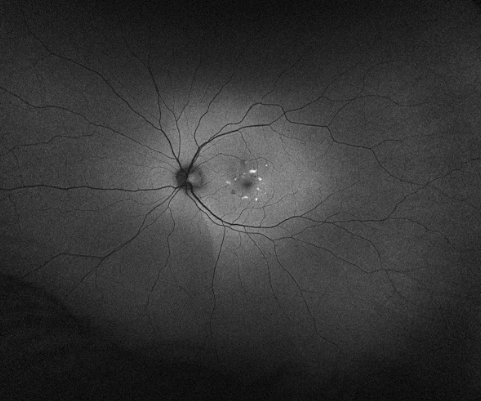
Two weeks ago I went to my eye doctor for that irritating annual appointment that they require if you want to wear contact lenses. They asked if I wanted to pay $40 for the picture of my retina. I don’t do that every year, but every so often it seems fine to check. The optometrist took a look at it, and showed me some pictures. She handed me a pamphlet for foods with lot of lutein and a preliminary diagnosis of macular degeneration and something else I didn’t even hear after I heard the words “macular degeneration” – which I knew to lead to incurable blindness. I managed to significantly fail an exam I’d never taken before. Good news though – my prescription hadn’t changed! I had no symptoms anything was wrong.
The white dots around the fovea are the area under question
One of the advantages of middle age is you’ve learned not to panic. I remember at 22 I found a lump in my breast and spent the time between diagnosis and follow up convinced that my life was too beautiful to be allowed to continue. I would leave my beloved groom a heartbroken widow at 25! I would never have children! I hadn’t been to all that many funerals, but the “Sleepless in Seattle” veiled funeral in a hilltop with a beautiful view and distraught mourners seemed about right. It was, my friends, happily just a weird lump.
Since then I’ve had a number of life-changing initial diagnosis that didn’t happen. I mean, just 18 months ago I wasn’t going to be able to hike again with degraded cartilage and too young for a knee replacement. That was actually an infestation of knee mice, easily solved with a scoping and I was back on the mountain not two weeks later.
Still, it’s an arresting thought that you might be going blind. I’ve always been imaginative and somewhat romantic, or dramatic. I’d look out the window while I worked and look at the blush of sunset over the trees where the hawk reposes and wonder how many more sunsets I would have. I looked at my paints and my papers and the unfinished paintings strewn across my desk. You’d think I’d be most grief stricken at giving up art, but instead I was DEEPLY grateful that I’d spent the last five years practicing LOOKING at things – really seeing the color of the snow, or the way light played through leaves, or the blueing of hills as they fade into the background. If I were going blind, that rich set of memories would be a consolation – to have known something better before you lose it forever is better than having taken it for granted.
And going blind sure sounded like it was an option.
I was not consoled when the ophthalmologist would see me in the next week. It’s not a great sign when the specialists are suddenly available. I went to see the owner of the practice, who had many decades of experience under his belt. He got still and sober when he saw my images. (Of course, we can never trust anyone else’s tests. For the second time in a week I got my eyes checked for glaucoma and dilated etc. etc.) He asked where I had grown up – which in my case is tropical Africa, home of mysterious diseases. No really, my birth country is where most of the really bizarre ones lately have come from. This was not a reassuring set of questions. He said he had no idea what it was (and he spent like 5 minutes trying to figure out the closest ICD10 code) but it seemed like an emergency and I needed to go see a retinal specialist ASAP. It was after 4, so they said they’d let me know the next day when the appointment would be. He affirmed that blindness was a real possible outcome here.
In good news, I didn’t have to wait long. In bad news, when a top specialist will see you tomorrow you don’t have what you might call warm fuzzy feelings.
I sat in the waiting room, the youngest person there by 20 years, not excluding the caretakers bringing tottering nonagenarians with rhuemy eyes, as my pupils grew larger and larger and my phone grew less and less visible. I couldn’t help but wonder if this was some preview of the gradual indistinction ahead of me. How do blind people distract themselves in waiting rooms? Audio books?
The retinal specialist had clearly once read a book on bedside manners, which he executed by rote. (The consensus in the waiting room was “he is fast” which is a lovely way to describe brusque.) But you don’t go to an expert because they make you feel good, you go because no one can figure out what’s happening to you, and they’ve seen hundreds of thousands of sick eyes and may know what they see.
Not to keep you in suspense, but the news is as good as it could be. He said, with brisk certainty, it’s Pattern Dystrophy. A genetic (not bizarre tropical) condition where the garbage removal system of the eyes doesn’t do all it’s supposed to and leaves mounds and caverns in the macula. The prognosis, he said, was good. Very very few people with this condition lose their sight and most are able to drive or read a newspaper their whole lives (or until they get something else). It definitely isn’t macular degeneration. He was, he said, comfortable leaving it there and just monitoring it. We could also do a formal diagnosis, and it turns out that The Dude Who Studies Genetic Retinal Diseases works at Mass Eye and Ear. So I’ll go do the formal thing and maybe enroll in a study. This is different than not having ANYTHING wrong with my eyes. I am now able to identify some … wobbles in my vision. Some of what I was figuring was just being that age is actually these deposits.
The only thing I need to do is to look at the Amsler Chart regularly to make sure no enterprising blood vessel decides to make a break for it through the thinner covering of my eye. This is the test I unexpectedly failed in the first appointment. Look at the dot in the middle of the grid one eye at a time. Do all of the lines stay straight? They don’t for me. There are wiggles in it. I was charmed when I first saw it. How do they do that optical illusion? But the illusion was actually the distortions in my macula.
The Amsler Grid
One of these days, I won’t be able to dodge the diagnosis. The lump will be cancer. The knee will be shot. The spots will be blindness. We all die of something, and we’re lucky in a world with good medical care (at least for now) which means many of us end up surviving things like cancer to go on and die of something else. But yesterday I watched the sun blush the snow-covered top of Nobility Hill and smiled to know I’d get to keep on watching that scene for years yet to come.
My in-laws spent their working years in Saudi Arabia, working for the Arab American Oil Company. Well, he did. She taught ballet to princesses, ran the high school musical, created works for art and visited the souk very regularly. When they came back to the states, the always generous benefits included moving the contents of their household. This is the only explanation that can exist for how an incredibly, incredibly carved wooden display case with thick glass doors came from swirling deserts sands to suburban New England.
The Iranian* Chest**
We call it the Iranian Chest. But, as was her wont, the card for the purchase has been kept with it. The address clearly shows the store was the “Arabic Palace of the 17th Century, in the middle of the Street called Straight, the largest oriental store. Damascus, Syria”. It’s origin is the street on which the Apostle Paul was baptized. So while the piece may well have been made in Iran well before the Revolution, that’s part is shrouded in mystery and history. It’s also not a chest. Miriam Webster defines a chest “a container for storage or shipping
especially : a box with a lid used especially for the safekeeping of belongings”. This piece of furniture is certainly not a box for shipping.
After six months of expense, irritation, dust, construction etc. our new room – the solarium – is ready for occupation. The furniture arrived on Saturday, and sits sort of awkwardly in a corner waiting to be lived in. I spent all yesterday visiting consignment stores trying to find inspiration for the right piece of furniture. (Why consignment? The color of the decade in furniture seems to be beige and I want this room to be rich in depth of color and pattern. So used furniture will suit my needs much better. Plus I like it.) I found this great side table, which I meant to take the place of the chest, for $60 with tax, but it’s too tall for a coffee table. So the quest continues.
The prior locale for the Iranian Chest.
From the beginning, we’d had plans from the beginning to make the awkward corner of this new room the home to the glassware and barware, mostly because the dimensions suited the Iranian Chest perfectly, which had previously lived slightly awkwardly in a corner of our living room.
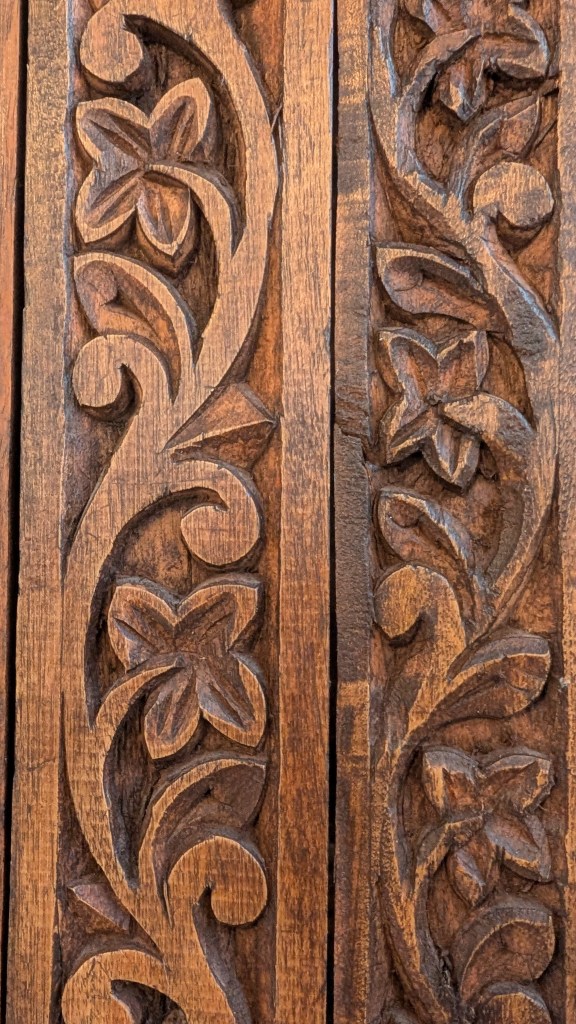
For the first time in the life of my children, I cleaned out the chest thoroughly, marveling and wondering at it. It’s an object that has real presence, and one that has forever been in my sons’ lives. I find it a bit of a contradiction. The entire front, with a clever double-hinged set of doors that allows it to open more than 90 degrees, is heavily carved with a rich floral pattern, hiding the second set of hinges. It has clawed feet raising it up off the floor. The top lip has a cresting wave of flowers creating a protective ridge for whatever is placed on top of it. But the actually wood, despite the excellent workmanship on the carving, is as rough as it had come out of the planer. There’s no attempt at sanding or polish. It’s richly stained, but you can see that the color of the underlying wood differs significantly. And in some spots – especially the wood keeping in the glass panes, it’s clear that the wood is either of poor quality or very, very old. Or both. I have no idea how old this chest is, other than “older than 25 years”.
Hand carved do you think?
The real terror of this piece of furniture, though, is the glass. It has two glass shelves and they terrify me. If you are older than 40, most of the glass you’ve dealt with is delicate, generous, light… safe. You missed the era of the true plate glass. The shelves are the better part of an inch thick. In one or two spots, they’ve chipped off and bend the light with a wicked carelessness. The edges of the shelves are sharp enough that they’d slice flesh easily. And if they were to shatter, the shards would be fearsome foes that might, like a serpent, bit hard in death. I confess to wanting to defang this furniture. I’d rather buy some tempered high weight bearing, non-fatal glass and have it cut to size and fear my furniture less. But that’s the kind of thing you’ll “do later” aka when you’re dead and your kids inherit your stuff and have to decide whether they want to keep it.
All filled up and cleaned.
I wonder how many years it will be before the Iranian Chest moves from this spot. Maybe we rethink the room and move it again. (Or not – it was VERY HEAVY and I don’t think we could have moved it without moving straps!). Maybe it is here when I leave this house for the last time, and my sons keep it where it stood. Maybe something else. As I refilled it with the accumulation of glasses (mostly sets which have at least one broken), it pleased me to take a moment to truly look at – truly think about – something so deeply as I got to with this object today. It’s the first accumulation of memories in this new room, kneeling on this warm tile and putting memories back into an old object from another land and time.
The next day….
Having quickly written up the mystery and the artifact, and gotten into the car to go visit my eldest at college on a day best spent indoors with hot cocoa, I figured I’d call my mother-in-law, and get the actual scoop. This serves, I think, as a useful example of how my mind and imagination work.
1) She’s never called it the Iranian Chest and had no idea what we’re talking about. Only my husband has ever called it that.
2) It was purchased at Desert Dreams in Dhahran Saudi Arabia. They would take old furnishings or carvings like doors or windows and repurpose them to modern use. So the reason it looks like two totally different styles of workmanship and wood is because it is in fact from at least two totally different eras. She says that the front doors were reclaimed from old windows. I wonder if the hinging was original or added? I’m guessing original.
3) The card in it came from ANOTHER purchase, most likely of a marquetry backgammon set we have hanging on the wall of our game, I mean, dining room. She remembered George immediately.
4) Aramco would seriously ship anything home. This display case was bought probably 40 years ago.
Last year, I decided three days before the start of the workshop that I wanted to be in Tucson, painting. My watercolors were not dry in the palette before I was on a plane to Arizona (and in point of fact I finally got the last of the gold-green explosion off getting ready for THIS year). But I’d fallen in love with Tanque Verde Ranch last year, and thoroughly enjoyed my first foray into urban sketching with Shari Blaukopf as part of the extremely well-run Madeline Island School of the Arts (MISE). So this November, as things started to darken, I figured that it would be the perfect time to spend a week with the only distraction from watercolors being the superb food dished out three times a day by the friendly and talented staff at the ranch.
In 2024, I’d been four weeks post-op from knee surgery, which somewhat reduced my hiking aspirations but not at all reduced my hiking longings. So this year I gave myself some extra time before and after to hit the iceless mountains of the Sonoran Desert. If I’m all praise for the actual workshop, I have nothing but calumny to pour on the heads of Payless Car Rentals – which kept me and dozens of others waiting for 3+ hours for the rental cars we’d reserved, or the Hilton resort I stayed at which sneeringly told me that if I wanted to charge the EV rental car which had been my only option I was welcome to spend several hours hanging out in the parking lot of town hall to do so… but I’d find no welcome in their facility.
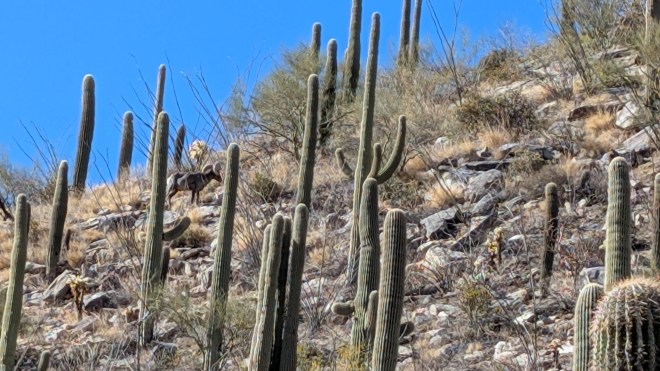
I still managed to get in a good hike, but these shenanigans probably took 3 miles off my intended course with their time suck. I digress. I had a great hike, and managed to see THREE big horn sheep which was really cool and also they are extremely hard to pick out.
It’s not AI, I just had the digital zoom cranked up all the way so you could see this bad boy.
My usual self is a lot of things to a lot of people: mother, wife, friend, daughter, employee, boss, mentor, board member, volunteer… the list is long. I love all these things and wouldn’t set them down. But the allure of going somewhere where no one knows me and I don’t have to live up to anyone’s expectations of me is strong. My mother has a hilarious schtick about her belief about going to college, and how she’d finally be the lay-dy (you should hear her say the words) she knew she was in her heart of hearts. I went in with the same idea. I’d be reserved. Quiet. A mysterious presence who spoke only with her brush and astonishingly beautiful selection of 37 colors (none of which was Prussian Blue, to the astonishment of all assembled). For once in my life I’d be quiet. Fade to the background. Unobtrusive.
As my mother discovered when she went to college and was still herself, I found myself not two days later (successfully) attempting to convey “Scheherazade” in charades with some of the world’s greatest color geniuses. Oh well.
Day 1: Into the fire
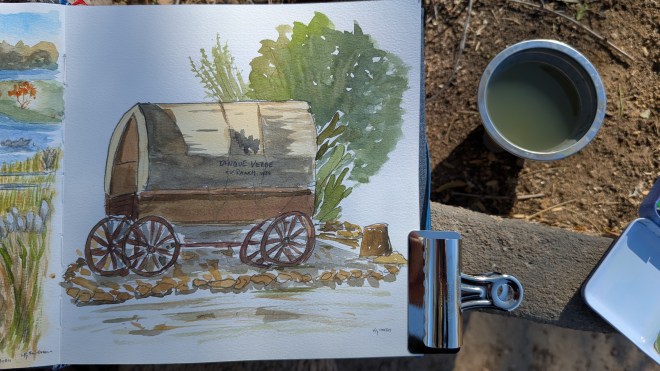
Little can strike terror into the heart of a bad drawer like wheels. Many of our bold number quailed when our first assignment was a covered wagon with an excess of spokes and shadows. There’s nothing like watching an expert wave a brush across a page and a brilliant, colorful, characterful painting just appears, and then tackling it yourself. This was a warmup effort – my shadows are particularly disappointing. But they can’t all be winners. Please notice how there are a bajillion spokes
There are more things wrong with this than are right with it. The shadow on the canvas is extra not great, and my foliage is a consistent weak point.
Day 2: Paints up! Days 1 & 2: A spread of cacti and a desert scene
Sure it looks easy to draw, but how do you do that fold on the right side?
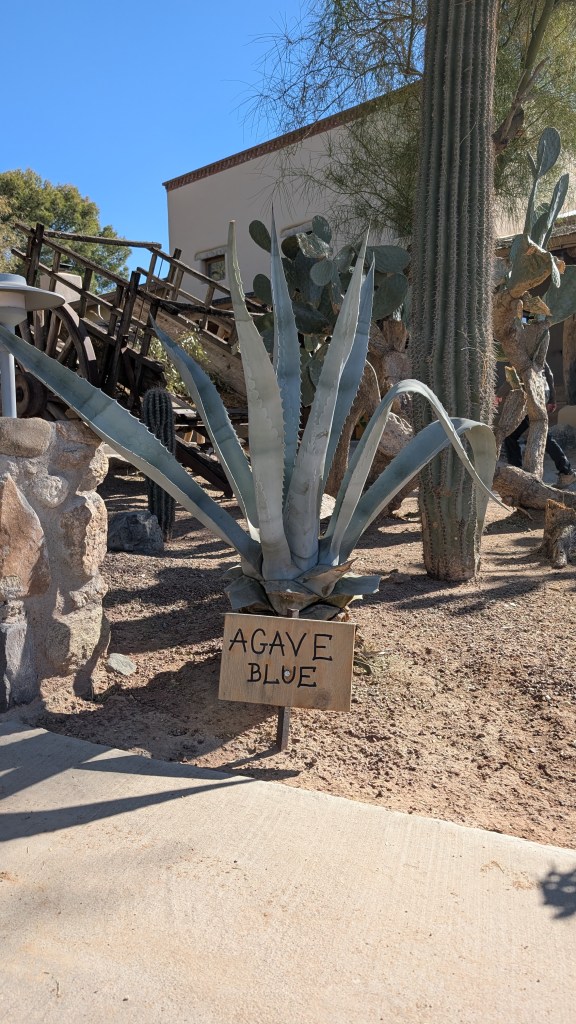
After I finished my wagon, I turned around and painted two of the cacti – one on either side of the walkway. I’d done some swatching ahead of time and had a brilliant idea for the color of the agave (which I was quite pleased with). Drawing the agave was haaaard. The barrel cactus might be one of my strongest paintings to that point. I keep finding myself looking at it. I didn’t fill all the space with paint (an error I’m particularly susceptible to), and left some glints to keep it interesting.
This was my second time painting nearly this exact desert scene (I’d tried last year too). Both of them were rather disappointing. I love love love mountains and want to paint them beautifully, but this scene didn’t convey the feeling I was going for.
Day 3: Tucson Botanical Gardens
You have no idea how exhausting painting can be. Also, it was _cold_ out there. There was ice that didn’t melt during the day, which is practically unprecedented in Tucson. I seriously questioned whether I shouldn’t just stay in the incredibly soft and cozy bed all day and maybe come out for a bit of a hike and call off the botanical garden. But I’m glad I didn’t.
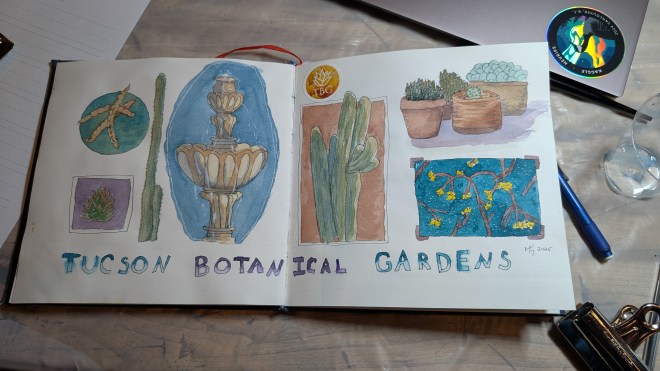
7 small paintings in one day
I was mostly pleased with this. The fountain was very difficult drawing for me. My ink drawings end up sort of cartoony like the fountain, and I think I need a new strategy. Or to embrace that as my style. I particularly like the cluster of pots in the top right – I was captivated by the real thing. The red cholla with the yellow blossoms on the teal background created a problem. Everyone likes it, but the value was all wrong for the rest of the vignettes. I tried to fix it with the lettering, but I’m not really sure I did.
I now want a shelf of these succulents and cacti in my house. I’m sure it would be just like this.My fellow sketchers are in many of my reference photos
Day 4: The Old Homestead
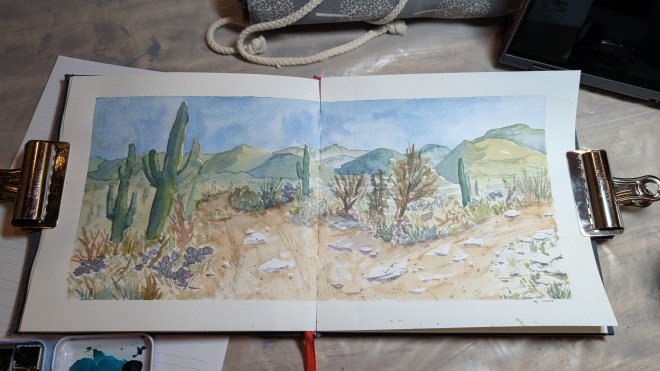
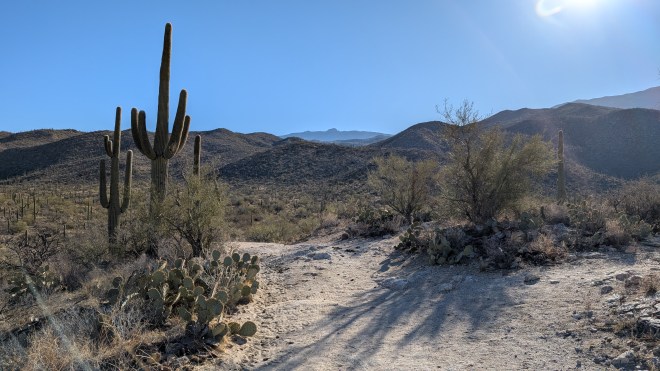
The old homestead on the top of the hill had been the spot of some of my more successful paintings last year, so this year I decided to skip it and take another crack at the disappointing panorama. I’m not saying this is my best painting ever. But … it very well might be. I’m half-sad it’s in a sketch book and I really can’t frame it or display it. It’s not perfect (my foliage continues to bedevil me) but the mountains are right. And I really GOT the rocks for the first time.
Now this one I’m very pleased withI think the trail is the key to my problem: I needed to lead the viewer INTO the picture instead of having this horizon barrier between you and the desert.
Day 5: Farewell to Tanque Verde
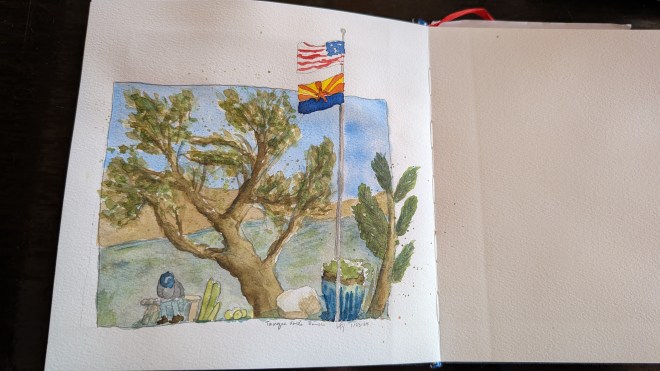
After a week of the subdued hues of the desert, my eye kept being caught by the bright colors of the US and Arizona flags. I decided to practice my foliage (definitely a work in progress), attempt a human figure (this guy ended up somehow being a figure in many of the classes paintings – maybe because he took a contrarian viewpoint?), and use some bright colors. It’s not a great painting – the values are too close, the tree on the right is weird. But reps count.
Those colors are still flying. I do really like the Arizona flag.I had to go back later and take another photo of the flags to get the colors right, but the second photo doesn’t have the figure
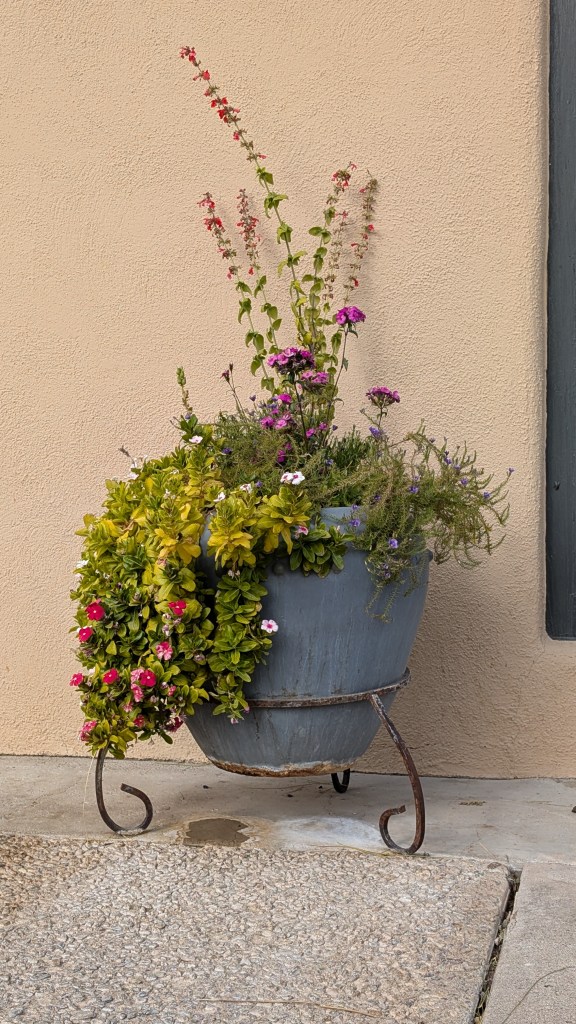
My last full painting of the class (I started a third one) is one that I don’t think I could have done at the beginning of the week. I’d admired this pot and its flowers all week (one of the fun things about a class like this is how much it sharpens your noticing muscles). I had finished my first painting and there was still time left, so I plopped down after lunch and did a super simple sketch and then just enjoyed non-desert colors. This is loose and fast and fun and I think you can feel that when you look at it. It shows a lot more fluency than I started the week with.
I mean, how can you be in a painting class and walk past this every day and not paint it?It’s not fussy. It was fast. And the shape and shadow are good. I’m especially proud of how … organic the edges of the painting are.
I would 100% recommend the teacher, class and location to anyone interested (if not the rental car company). I’m now ready to collapse into an exhausted heap (seriously how is painting that tiring). And tomorrow I’ve got a hike planned before I fly back to frigid New England on Sunday.
Just a quick reminder for folks that you can catch my shorter form work on Bluesky.
It can be a mistake to volunteer. For several years on my company’s paid volunteering day, I’ve opted to do invasive species removal. Mostly it gets me outside and is light and satisfying physical labor. But it has the nasty side effect of teaching me to clearly identify local invasive species. And every time I take a walk along the Greenway – particularly fertile ground for those – I just can’t stop noticing the invasives (as well as the noxious and edible plants I’ve trained myself to notice). In October, in a burst of civic enthusiasm, I noted a Keep Stoneham Beautiful meeting, figured I had two hours to spare, quickly snapped a picture and description of the plants in question (easy to do since that particular narrative runs through my head every walk), and tossed it like a glitter bomb in their unsuspecting open meeting.
Showing my sources – although missing the book I use most
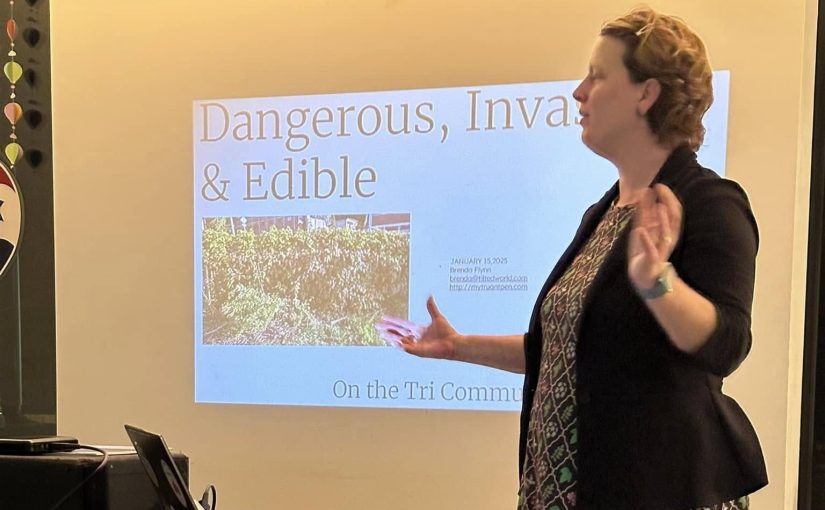
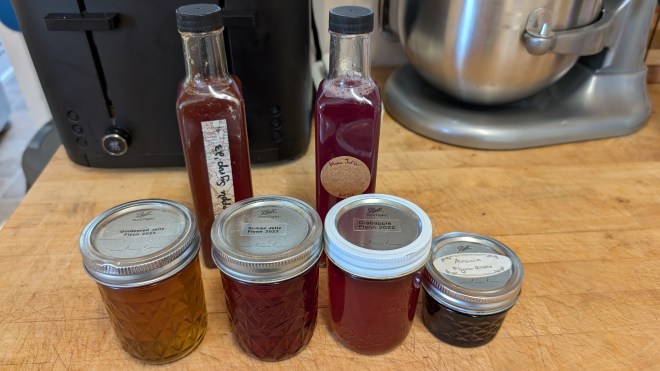
They were EXTREMELY gracious about it. And then, in a move I really should have anticipated, they then wanted me to DO something about it. We settled on a community education talk. So this last week, I added baking some homemade bread into a busy work day (I admit it’s somehow a jarring role shift to go between the highest high tech and baking bread back to back). And then I brought my slides, several books, two syrups I use for flavoring seltzer, three loaves of warm bread and four jams to the Common House in Stoneham. It ended up being a packed house. It’s a small space, so packed was probably only 20 people, but we had a lively discussion with a lot more talking about goats than you might expect. (Renting goats probably our only non-herbicidal solution to the poison ivy problem.)
My presentation really focuses on an extremely small section of trail. It’s probably 2/10ths of a mile. Everyone in the crowd knew exactly what I meant when I said things like “it’s where the Montvale Plaza used to be” or “it’s on the downhill side near the Y”. It can be easy to forget how, in a physical community, we have this shared context of places we (mostly) all know. It allowed this conversation to be incredibly specific, in a deeply satisfying way. It wasn’t about invasive species in general: it was about that stand of knotweed right where the new housing is going up, but on the other side of the trail.
I had a really fun time. I loved watching people try out my jellies. People especially enjoyed the chokecherry (aronia) and crabapple. The sumac was good but wasn’t anyone’s favorite. And only a few holdouts though that the goldenrod jelly was enjoyable to eat (although heaven knows it’s a complex flavor). I foreshadowed the coming of the pawpaws. And the bread was very popular!
All of this is locally sourced and much of this was foraged. I did plant the aronia, and the plums are from my farm share.
One of the things I like about this kind of community work is that it is something we can DO. Most of my suggestions don’t require approval or collaboration or fundraising or even other people. Or if so – only small groups are really needed. It shouldn’t be a divisive issue to find a way to get rid of the poison ivy where our kids play. Sometimes, there’s so much in the world I feel like I can’t fix, that I have to remind myself to ask the question what CAN I do? And this is something I can do.
Next on the schedule: walks of the area this spring, with narration! And maybe goats.