

I’ve always loved the idea of gardening. I was deeply influenced by the books available to me as a girl, and one of my spring favorites was “The Secret Garden” by Francis Hodgson Burnett, which spoke of the healing power of green and growing things, friendship, gardens, sunshine and good food. Many of my views of the world have shifted since I was a 9 year old in a farming town in Eastern Washington, but I still hold the virtue of those things.
As a side note, I think the current generation (and my more urban colleagues) just do NOT understand what it was to be book constrained. I’d read out the school library within weeks – at least of books interesting to me. The library in our town had a librarian deeply suspicious that we could possibly be reading what we were checking out, and wasn’t that much bigger anyway. We used to drive once or twice a month for an hour to go to the “big city” (editor’s note: NOT a big city) to go to their library. My sister adjusted by vastly expanding the realm of what she was interested in. I, on the other hand, read the same books over and over and over again.
Anyway. Love of gardening, right there with my love of survival (My Side of the Mountain) and love of native culture (Naya Nuki: Girl Who Ran). But alas, I am no gardener. Not least because I’ve spent the last 20 years with a farmshare, and the LAST thing I needed was more zucchini. But the urge. The urge is still there.
We are in the Zeno’s Paradox stage of our year long home renovation project, where we’ve been a week away from done for a month or two now. (Stupid rain. Can’t paint when it’s raining.) But I finally decided that a garden couldn’t wait on trivialities like whether we had gutters installed. I did mostly wait for them to lay our new walkway (due to the excavating). But my plan was to replace what had been a front yard with a front garden.
We lost quite a bit of the front growable area due to doubling the size of the room that was our front porch and is now our solarium and balcony. It was already postage stamped sized, and mowing it took more effort to lug the mower from the back yard than to actually push it around. Resodding seemed like a mistake for such a small area. But it’s quite shaded, and a little hilly. And there are gas lines, sight lines, sewer lines and a brand new Cultek rainwater system to think of. I decided on three governing principles:
1) Shade
No pretending it’s full sun. It’s not full sun. Parts of it are a lot closer to full shade. Don’t even try to tell me that the 30 minutes of direct sun it gets between May and September on sunny days = full sun.
2) Edible
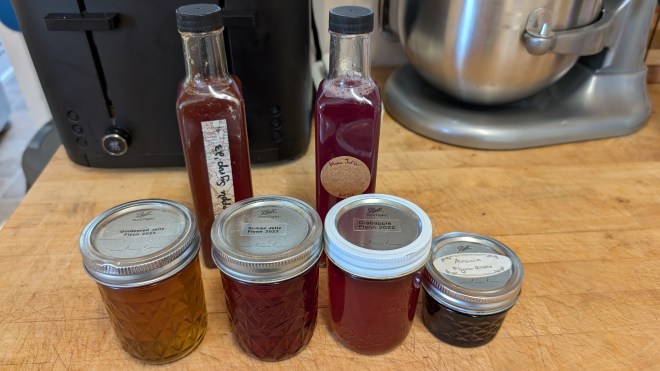
I am not doing the farm share this year. So my tolerance for a harvest is higher than it’s ever been. In fact, I don’t quite know what to do with myself if I don’t have an excess of some sort of produce. I’ve been thinking about my favorite parts of the process. I love making jam, which there are plenty of stuff that suits itself to jam. Making pies likewise is vastly appealing. But I’ll add to the the list syrups, which I like to add to seltzer water in lieu of a soda. And also the fruity toppings for cheesecakes. So things like serviceberry, aronia (chokecherry), or rhubarb. I’ll have a few things to do with them.
3) Native. At least ish.
I’m on a quest to eliminate invasives. But also, there’s an entire lexicon of American native fruits and vegetables we don’t eat. Not because they aren’t tasty, but because our colonial forebears preferred their familiar versions. Johnny Appleseed walked across our country spreading (cider) apples, but pushed aside the pawpaws that had been eaten in those places for millenia.
And then of course, there’s beautiful. Sometimes a girl just needs some peonies.
I spent the winter poring through seed and plant catalogs, making purchases that would come as a complete surprise to me several months later when they finally shipped. And then I discovered that Mahoney’s Garden Center had all those obscure natives and some I had not dared to imagine would be purchasable, that were only on my foraging list.


Here’s a quick rundown of what I put in my garden, so far. Let’s see what survives.
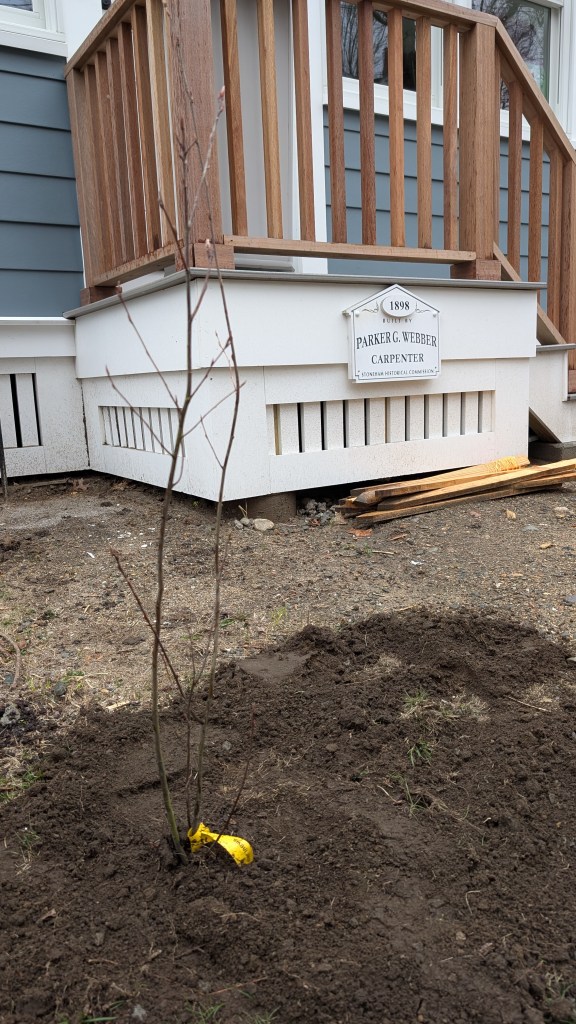
Shadblow Serviceberry Shade, edible, native
I only get one tree in this space, and I’ve dedicated my one and only shot to the serviceberry. The serviceberry (or Saskatoon or Juneberry) is both edible and delicious, with a rich heritage. If you don’t bother picking it, the birds will do it for you. It’s a favorite. It’s also a beautiful tree in blossom and in fruit. It doesn’t get too large (12-14′), and has beautiful flowers. I mean, I already have three pawpaws in back. I could stand more variety. I’ve, of course, never HAD serviceberry, so hopefully I like it! It will likely be several years before I see anything.
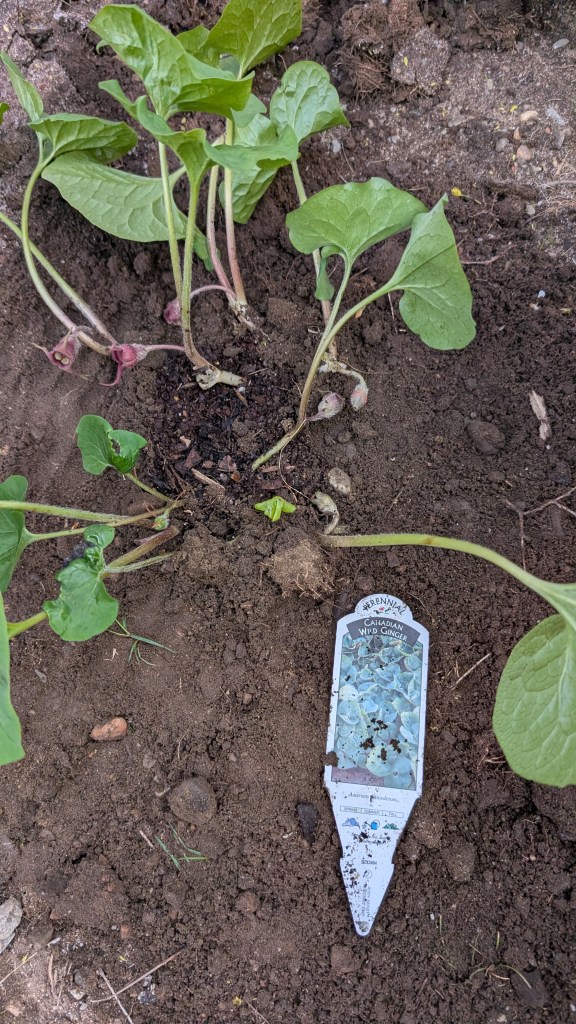
Canadian Ginger Shade, edible, native
I was SO EXCITED when I saw this at the garden store. I hadn’t even thought to have it on my list. But it is a shade lover, ground cover with a strong edible contingent and really weird, cool flowers. I’ve been thrilled at how it immediately bounced back from transplant and got right on the growing business. I’m not sure how much actual ginger I’ll get from my little garden, but it’s the possibility that matters, right?
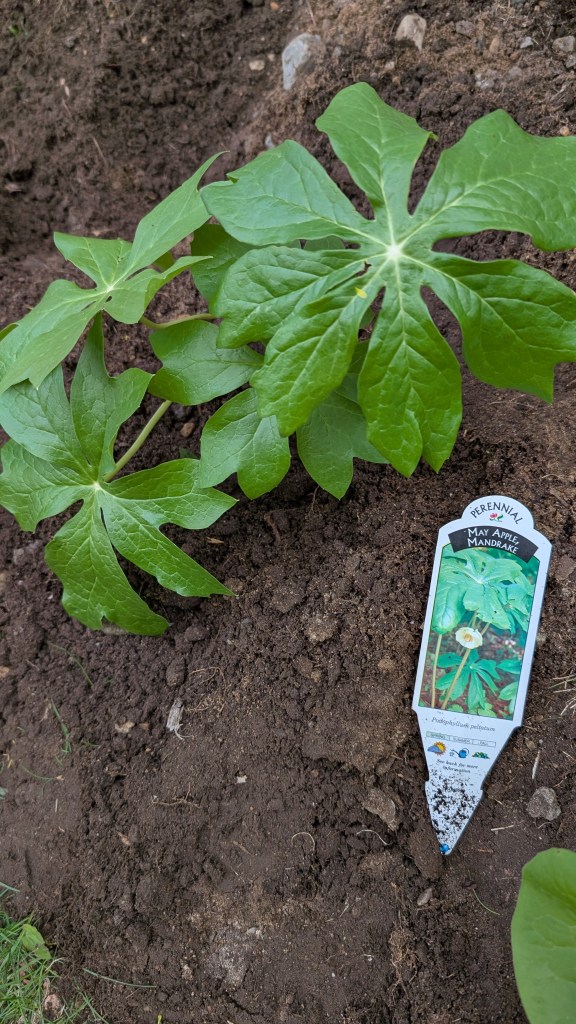
Mayapple Shade, edible, native
This one has been on my “want to forage” list for a long time. I’ve found it twice – but neither time has the fruit been ripe. I love the cool shape of the leaves, and I had no idea it was possible to purchase for a garden. This one is having a harder time acclimating (I actually think it’s getting too much sun, which will improve when the serviceberry is less stick-like). I doubt I’ll get any fruit this year, but it will be a lot easier for me to get the timing right when it’s literally out my front door. I went from excited to unreasonably-excited-for-an-adult when I learned it was a MANDRAKE. I mean, share some awesome with other plants, mayapple.
Rhubarb Edible
I really don’t like hostas. But they play an important role in the garden, where that role is “relatively low mounding green thing that doesn’t get in the way of the pretty plants”. But when I was pondering whether the local farmer’s market would open in time to get rhubarb this year (it’s often almost over before they’re open) it occurred to me that I could fill the ecological garden niche of hosta with a plant I liked a lot better. Plus, it’s ready for preserving before I get overwhelmed in fall! But it’s an Asian native, and needs close to full sun. Grey loves eating raw rhubarb.

Native flowers
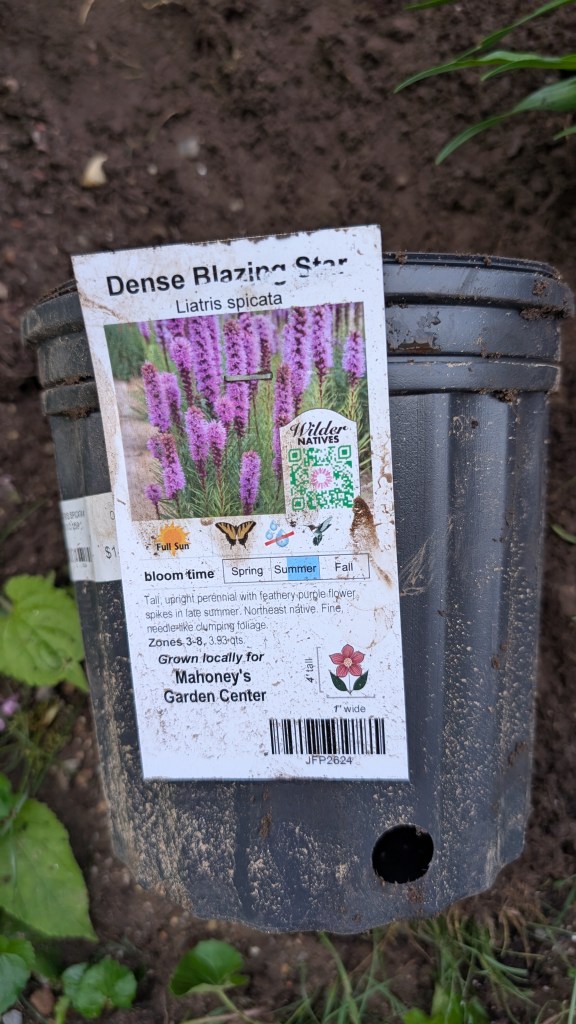
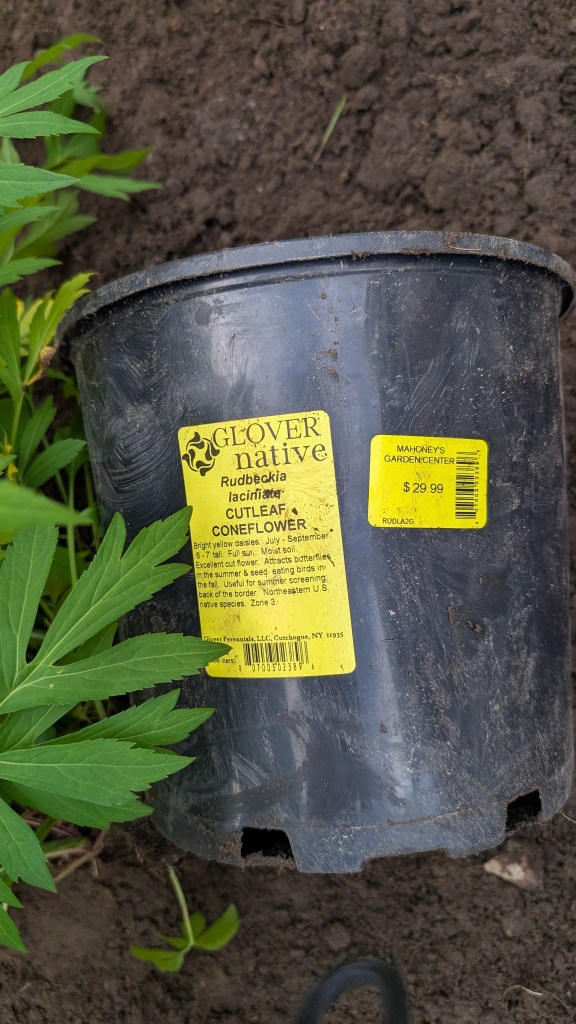
There’s variation in JUST how much thinking I did. Some of these I thought about a lot. Some were like thinking of a perfect friend for a job. But I also went to Mahoney’s and just bought some native local flowers that looked cool. On that list I have Blazing Star (which I’m not sure I’ve ever even seen), Stonecrop which I had before and is never without bees, Shasta daisies with their long bloom, and a monumental cutleaf coneflower which I might not have read carefully enough gets 6-7′ tall. I planted that in front of the hose. We’ll find out which are friends, which are foes, and which doe well in their roles.

Just Pretty
I managed to rescue our bleeding heart from before construction. I think it got dug up and replanted three times. But while not going gangbusters, it survived! Also, well, you have to be pretty hard-hearted to create a garden and make no room for peonies. I planted creeping phlox all around the edge of the garden.
Strawberries & lupine
Over on the other side is my “kitchen garden”. Lupine doesn’t really count as native since I got a copyrighted cultivar (that was before I had my rhubarb revelation or things might have gone differently). But I have such fond memories of the alpine lupine on Mt. Rainier, and it’s taller brethren in my Washington home. I had another stroke of brilliance that surrounding the lupine with five different varieties of strawberry, for a summer where there will always be a mouthful, and to find out what does well in my spot.

Walkway
Around the beautiful stones carefully laid down by my handsome husband, I planted four varieties of creeping thyme. The thought is that when mature, each step home will release a rich fragrance. They can handle light traffic. And it will help prevent erosion, right?
Kitchen garden
Abandoning all thoughts of natives, my herb-centric kitchen garden includes: two kinds of basil, chives, garlic chives, parsley, mint contained in a pot, celery (I’m curious), dill, rosemary, arugula and an actual planting of thyme for culinary purposes (although you can use the creeping thyme). I would plant cilantro but man that always bolts SO FAST!
And now I’m at the phase where every day, sometimes twice I day, I’m staring at the new leaves on my serviceberry, or pondering if my new peony just grew another inch. Is my mayapple acclimating? Are there any hidden strawberry blossoms? It’s such a glorious and hopeful waiting, the new garden. And in a month or so, after the 4th, I’ll go again to Mahoneys and come home with more summer treasures for my waiting garden.






 My Truant Pen