
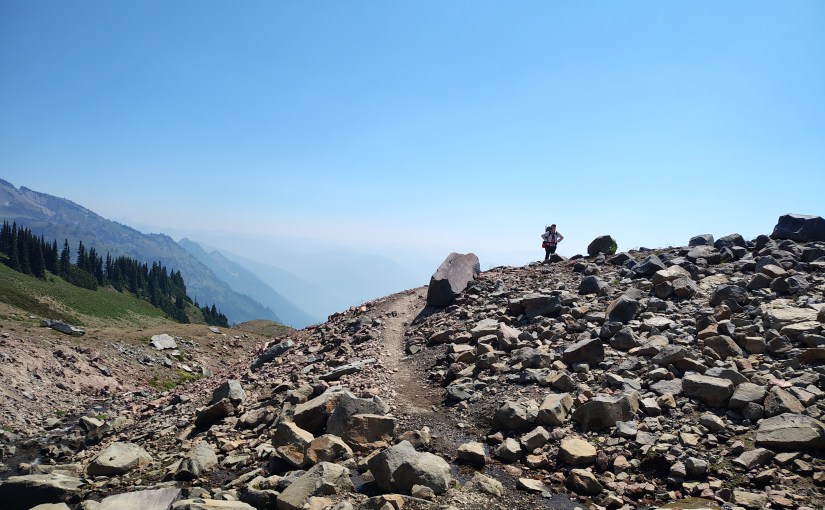
I’m an avid hiker – loving nothing more than to follow my legs to a place you can’t get to any other way and stand overlooking vistas you can only achieve with effort. Over the years, I’ve gotten a lot of comments and concerns about hiking. Is it safe to hike alone? What about bears? Did I hear about that person who died in the White Mountains last week? We spend a lot of time thinking about the risks of this hobby. I’ve taken Wilderness First Aid. We go out prepared with the ten essentials – and another 20 more “super usefuls”. We carefully review the weather, have at least two maps of the trail (and one in our head) and generally do everything we can to mitigate the risks of tackling remote, ankle-breaking trails for fun. Every time I go hiking, I take a big risk.
But one of the things I think a lot about is the difference between a big, active risk you take, and the kinds of risks that exist without a decision. If I don’t go hiking – what are the risks of NOT hiking? According to a 2018 study, “Overall, 8.3% of deaths were attributed to inadequate levels of physical activity.” [https://www.cdc.gov/Pcd/issues/2018/17_0354.htm]. A lifetime of not hiking, or not running on roads where you might get attacked, or not riding bikes where you might get hit by a car leads to a situation where you might instead die of heart disease, diabetes or the other curses of the inactive body.
Going outside and getting exercise are two absolutely proven mental health interventions. Sunshine, nature and exercise (which I get on those trails) have measurable positive impacts on mental health. “3% of deaths, equating to around 8 million annually, are attributable to mental health conditions.” [https://themaplesrehab.com/how-many-people-died-as-a-result-of-mental-illness.html]. So that trip to the mountains instead of staying home doomscrolling also reduces mental health related risks.
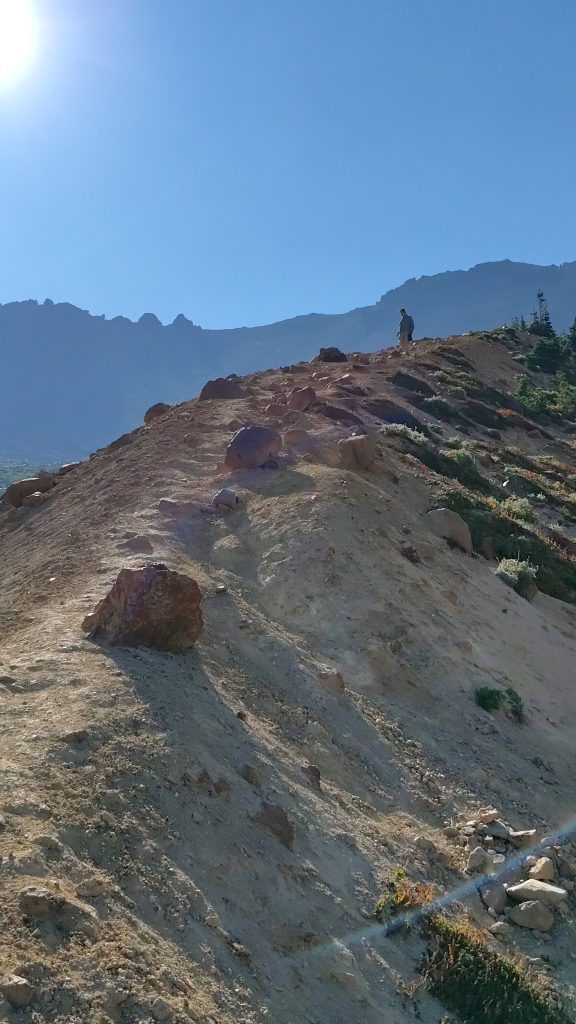
You might argue that a lot of these benefits could be obtained by going for a run around a nice, safe track without the risks. But there are aspects to the very risks of the rocky trails that also create protections. If you’ve ever scrambled up a rocky slope for a few hours, you feel it in the tiny little muscles in your ankles and feet – the little stabilizers that never get called upon on a flat road. Your balance gets better. You become more resilient to uneven terrain. Given that falls are a top injurer and killer of older folks [https://www.cdc.gov/falls/data-research/index.html] and hiking can help you stay steady-footed later, it seems clear that the upsides might outweigh the downsides.
Do people die hiking? Absolutely. But far fewer than a thousand people a year [https://imalive.co/data/hiking-fatality-statistics]. When someone does die that way, it makes the news. It doesn’t make the news when someone dies of congestive heart failure, alcohol poisoning, or the effects of a fall on a sidewalk. Put another way: hiking is safer for you than NOT hiking.
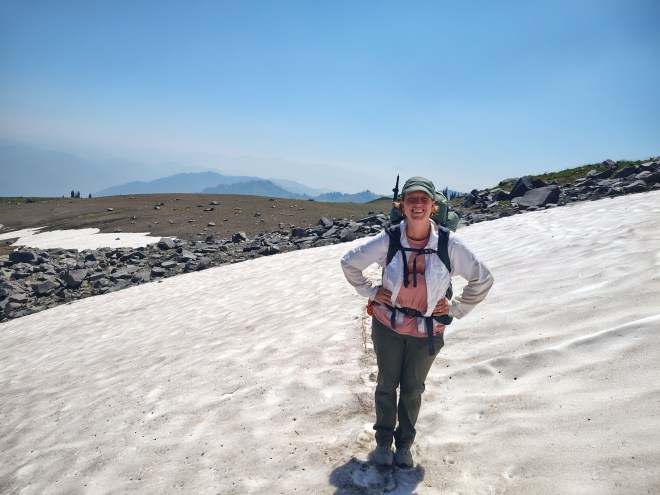
We don’t look at risks that way though. We look at the things you DO as creating a risk, not the things you don’t do. I worked at a place that had a risk log where decisions were written down with who accepted the risk of them. Did you update some software? Into the risk log. Adopt a new technology? Open a new facility? Take on a new kind of project? Risk log for you. But no one writes down “we didn’t innovate today” in the risk log or “we didn’t kick off a project to update our authentication system” or “we aren’t listening to our customers well” in the risk log. Action has an owner who takes responsibility. Inaction belongs to everyone and no one.
So I’ve started to think hard and long about the risks of NOT doing something, in both my personal and work life. What is the risk of NOT going for a promotion, taking on a big project, or looking for a better-fitting role? I thought about this a lot in the context of leaving Google. I’d been there 11 years. I knew how things worked. I had friends and habits and I had been continually employed there for over a decade. Of course it would be “safer” in this really tough economy to just stay there and hunker down, right? The counterpoint was the steady erosion by layoff that is endemic across the high tech industry. It felt like a week didn’t go by without some layoff, some friend gone, some email suddenly bouncing back. The frenetic pace of project changes made it feel like a huge game of musical chairs. So far I’d always been in a seat when the music stopped playing – but I couldn’t guarantee my luck there would hold. There was always the chance I’d wake up some morning to an email letting me know it was my turn.
I truly believe that it was safer – for my long term and short term career – to find a company whose mission and leadership I’m really excited about. It’s safer to work for a company that not only needs me, it KNOWS it needs me, as opposed to the anonymity of a role inside a behemoth. The freshness of the new business and expanded role help invigorate me for the next chapter in my career.
How much do you think about the risks of “not”? When you’re contemplating something that feels dangerous – either a perilous mountain trail or career change – how much time to you spend imagining what the risks are if you don’t change anything?


I absolutely love the analogy of these choices!
LikeLike
I do think about this, a lot, though I tend to think in terms of regret rather than risk. People tend to regret the things they don’t attempt, rather than the things they do. And in some ways regret is the only real risk — an injury, a delay, or embarrassment without regret is just a good story! An on-paper victory with regret is just… hollow. Either way one thinks of it, it’s usually best to get out there and make the attempt at whatever it is.
LikeLike