Ten and a half years later

This year marks my decade on a number of milestones. I’ve now been married ten years and change. And it’s been a few months longer than that since I graduated from Connecticut College with a Double Major in English and Medieval Studies. It’s brought to mind because this month marks the very final time that Sallie Mae is authorized to take a chunk of change out of my checking account. It’s funny, that a form letter with a strongly serif font, printed in black and white, actually inspired a number of emotions in me.

First and foremost of course, is satisfaction. It’s nice to finish things. To finish paying off a debt, that’s extra nice. And then there’s the fact that I get a little bit more money now. (Not that much more. Thanks to good stewardship in the pre-kid era, I’d prepayed a significant amount of the loan and halved the payment from what it was originally.) And finally, I confess, I have a little chagrin that I’ve never gone back to school – not for even the smallest class. I vacillate between being slightly embarrassed by my lack of graduate degree and going through the logic again that shows it’s a sensible decision for me. In many programming careers, work experience is more valuable that education. Education is how you break in, but once you’re in it doesn’t matter as much.

I got to thinking, though, about what I’d gotten for that debt incurred. In serious retrospect, I think it was a superb investment in all the ways that matter. From a career investment point of view, I have no complaints about the career I’ve had so far, or about the opportunities for advancement that I have. In a surprising turn of events (another post for another day) I’ve even started to use some of those hard-won analysis and writing skills!

But those four years in college gave me some of the most important things in my life. For starters, and in the obvious camp, I met my husband there. That relationship has been the foundation on which so much of the rest of my life (and my joy!) has been built. I made many of the friends who still roll around for Mocksgiving and Piemas. Connecticut College gave me “Make We Joy” and Chaucer (at the same time – I’ve associated Chaucer with Christmas ever since). I wandered its hallowed greens under the faint luminescence of the Hale-Bopp comet, freezing time to memory. I read American Literature basking in the sun on the roof of Smith, becoming increasingly dismayed that Robert Service was completely unrepresented! I discovered that a hatred of science and mathematics was not actually inevitable for the literary-minded. I worshiped in a small, meaningful service on Wednesday nights with the faithful few. I learned how to write. I learned how to read. I learned that grilled bagels are way better than toasted bagels and had lobster for the first time ever.

In retrospect, my college experience lived up to the billing, and I’d likely be one of those nostalgic alumni who wandered through the gray-stoned campus stopping to tell sophomores to enjoy it because it’s the best four years of your life! … if I didn’t remember how alien and obnoxious those interlopers are to the currently-being-educated.

Staring at that last bill, I am completely satisfied with the investment I (and my parents) made and would decline to return the product, even if that was offered. I only wish my car loan and mortgage carried the same sense of satisfaction!
Thoughts on Mocksgiving morning

This is my 11th Mocksgiving morning. I’ve been thinking lately about how the age I’m entering is the height of power and responsibility, and I feel it this Mocksgiving. An endeaver that seemed unutterably grownup — a usurpation of maturity back when I first did it — now seems comfortable. It’s so much easier, this feeding of the five thousand (ok 30), now than it was 8 or 9 years ago. I know the questions — that’s the hardest part. And now I even know the answers.

As I cook, I think. I think of you. I think of what I want to tell you, so often, while I stand at the sink and gaze out at the autumn leaves falling like first snowflakes. Here are some of my thoughts this morning.


  • I wonder very much what this looks like to my sons. This holiday includes them, but it is not for them. How few holidays we have that do not revolve around “the children”. This is one. I wonder if Grey watches from the corners of the rooms, what he makes of the trope conversations that have been continued year to year since the year his parents were first married. I wonder if when they grow older, they’ll feel proud (or resentful?) that they don’t have a “normal” Thanksgiving, but rather this jubilant, crowded celebration of friendship and food?
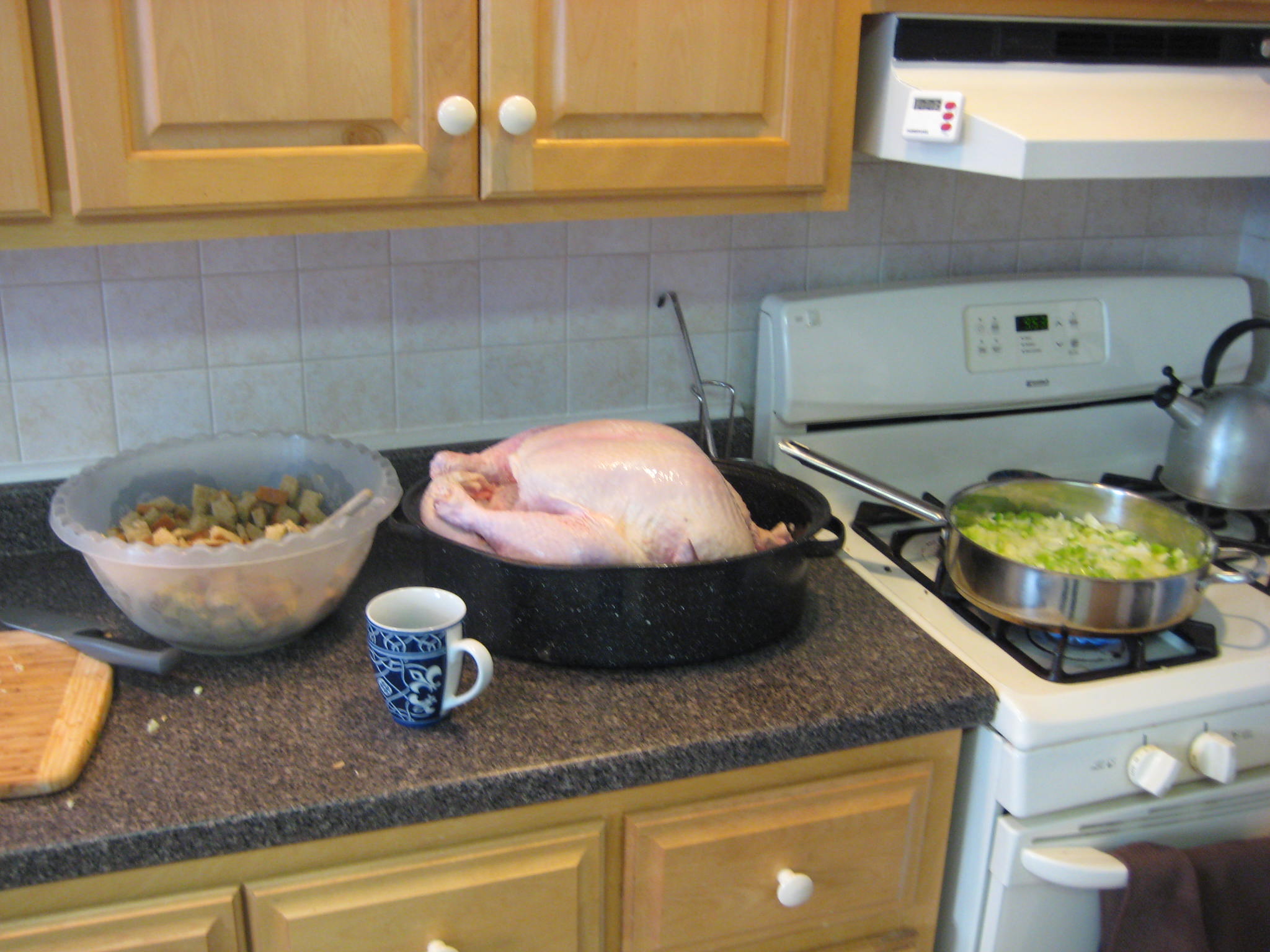
  • This was my easiest turkey in years. Usually I end up hacking out the gizzards with tears, numb fingers and great persistence. This turkey was actually (gasp!) THAWED. I’m not sure that’s ever happened to me before, even when I managed to find a fresh 20 pound turkey two weeks before Thanksgiving.
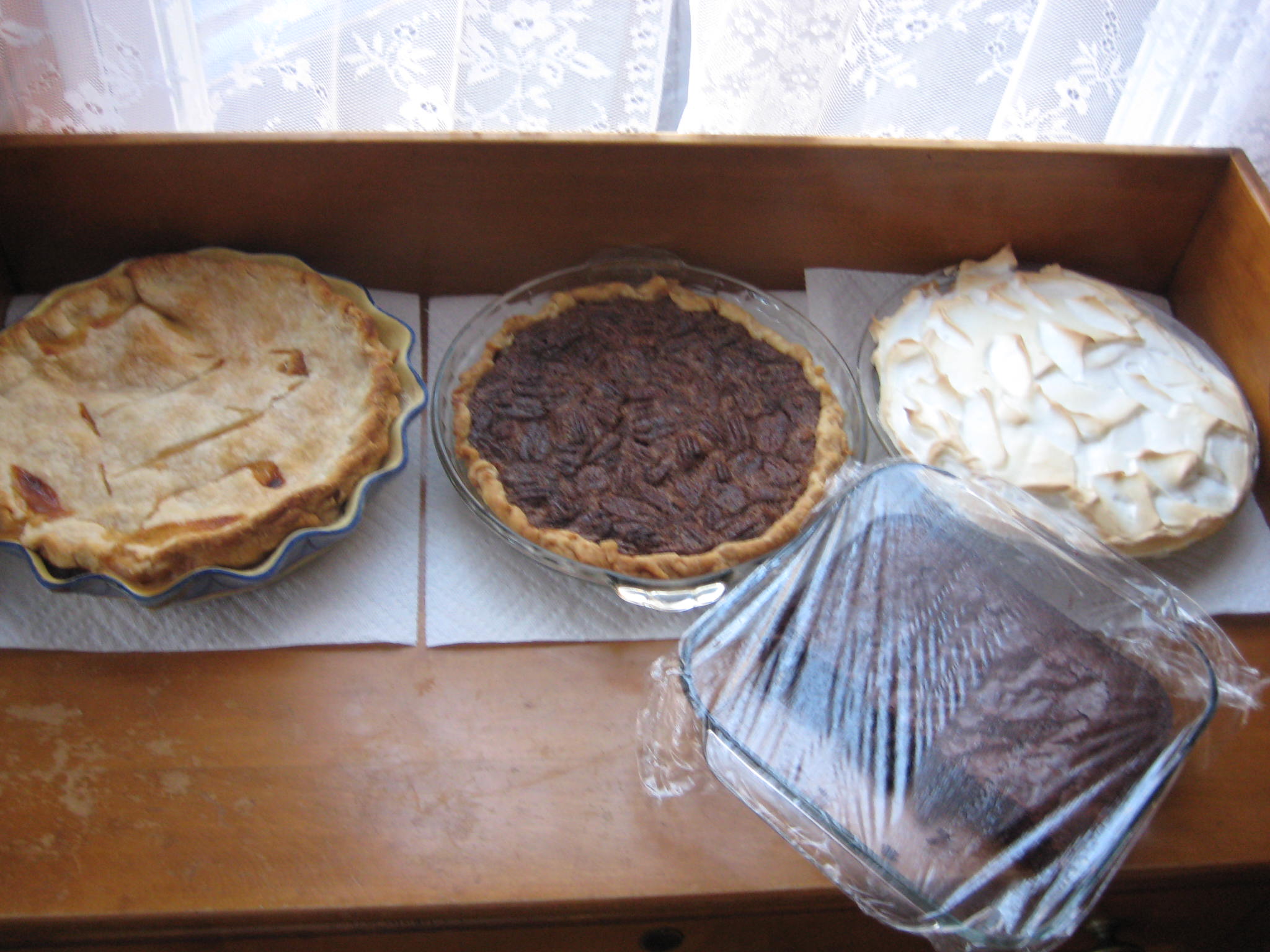
  • I only made 3 pies this year. I didn’t make apple because no one ever eats it. I’m feeling anxious. What if people aren’t rolled out of here? I have a backup recipe in case I actually have time. What are the odds?
    Getting ready to stuff the turkey

  • My friend Corey is up for nomination to sainthood. He’s playing with Thane in Thane’s room — dealing with the barrage of “I need help!” that defines current interactions with my scion. The hardest part of Mocksgiving for me is taking care of the kids.
  • I’m a comfort cook. I make the same turkey and same stuffing every year. I make my mom’s recipes for lemon merangue pie, bread, stuffing. I innovate rarely. I sometimes feel… embarrassed? that I’m not a more ambitious cook. But on the other hand, it is who I am, and perhaps I should embrace it.
    Farmshare peach, pecan & lemon merangue (plus brownies)

  • I think a lot at Mocksgiving about Hospitality. You might not know it from the headlines about Christians, but Hospitality is a fundamental Christian virtue. I only practice pagan hospitality — the welcoming of friends. Christian Hospitality is the welcoming of strangers, of enemies even. But you must begin at the beginning of hospitality, and practice until you become good at it. Our culture does not support Christian Hospitality. It is hard to welcome the unwashed and unwanted into the fullness of your home with your beautiful babies and good china. But I think of it this day. There is also, to me, a holiness to the welcome of guests into my home. I find it profound, meaningful. When you cross my threshold, you are more welcome than you know, friends. It is one of the things I was truly called to do.
  • This call to welcome is perhaps why the one thing I don’t like about Mocksgiving is that I can’t invite everyone. This galls me. Trust me, if you wish you’d gotten an invite and you didn’t — I wish you had too. But every solution takes something fundamental from the venture. It must be my home. We must sit together. The 25 to 30 who come every year are the capacity of my house.
  • It’s a bright, sunny, warm Mocksgiving today. I love those, because the boundaries of the house bulge, and on warm days we can overspill to the yard or porch.
  • The first of my guests have already come (the aforementioned Sainted Corey). For years and years I always had this anxiety “What if no one came?”. I no longer suffer than one, to the same degree. But some of the stalwarts are not able to be here, and I wonder who will appear first at my door.
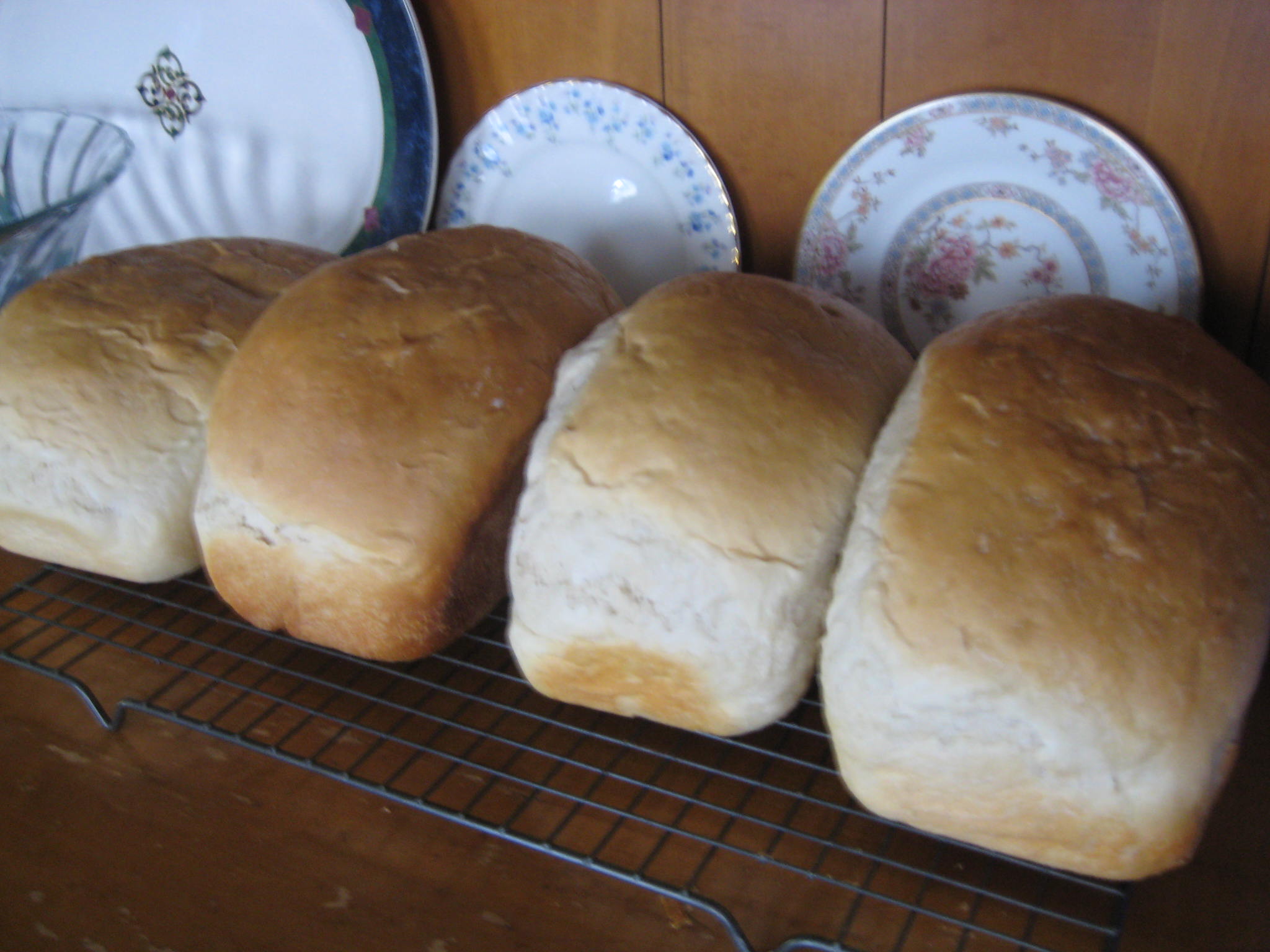
    My mother's bread recipe. We also have a loaf of Adam's bread.

  • Of course, the tragedy of Mocskgiving is that I have no time to talk in depth with the rooms full of people I love. Irony!

    (Note: if opportunity and thoughts strike, I’ll continue adding pictures and thoughts to this post until the party starts.)

  • Helicopter Parenting – take 2

    I’ve thought of two other things I wanted to say about helicopter parenting. This is the blogger version of thinking about a witty retort two hours after you need it — you come up with your points two hours after you’ve clicked “Publish”.

    (Note: if you will be seriously distressed by hearing about bad things happening to kids, you might want to skip this post.)

    So previously I discussed the role that risk analysis, concerned onlookers and the media play in the creation of parental hovering. Another element is a lack of expiration dates on recommendations. For example, we ALL know that you should NEVER leave a child in the bath tub unattended, right? There are about a gagillion places you will be told this as a parent. It’s in all the books, the pamphlets you take home, the top ten lists of things you must do as a new parent. Here’s a sample of the kind of text you’ll read several times as a new parent, “Leaving your child alone while they are in the bath, even for a minute, is just begging for an injury to happen. It is never a good idea. It never will be. If the phone rings, let it. Do not leave your child alone to answer the phone. No phone call is more important that your child’s well being. If someone knocks at the door, let him or her. Again, no visitor is more important that your child’s safety.”

    This example goes on for seven more paragraphs. Another page I found includes gruesome examples. Of course, this is all true. Bath tubs are not a safe place for anyone (grownups included). A small child could have a bad outcome. This is important and true.

    The catch is that no where in all these breathless warning is there an expiration age for this advice. They talk about “your child”. Well, just how old should my kid be to be allowed privacy in the bathroom? Is Grey old enough? The biggest risk to leaving him unattended in the bathtub is much more likely the state of the bathroom floor if he’s not constantly reminded about splashing rules. Ok, so you say five is too young, perhaps. What about 7? 10? 13? 16? 19? Obviously there’s some age by which your child is old enough to be left alone in the bathroom, and you’re totally creepy for supervising. But I’m pretty sure that in all the articles on the core requirements of parenting that I’ve read, that age was never mentioned.

    I can truly understand why some parents would continue doing things like supervise bath time, even when it is no longer needed or appropriate. I mean, just reading some of the warnings about bad things that have happened in baths is very convincing to me, even with this thesis as my starting point. So the risk of bad things makes you continue your constant and tiring vigilance. But it’s so hard to see the other side of that risk. I’m pretty sure that my 5 year old doesn’t feel suffocated by my supervision. He also hates to ever be in a room alone. Is that because I’ve never let him be in a room alone? Am I teaching him fear? Passiveness? Some of those traits of the helicoptered children? It’s hard to know what the most appropriate thing is to do, even in this one small example.

    It would be awfully nice if some of this advice came with an end date — preferably one prior to your child getting their driver’s license.

    My second thought on protecting children came in traffic the other day. Our area has significant immigration. In the town I go to church in, much of that is from Africa. There are plenty of kids born and raised on the Continent who have come here quite recently. As I sat at a light, I saw two boys, pretty clearly recent African immigrants, bicycling quickly down the road wearing no helmets. Now, as that other post shows I have very strong opinions about the importance of bike helmets. So I mentally shouted at the kids (as I so often do) to WEAR A HELMET ALREADY.

    Then my sub-processor noticed that the story on NPR was about the Lord’s Resistance Army (for the strong of stomach only). I imagined being a mother who had left the Congo or Sierra Leone or the Niger Delta with my children to end up in this cold, idyllic New England Town. I imagine heaving a huge sigh of relief. They were safe. The fate that had befallen their brothers, cousins, friends and uncles would not be theirs. No land mines. No roving bands of bandits. No post-election violence. No opportunistic armies looking for pillage, violence or recruits. No snakes. No kidnappers (by comparison). No Guinea worms. Safe. If I were that mother, how worried would I be about helmets? If I were that mother, marvelling at pure, convenient, running water and comparing that to the hours I’d spent walking to and from the disease-ridden source I’d had before, would I fret about leaving my child unattended in the bath tub?

    Of course those two boys I saw were more likely from a more stable country (Ghana, perhaps) from a more modern house, etc. But still. Seeing those boys from this other world I heard about on the radio here on my own New England commute reminded me of the context of my fretting.

    What about you? Do you have a hard time stepping back? How do you gauge when the right time is to offer autonomy, even though risks can never be entirely mitigated? Have you ever had your worries put into perspective? How do you walk between these competing concerns of safety and independence?

    A matter of comparison

    When I got at my new job, I looked around for the fellow geeks. I was sitting next to the Java programming team. This seemed like a promising start. One of them mentioned that he basically ran Talk Like a Pirate Day. I thought, “Aha!” and tried to find common ground. Over the course of a five minute conversation I mentioned that I played role-playing games and board games, read XKCD religiously and dropped the acronym “NWN”.

    Well, it turns out that you can be a Java programmer and celebrate “Talk Like a Pirate Day” and be significantly less of a geek than I am. Ah, the blank looks! “I play role-playing games. (Blank look) You know, like Dungeons and Dragons? (Blank look) It was like seriously demonized in the ’80s? Surely you read about that? (Blank look) So…. how about those Red Sox?”

    I’m sure that all the rest of you have finished figuring out who you are. I’m still very much working on my identity. I’m a Christian, mother, programmer*, Northwesterner*, coffee-lover, board-gamer, outdoorsy-type, trumpet-player*, wife, RPGer, cook, NPR supporter, Presbyterian, reader*, road-tripper, stylish person (kind of), blogger, srs businessperson, extrovert, elder, Camel alumni, nature-lover, home-owner, New Englander (not really, but after 14 years I have some of that), tax-payer, card-maker*, woman, not-quite-middle-aged, voter, cook & hostess.

    Several of these identity groups fall under the “geek” category: programmer, board-gamer, RPGer, video gamer. There’s also my deep and abiding love for Tolkein. So I think it’s fair to say that I do qualify as a geek.

    The _problem_ though, is that I see myself as an amateur geek. I think I’ve made an entree into the geek world, but that when the real geeks get going I haven’t a snowball’s chance. I have good reason for thinking this. At my birthday, four folks stood in my hallways, discussing the latest deep infrastructure of some video gaming company. On late nights after social events, you can almost always find two of them on the couch discussing either comic books or 80s sci fi tv shows.

    I think I’m an initiate geek because of the company I keep. It just so happens that my friends are a bad point of comparison. Four of my close friends work for video gaming companies. Almost all of them play RPGs (Role Playing Games) and board games with skill and frequency. We share a culture that assumes a familiarity with many of the tropes of geek culture. This is WHY and HOW we’re friends — in large part it’s what brought us together as friends in the first place. And in this context I am a padawan. I’m a level 2 cleric. I only do D6 damage. And that’s where I benchmark myself, as a person who plays RPGs but doesn’t read the books cover to cover.

    But it turns out that even compared to a room full of Java programmers, I’m no apprentice geek. No, I have several levels on the lot of them.

    It turns out that the real place to find geeks is in the design group, where they sneak German board games into the cafeteria. I’m still a senior geek in those circumstances, but at least they’ve heard of this stuff before.

    What about about you? Are there things you do where you’re a Jr. partner, but in other circumstances you are the Grand Master? Do you ever get whiplash about whether you’re skilled or good at something, depending on who you compare yourselves to? And what do you think… am I a jr. or a sr. geek?

    *The loss of these identities is one of the things I’m wrestling with. I am, for example, ceasing to become a programmer and haven’t lived in the Northwest in 14 year. I also don’t get a chance to play trumpet much.

    Senior year and eminent domain

    When I came to interview for the job I currently hold, the first question my interviewer asked was, “So you’re a Camel?” This might seem odd, except I am, in fact a Camel. And as his question would imply, so is he. The Camel is, of course, the mascot of my distinguished New England Alma Mater, Connecticut College. Yes we have a good basketball team. No, you are thinking of UConn. This is the one in New London. Small, private, liberal arts? Like Wellesley and Bates? Never mind.

    Anyway, this fellow alumnus of mine loaned me a book, Little Pink House: A True Story of Defiance and Courage. I have detailed before how remarkable I find it that weather reports cover my zip code and that anything that happens in my life might get covered in any detail. This book took that concept to the next level. It is a discussion of the Supreme Court eminent domain case (Kelo vs. the City of New London), generated right there on the sleepy banks of the Thames. It takes place in large part during exactly my tenure at that fine institution. And it talks about people I know.

    Claire Gaudiani was the president of the college during my full stay. She was about as far as you could get from tweed smoking jackets. She believed she was extremely sexy (that was up for debate among those of us under 40). She was extremely powerful and hated getting crossed in any way. She was eloquent, energetic, determined and dynamic. She did some excellent things for the college: much of the ambition, renovation and reconstruction of the college was her doing. She pushed to college forward to be a little less sleepy and complacent, and a little more willing to try to become a world class institution with a highly forgettable name. There was much she did for Conn that was to be commended.

    Then there was the weird stuff. Her wardrobe was largely written off as a different version of academic eccentricity by many of we students. The art work, on the other hand… well, I personally liked “Synergy” which we called the kissing blue french fries. The sundial was ok. But some of the other random artwork (I’m looking at you styrofoam blocks in Cummings) was just weird.

    Then there was the bad stuff. She ran roughshod over dissent. She once told me that she preferred to ask forgiveness rather than permission. She didn’t believe in balancing budgets. She was the sort of person who believed, “If you build it, the funding will come.” This was partially true, and partially not. The book I read was all about the bad stuff. Namely, she lead a redevelopment consortium (not really bad — it had some excellent goals) that used increasingly dire and destructive means in order to obtain those excellent goals. She never quite got that the ends did NOT justify the means, and paid for it dearly in the end.

    If Claire (as we all called her — no one called her Dr. Gaudiani, ever), was the villain of the book, one of the heroes was a Connecticut College professor named Fred Paxton. The crux of their conflict was the year 2000. In the year 2000, Dr. Paxton and I spent a lot of time together. Every Thursday, he would eat dinner with me in the cafeteria, and we’d go over my honor’s thesis. He wasn’t actually my thesis advisor. (I remember one meal when he and I tried to work out how and why it had transpired that way.) After that, we’d go to “Death, Dying and the Dead” which was just about my favorite course in all of college. It was a 400 level history course, which I was taking as an elective. That year for spring break, I drove out to Missoula Montana with my family to meet up with him and tour the school of Music Thanatology where he taught during breaks from Conn. We had dinner. There’s a picture of the two of us standing overlooking Missoula on an early spring day.

    Of all the fantastic and excellent professors at Conn, he was probably the one who gave me the most, with the least formal reasons for it. (He was never my advisor or had any formal assignment to me. And in addition to teaching a full load and running the opposition to the eminent domain in Fort Trumbull, he was the director for one of our big programs). At the time, I knew the whole NLDC thing was bad. I knew that there were tensions between him and Claire (this whole saga was a serious argument for the tenure system, let me assure you). I knew that he was catching heat.

    I just had no idea how much, or what this all signified, until I read about it in a book.

    I’ve admired Professor Paxton for 12 years. I’ve never admired him more than I do now, having finished this book. The activism, that’s awesome. The community organizing. The taking on of burdens of people who were not his obligation. (Recognize a theme there?) But you know what really, really caught me up short in this book? When he comes back from Sabbatical, Professor Paxton returns to a hornet’s nest. He tries to figure out what’s up. He goes to the NLDC offices and spends hours upon hours reading source documents to understand the plan the NLDC is putting forth. Having read all this raw material, he digests it and comes to his own conclusions on what it means, where the opportunities are, and what the consequences will be.

    THAT’S the bit that floors me. That might be the hardest thing to do. It is so easy to listen to an interpretation of an event or conflict, and follow along. It’s simple to take comparisons of rhetoric, and go with the best sounding. But to go to the sources, do the work of extrapolation yourself, figure out what it means, and then figure out what the consequences are for you and your values? I can hardly think of any examples of when I’ve seen that. I know, to my chagrin, I’ve hardly ever done that. That is so hard. But can you imagine how much better the world would be if we all pulled a Paxton, went to the sources and interpreted them for ourselves? What if we all actually read the Healthcare bill, offered constructive criticism based on our expertise, and figured out what we thought for ourselves? What if we took the hornet’s nests in our own lives, and instead of just listening to our favorite and trusted sources, took a neutral investigative look? Man, I’d settle for even our journalists doing that!

    I take the example seriously. It’s a good thing to remember, as the rhetoric gets more heated and polarized. Dig into the policies. Avoid the rhetoric. Look at what underlies the politics, not the personalities expressed. Find out how this all lines up with your values. Then take the actions that are right, without recklessness or fear.

    Thank you again, Dr. Paxton, for teaching me.

    The summer’s wise

    Although the calendar informs me that there are several precious days of summer left, my updates are more sporadic than I might wish.

    Gloriously summer
    Gloriously summer

    This summer was an exceptional one. I’m not quite sure how to articulate it, but it seemed like uber-summer — the kind of summer used to define what summer is. (Reminding me, in fact, of last Halloween). Perhaps it’s looking at the world through the eyes of my sons. For Grey, this summer might well define what summer is. It may be the thing he unconsciously expects for the rest of his life. (Note: my uber-summer was the summer I was nine and living in the fields and forests of Washington state. According to my memory, I spent the entire time wandering the woods, catching newts on the pond and watching clouds wend their way above dancing firs.) But this summer was one of those kinds of summers. It started early, in May. The weather turned exceptional after a soggy spell of spring and a less-brutal-than-usual winter. And it stayed exceptional. The summer made you comfortable and secure in its summerness. I forgot entirely about jackets. My sons wandered in sandals alone. The windows were only closed when it was too hot out. There was warm, hot, and omg.

    This summer was also full of joyful adventures. We took three 4-day weekends to go camping with the boys. I watched my sons evolve over the course of those trips. I watched Thane learn how to entertain himself (and I learned what to pack so he would). Grey made friends with the kids next door, and ventured past the protective skirt of his parents to roam with the packs of children. (Well, he was more watched than he realized, but he never caught me tailing him. And he never needed me to be tailing him.) Both boys made a lot of progress swimming. (Thane would push himself along with his hands in the shallow water, saying “‘wim! ‘wim!” the last time I took him to the lake.) Heck, the boys even figured out how to sleep on their shared and bouncy air mattress. At the end of the summer, my husband and I sat in front of a roaring fire, our sons sleeping nearby, reading as the sparks flew to the visible milky way above.

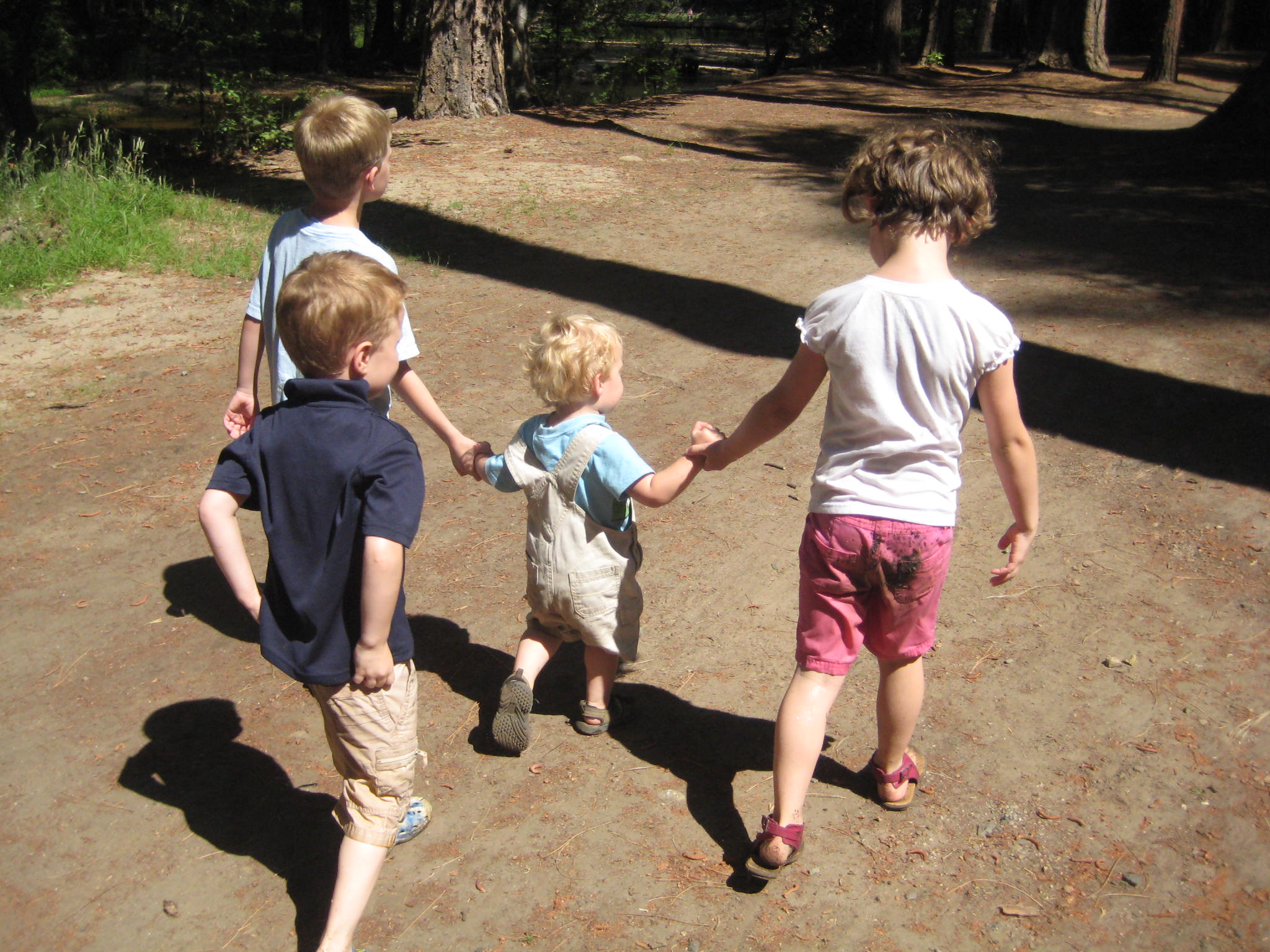
    There was my whirlwind trip across country with both boys to California. That had some very *important* moments in it, and some valuable ones. Those will prove precious, now and later. But I think my favorite parts were getting to know my young cousin and the brief hours we spent at Yosemite. There was a primal longing for me that was quenched, scratched, call it what you will. It was both deeply desire-inducing and deeply satisfying. It was captured by this moment, I think:

    The golden light, the tall trees, the river, the mountains, the children
    The golden light, the tall trees, the river, the mountains, the children

    Of course, notable among the life-long-memories was the trip to Istanbul. The heat of summer was just one of the flavors of that journey — the clarity of the winds off the swirling straights, the competing calls to prayer from the minarets high on hallowed and historic ground, the delights to be found in aubergine… it was a week never to be forgotten and long to be savored.

    Then there were the day to day things that came together to make it just and wholly summer. Every week I had a huge box of produce to find a way to work into my menus. Many a Monday night I stood at the sink peeling peaches, or stirring jam hot on the stove, my hair curling at the nape of my neck. My sons would ask to play in the park on the way home, and I would oblige. In the undimmed sunlight of 6 pm they would run and jump and climb and crawl. On Saturday afternoons, you might find me in conversation with a neighbor on the latest happenings on the street, or watching our children playing together. Most nights we slept with the windows wide to the light and breezes and air of a barely-cool summer.

    It has seemed so long and glorious and full. It has been the epitome, the true expression, of what summer can be even in a life fully lived with jobs and kids and church and all those things that keep me on my toes.

    Autumn is my favorite season. The crispness and urgency of the beauty catch me up short. The leaves (after a brief, drought-driven flirtation with color) have only now started to consider the possibilities inherent in changing their green gowns for gold and crimson. I traded out Thane’s 2T summer wardrobe for a 3T winter wardrobe this evening. It seems selfish to hope that autumn is as gloriously autumnal as summer was graciously warm. But oh! I do hope.

    I rarely cite song lyrics, because I mostly listen to 16th century polyphony and that makes for really obscure allusions, but one of the few pieces of music from the last 50 years that I do know is the King Singers’ cover of “The Summer Knows”. It summarizes well the intentional seduction of such a warm and easy summer:

    The summer smiles, the summer knows
    And unashamed, she sheds her clothes
    The summer smoothes the restless sky
    And lovingly she warms the sand on which you lie.

    The summer knows, the summer’s wise
    She sees the doubts within your eyes
    And so she takes her summer time
    Tells the moon to wait and the sun to linger
    Twists the world ’round her summer finger
    Lets you see the wonder of it all.

    And if you’ve learned your lessons well
    There’s little more for her to tell
    One last caress, it’s time to dress for fall.

    And if you’ve learned your lesson well
    There’s little more for her to dwell.
    One last caress, it’s time to dress for fall.

    Ghost stories

    This last weekend we went on the last camping trip of the year. It has finally started getting easier, this camping with children thing. This resulted in me actually getting time to think, to mull, and to consider. And, of course, to read some ghost stories in front of the camp fire (on the Kindle — ah, the 21st century! How enabling you are!).

    I love ghost stories. For a while in college, I extensively read “true”, first-person ghost stories. My favorite site was completely unedited, updated monthly (this was the old days folks) and had lots and lots of tales about ambiguously frightening things happening. As I was also getting my degree in English, I couldn’t help but begin to analyze the form and contemplate what was universal to the first person, claimed-to-be-true ghost story, what separated the good from the bad, what made them interesting, and what made people care about them.

    After extensive (and pointless) research into the ill-defined genre, I finally figured it out. The key to a good ghost story isn’t the actual haunting or specter or experience. It’s the back story. You’d hardly ever find a ghost story posted that didn’t include the “I did some research and it turns out that on this spot XXX bad thing happened”. The very best stories are the ones with the strongest back story and the closest ties to whatever inspired the haunting.

    This was on my mind in Istanbul. If ever there was a city to be haunted, it was Justinian’s Constantinople.

    See this cheerful picture, with the tourist and the little kid tooling around on his bicycle?

    The brazen column
    The brazen column

    This bucolic scene is inside where the Hippodrome stood in Constantine’s fair city. The Hippodrome. It was on this soil, fifteen hundred years ago, as Justinian made to flee and Theodora declared she’d rather die in purple than live in exile, that a mob gathered. It was here that, according to records, 30,000 of them were killed in the Nika Riots. That was a grim and gruesome tale. And it wasn’t just those riots. This same ground was a combination of Fenway and Yankee Stadium. The passions of the racers, flying in chariots behind their quadrigia, bedecked in their factions colors, was a drop compared to the fury of longing and joy and despair echoing from the stands. Emperors were one thing, but the races were the greatest thing. The best of the racers had statues raised to them, and the names of their horses were lauded in song and story. This same Hippodrome saw the height of Constantinople being truly itself. There were the royalty, the common man, the horses, the palaces and Hagia Sophia watching it all from the top of the hill. Here the Venetians came. Here the Crusaders came. Just a stone’s throw away, the Christians huddled in their sanctuary as their walls fell to Ottoman artillery.

    If ever there was a place in all human history where the gathered passionate energy of an entire civilization might linger, leaving it’s ectoplasm or psychic imprint behind, surely it was on this soil. I stood there, warm sun on my heads, little kids zooming by on bikes with indulgent parents proudly watching, and waited to feel it. Surely there would be some hint on this storied ground? Surely some ghost stories lurked in the ancient stonework, or swirled above the domes of the city like roosting gulls?
    The Hippodrome in Justinian's day
    But no. There was nothing. I heard laughter, cell phone ringtones, low music. I saw smiles and tourists and the ever-present children. I smelled moussaka and boiled corn. There was no hint of the history (and bodies?) indubitably buried beneath my feet. There were no ghost stories I could find.

    I admit that back in college, I was tempted to take the trope of the true ghost story and expand on the form. Having identified the elements, I felt, I could write some cracking good ghost stories, masquerading as real experiences. (What? It’s the internet. Don’t believe everything you read.) I thought about it this weekend, staring into red embers and listening to the loons singing my children to sleep. I thought about it, reading literary ghost stories which (honestly) don’t all have the form of the ghost story quite figured. And if I did, perhaps I would set it there, in the Hippodrome, between the palace and the church, above the sea.

    California, there I went

    Sometimes in life, you are inconvenienced by your “values”. You don’t dish some particularly juicy gossip. You help a friend move in 80 degree weather with 80% humidity. You buy a car that isn’t as big as you would enjoy but that has great gas mileage. Well, a month or so ago my mom called me up with a crazy plan. “I want to take the kids to see grandma in California”. Her version of the plan involved two cross country flights and a 16 hour drive from Washington to Merced for my little guys.

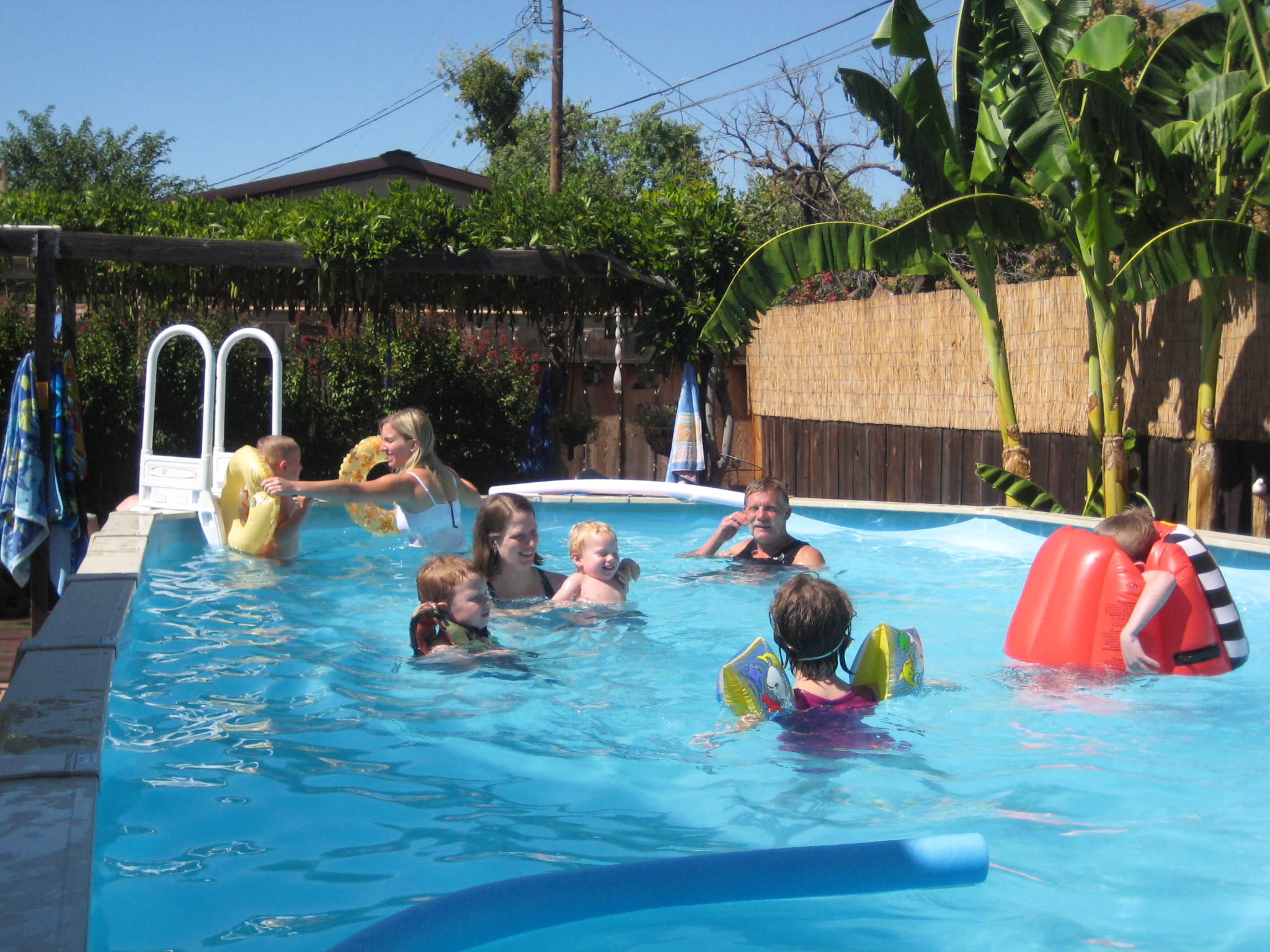
    My aunt's pool was awesome in the 100 degree weather
    My aunt's pool was awesome in the 100 degree weather

    But the thing was, almost all my grandmother’s descendants were descending upon that Mecca of fig-growing, that irrigated paradise. And my mother really wanted her mother to at least get to MEET Thane for the first time, and to encounter Grey as a verbal and interesting person. She had an excellent point. I cogitated. Now, if asked to name some of life’s priorities, I’d probably include family among them. Or maybe I wouldn’t even… I’d forget to articulate it because OF COURSE family is one of life’s priorities. But the options for getting the boys out to see their great-grandmother were all difficult and inconvenient. Round trip tickets. Long drives. But the one that made the MOST sense was for me to take the boys out, see my own grandmother, and return with them. That was what living up to “My family is important to me” meant. But with the newish job and the merger and the trip to Istanbul in two weeks… I didn’t have a lot of time to take. Two days seemed like the most vacation time that I could scramble together.

    So that is what I did. We left Wednesday night. The flight was a red-eye, delayed nearly two hours. I sang about 80 verses of “Old MacDonald Had a Farm” and blessed the fact that an empty seat meant I could bring Thane’s car seat. He’s still (barely) young enough to be a lap child, but that wouldn’t have been fun for anyone, including everyone in a four aisle radius. We finally got on board, and Grey went to sleep. Thane fell asleep too, but he woke up about ever half hour screaming BLOODY murder. The entire flight. The only cool part was the lightening. For the entire interior of the country, for about 5 of these wakings, the horizon flickered with the menacing lightening.

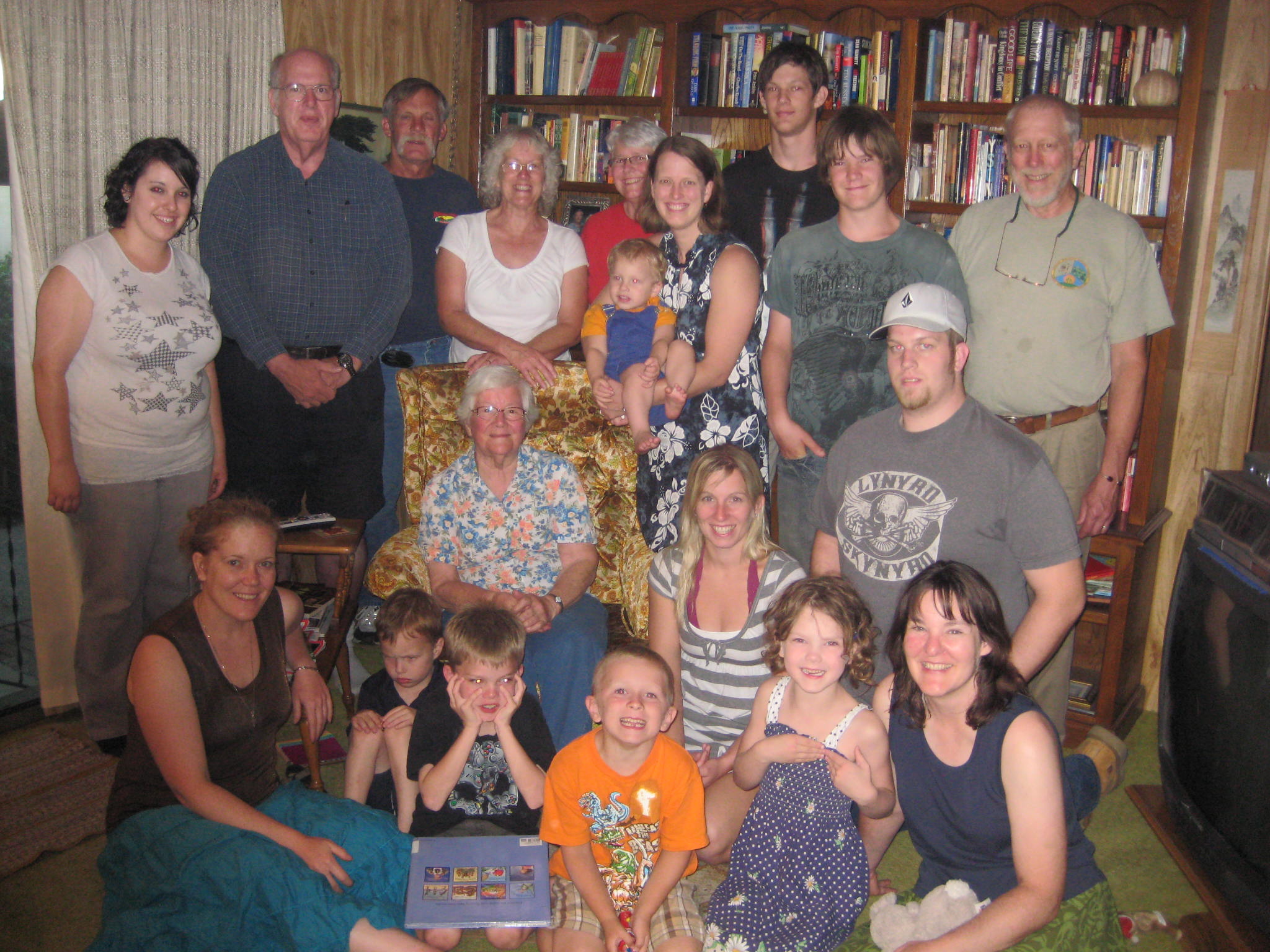
    My family all together
    My family all together

    I arrived late and tired, and my folks picked me up at the airport. Thursday and Friday I spent with my family. There was swimming in the pool. I got to talk with cousins I remember from when they were tiny, one whose birth happened during Christmas at my house when I was 16. The one whose birth I so vividly remember is 15 now, and wants to learn about programming. It’s surprisingly flattering when one’s teenage hacker cousin seeks one out for technical advice and looks up to one as an Oracle because one is a real live programmer. It was really lovely to see my extended family again.
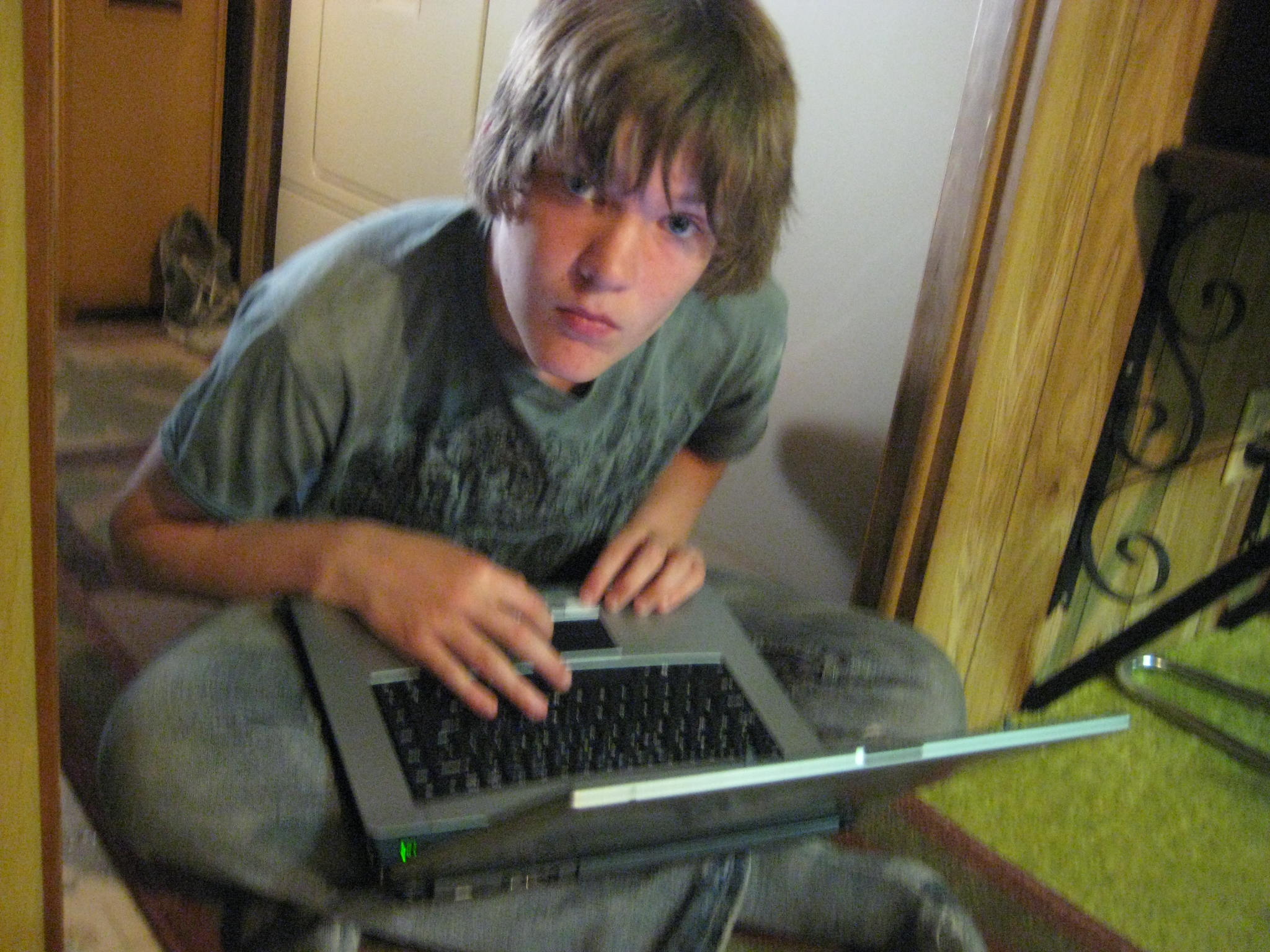
    My cousin, in what I have come to understand is a typical pose
    My cousin, in what I have come to understand is a typical pose

    Saturday, we went to the airport by was of Yosemite valley. My only regret is that I didn’t have a week to spend in Yosemite. It was glorious and fantastic and amazing and deserved way more time than we had. We got the kids out of the car, and walking towards a stomping ground I remember, in 90 degree heat (Central Valley spent the week at 102 – 103). We walked past this shallow, pebbly stream in dappled sunlight. This was not to be resisted. We stripped the kids down and there was a great frolic in the river. It was awesome.

    Then Saturday night I flew back home with the boys. It went slightly better. Thane only woke up every hour, and his screaming was diminished in intensity, until I woke him up to get off the airplane.

    Baz and Grey
    Baz and Grey

    There are some things where the memories and the pictures are priceless. I got a picture of my grandmother with all but three of her direct descendants. I saw Yosemite for the first time as an adult. I got to spend an evening in a hot desert patio with my cousin, talking about his dreams and desires. I read the poem my grandmother wrote to my grandfather on their second anniversary. I gave her a hug and I told her I loved her. I had the best maple bar of my life.

    These, my friends, are the things that matter. Not the red-eyes and crying babies and inconvenient schedules. I’m so glad and grateful that I had this opportunity.

    The real precious moments
    The real precious moments

    I saw a shooting star

    http://www.artinnaturephotography.com/photo.php?id=17&gallery=galleries
    The stars over Mt. Rainier

    Saturday night, I saw a shooting star.

    That may not sound significant or momentous to you. Perhaps you live in a place where you can see stars in the night sky — more than the 20 or so that outshine the ambient light of cities. Perhaps you have ample opportunity, on your drives home, to pull over and admire a particularly brilliant night. Perhaps you can’t exactly recall the last time you saw a shooting star — you’re sure you have, sometime — but it doesn’t matter because astronomical events just aren’t that important to you.

    These may be some of the ways you and I are different, then.

    Ten years, now, I have lived in places where you could not see shooting stars. For ten years, I have lived within a ten mile radius of the City of Boston, with the orange omnipresent glow that ranges, with the humidity, between present and overwhelming. Ten years, the same feeble 20 stars have been my rare nightly companions. For nearly half that time, approaching five years now, I have been tethered to my home at night. It’s not entirely safe to walk alone in the dark, although I do so. And almost always, one of us (my husband or I) must be at home to listen for the late night cries of our children. I could not see the stars even if they were clear, because I cannot look.

    Before that ten years, the stars were very much a part of my life. New London, Connecticut has lights. Certainly. But many fewer and weaker and further down the hill. I used to love walking around Harkness Green in the evenings – from the soft first evenings of September through the bitter colds of February and back to the noisy darkness of May. Sometimes alone, often with friends, I would walk: South overlooking the estuary of the Thames, West towards Winged Victory and the party noises emanating from Freeman, North facing Harkness Chapel then East across the new sun dial. My eyes ranged out and up. It was dark there (with one particular light that always seemed to either go on or off as we approached). The stars were present in greater numbers. For one glorious year, the Hale-Bopp comet hung directly over Knowlton, where young girls had danced with Coast Guard cadets in long-gone times.

    My love of the skies had not started with college, though. Even before that, I lived high in the mountains. Growing up, I could see the Milky Way spread out across the sky. I didn’t know that for the urban world it was an unthought-of myth. I remember one particular night when I was driving home, late, and the astonishing brilliance of a moonless starry sky was so incredibly distracting that I pulled over and just looked until I was thoroughly chilled. I used to go to the graveyard — a flat, long horizoned space with no lights — to watch the stars in the dark of the night. I recall one rather ominous occasion when a herd of elk traveled across the clearing while I was there. I rarely brought a flashlight, and the large thumping shapes were frightening in the dark of the cemetery.

    In all my sky-gazing youth, the most precious moments were the shooting stars. Have you ever seen one? Do you remember it? My passion for them started during a summer camp. We’d gotten rained out from our backpacking trip, and were sleeping under the stars in fields just to the north of Mt. Rainier. It was during the Perseid meteor shower, although I didn’t know that at the time. It was a super clear, high, moonless night and the stars fell nearly every minute. I loved them. I loved the surprise gift – the reward of watching and waiting with alertness. They were thrilling. Since then I’ve considered meteors to be gifts, benedictions, blessings from a loving creator.

    I do not know exactly how long it’s been since I last saw a shooting star. More than three years, almost certainly. Perhaps more than five. I do make visits to places where stars can be seen, but often it’s cloudy that particular night, or I cannot leave my sleeping babes, or the moon steals the stars from my sight. But on Saturday, after all my boys had gone to bed, I crept away from the dying embers of my New Hampshire campfire and walked in darkness to a small clearing near the lake where the loons mournfully cried. I laid on my back in the grass on a warm summer’s evening, marveling at how many more star there were than even my memories portrayed, still knowing I was seeing only a portion. And just before I stood to return, there across the sky sped a streak of light, gone before my eyes could turn fully to take it in. A shooting star. A blessing and a benediction. And I returned with joy to my family.

    Helloooo!!!

    I’m still here. I exist. Work is eating my brain. Nom nom nom. Today I got there at 7:30 am. At my old job, I rarely got up by 7:30 am. I had German cultural training. I discovered that I am everything German’s hate: positive, optimistic, agile, smiley…. I am not heartened.

    Then I went and got lost in South Boston going to go practice my trumpet for an ordination this weekend. This was followed by a book club discussing Plato. We can’t figure out if he was being ironic in the Republic, if Plato is making fun of Socrates, or if this is all sincere. My brother, the classics major, says that “yeah, it’s pretty lame”. (NOTE: This is the funniest of his comments and do not reflect the full and complex dialog regarding his understanding of the historical and cultural importance of Plato.) This does not fill me with motivation to read the remaining 60% of the book. I am also reading a fascinating book about competing on Analytics. Yes, that is my sarcastic voice.

    But the boys are very, very cool lately. Grey is in this awesome affectionate stage, mixed in with neat questions and cool phrases and a deep desire for candy. Thane is unclinging just a little. For example, in the mornings he now reads quietly in his room while I get dressed. It makes dressing much easier when no one is surgically attached to your leg.

    I made risotto for guests on Tuesday. I think you level up as a chef when you’ve made risotto. It was extremely tasty.

    My farm share started on Monday. I successfully used peas & garlic scapes. Up next: fun with beets.

    My sons have the world’s shaggiest hair, and I have no idea when we can get them haircuts.

    Have I told you that Thane tells knock-knock jokes? Here’s how they go:
    Thane: Knock knock
    You: Who’s there
    Thane: (inaudible)
    You: Inaudible who?
    Thane: Inaudible + weird syllables
    CUE RIOTOUS LAUGHTER

    It’s pretty funny to have a practically preverbal kid telling knock knock jokes that are only marginally less funny than his 4 year old brother’s.

    We’re going white-water river rafting next week. Doesn’t that sound awesome and adventurous and not at all boring? Yes, I think so too.

    Ok, I think you’re now up to date and hopefully confident that I haven’t PERMANENTLY abandoned you. Just, you know, until things calm down a LITTLE.

    Also: GO CELTS!