Holy Saturday

Holy Week – the week leading up to Easter – is full of named days and church services. It starts with Palm Sunday, with loud Hosannas and praises and donkey-riding-reeactments. Then there’s Maundy Thursday – the day we celebrate the Last Supper. This is followed by the ironically named Good Friday, the day on which Jesus died. Then everyone comes out in their finery to celebrate the resurrection on Sunday, even those who only come to church once or twice a year.
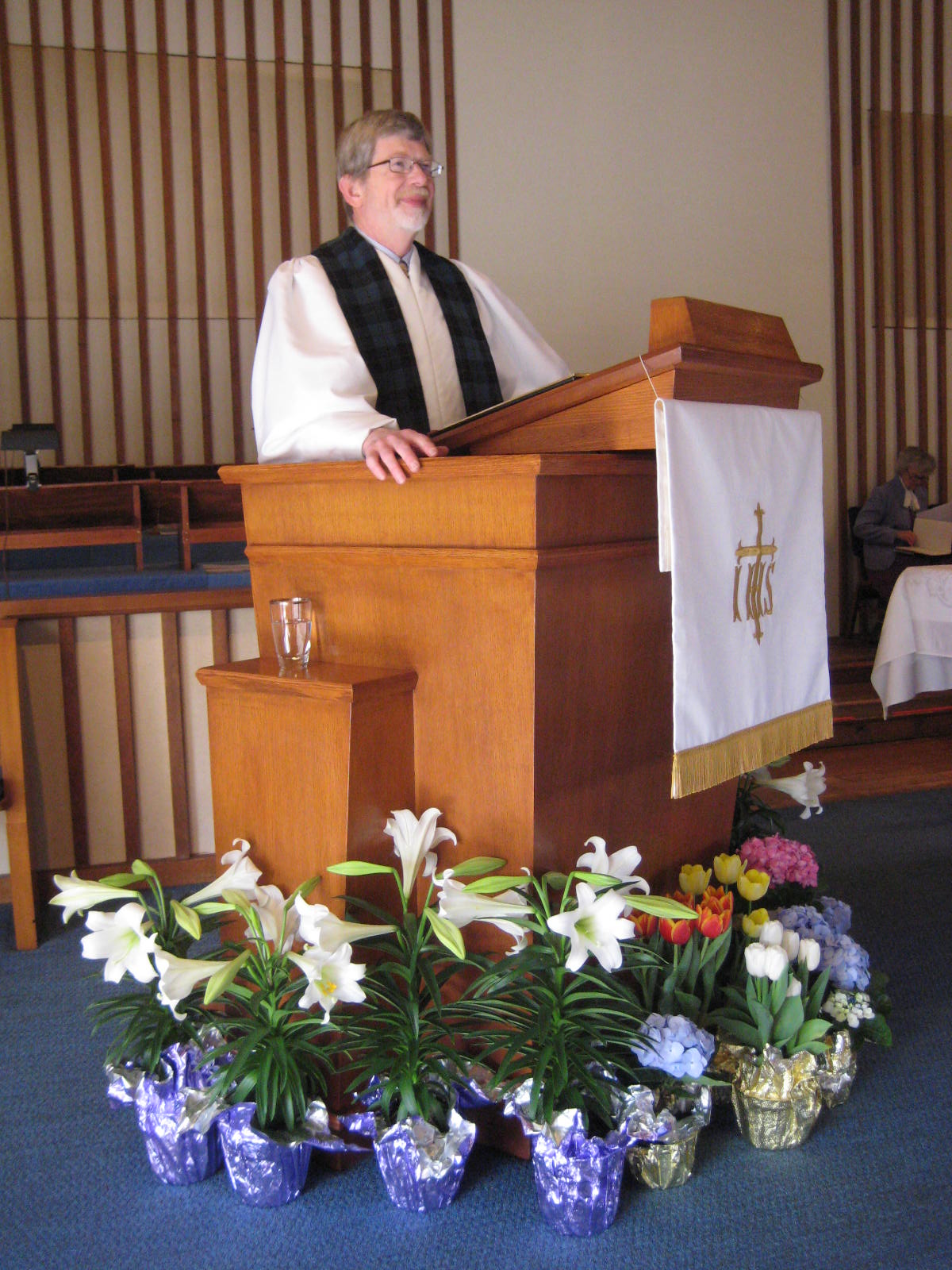
The pastor prepares for Easter

If you know a church musician or a pastor, this week is something of a marathon. There’s usually a huge push… Palm Sunday has big spectacle, then there’s a service on Thursday (with communion), on Friday (in the dark and quiet), and on Sunday with the biggest party of the year in the sanctuary. For many, there’s also a Sunrise Service in the wee sma’s of Easter morning. If you’re a pastor, that’s five big sermons (or meditations, or whatever) in 7 days. If you’re an organist or pianist, not only is it a lot of music you have to put together but it’s some of your hardest and most important of the whole year. Most of the liturgical professionals I know are completely wiped out after this week.

The Good Friday service is my favorite of the year. In our church, it’s the same down to the word, year after year. The only thing that changes is the name of the president and the UN Secretary General. We read through six scripture sets, extinguishing a light after each is read until the sanctuary is in total darkness. (Or rather, lit only by the extremely bright light that illuminates our parking lot. The year that it cycled on and off during the service was memorable to me.) Between those readings is only music and your own thoughts and prayers.

I have gotten better at this, over time. The first few years, I could hardly sit still and think, looking over and again for stimulation or change – unused and uncomfortable with the silence of my mind. This year, I sat heavy in my pew and was surprised when the time came to read again.

The other surprise is that, in those few words read over and over, I can still hear new things. This year on Good Friday, I heard something I’ve never heard before. It was in the voice of those many people who ask Jesus, “Are you the Messiah? Are you the Son of God? Are you the King of the Jews?” Before, I only heard the leading, lying question trying to get him to implicate himself in front of the Romans in order to remove a nuisance. But this time, I heard another thing.

They really wanted to know. Moreover, some of those asking really, really wanted him to answer yes. This was the moment so many of those followers had been waiting for. This man whom they had watched work miracles – who a short time before had met with Elijah and Moses – would declare himself! He would be a second Moses, liberating the people from the domination of the Romans! He would show not just the hungry multitudes but the halls of power who he really was and what he could really do.

And it wasn’t just those Pharisees and soldiers asking and half hoping to hear a yes, nor only his disciples. Jesus is sent to Herod, who is totally excited because he’d been hearing about this guy and really wanted to see it for himself. If Jesus had given Herod anything to hold on to, he wouldn’t have been sent back to Pilate to die. Even if Jesus had just told a good story or two, or a minor miracle, maybe he would’ve gone on to great things within the Roman Empire!

All these people wanted Jesus for all these different things: for entertainment, for political need expediency, for rebellion, for leadership. Many of these people who looked to Jesus for deliverance were good people, who were asking for needed things. None of them were looking for Jesus to, oh, conquer death and provide atonement for sin. It just wasn’t on the agenda. Overthrowing the Romans: plausible. Dying and coming back from the dead: not plausible. (In this my reading of the Greek and Roman classics has been edifying. Virgil talks about Prometheus (Tityus), and the vast torment of being immortal while your liver gets ripped out and eaten every day. In their immortality the very power of those ancient gods is limited because – do what they will – they cannot die.)

After a few hundred years of this happening every day, immortality might stop looking so good.

I have heard before how unexpected the path of Jesus was to his followers: how this was not the outcome they expected. This is not in the stories. You’d don’t lose all the way, and end up winning. You don’t quietly accept shame and ignominy. (I promise you now that silence is not how Odysseus or Aeneis or Xerxes would have dealt with being mocked and abused.) But I had never before heard that note in the voice of his accusers, betrayers and killers. They were hoping he would prove them wrong.

“Look at you now!” they yelled at him. “You said you were going to destroy the Temple and rebuild it in three days. Well then, if you are the Son of God, save yourself and come down from the cross!” Matthew 27:40

I had heard the mockery in it before. I had never before heard the half-hope that he would.


This is Holy Saturday. It deserves a cooler, more depressing name, like “Black Saturday” or “Golgotha Saturday” or “Despair Saturday” or “Holy crap he actually died, what do we do now?” Saturday. It’s the only full day that Jesus was actually dead. It always seemed to me like a day where were should just stop – like a day where we should rend our hair and mourn and walk around in a shocked trance.

Of course, I did nothing of the sort today. In fact, I had a lovely day that included a nice lie-in, breakfast in bed, a spring-flower walk, an Easter egg hunt in a local part (which was a dud), followed by an impromptu Easter egg hunt in my backyard with the neighbors (which was not) and a family movie. Great day, in fact.

But there in the back of my mind was the set-apartness of this day. If you go from Palm Sunday to Easter, or from Christmas to Easter, or from Easter to Easter… you miss the best part. On Easter, Jesus does something that humans could not do: to be raised from the dead. But on this Saturday, he was doing something the little “g” gods of mythology could not do: be human enough to die and be dead.

Tonight is dark with the grim settling reality for those who loved Jesus. That really happened. He really died. When we thought he would wage his mysterious eloquence against the powers of the world, he shut up and went silent and the fickle crowds abandoned him – including us, to our everlasting shame and horror. We sold him out. We fell asleep. We lied about knowing him. We shouted “crucify him” from the crowds and threatened a riot. We gambled for his clothes and put sour wine on a stick for him. We made fun of him. We did little to be proud of this week.

But tomorrow will come with the vast surprise of resurrection (as it has every year for almost 2000 now), and a confusion of pancakes and chocolate and bunnies and preludes and trumpets and ham dinners and nice dresses and really tired clergypeople with adrenaline highs. We will take the purple off our communion tables, welcome back whatever we gave up for Lent, and catch the baseball game in the afternoon.

But – hopefully – we will remember that the miracles we look for are not always the miracles we get. The miracles we get may be far bigger, far more profound, and far less predictable, and less comfortable, than we ever dreamed.
High Notes

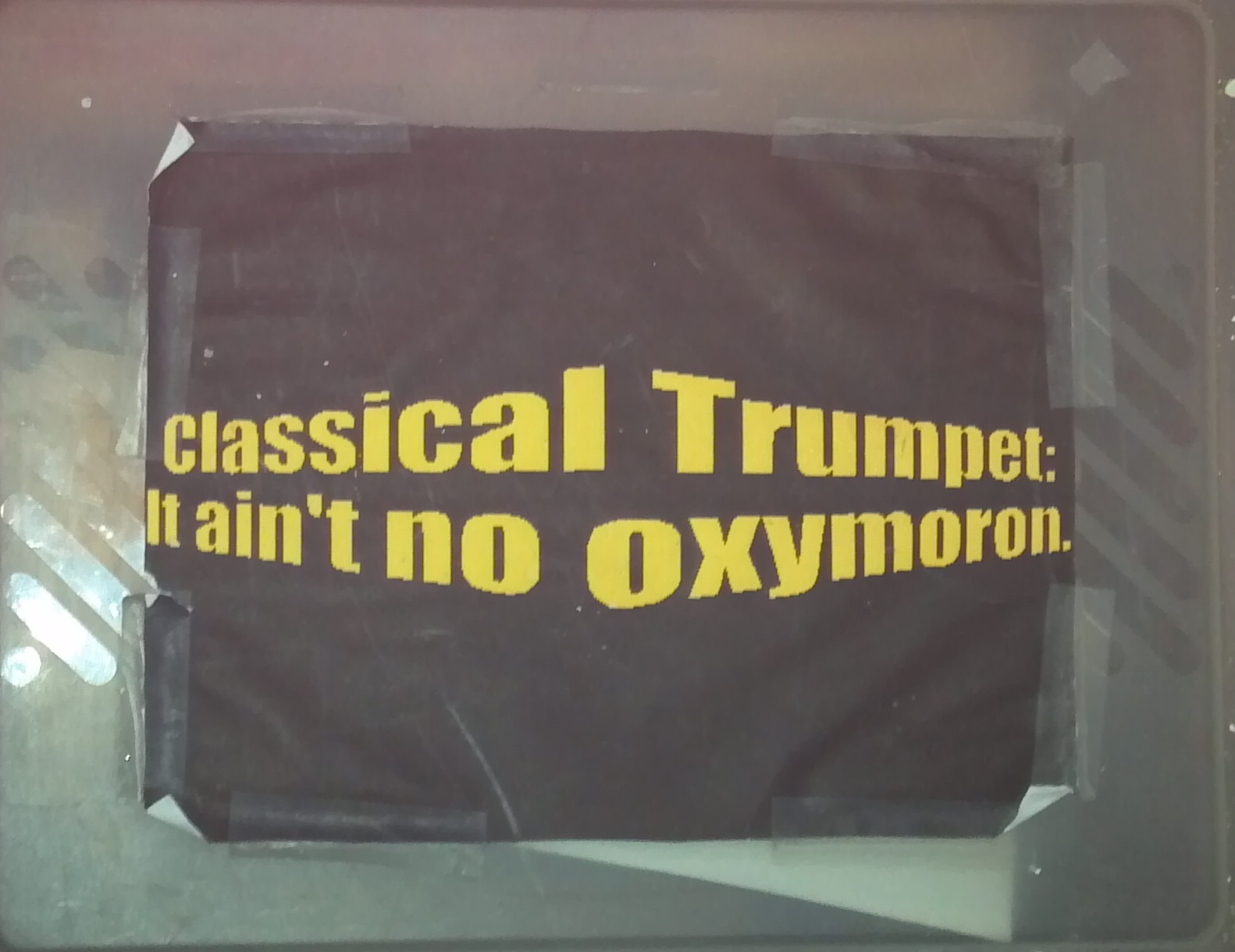
It’s Holy Week and I am, as usual, late to the music stand with my Easter selections. Every year I go to the same box of music that I’ve had since I was 14. It has a “color printed” word art sheet on the front – done with Lotus Amipro – that says, “Classical Trumpet: It Ain’t No Oxymoron!” This was my way of expressing my individuality and ironically bad grammar as a youth. Shockingly, I was never one of the cool kids…. Anyway, I’ve played Handel or baroque music nearly every Easter for the last five years because: I know it, it sounds great, it goes with the other music nicely, and I own it. I would pretend that I decided this year that my church had been subjected to enough baroque brass music, but in reality I had played through everything I owned that was baroque and not lento and that I could play.

Yes, I did miss my senior prom because it conflicted with my orchestra concert - how did you guess?

I really wish the publishers would come out with a book called, “Really Flashy Awesome Easter Music for Trumpet Players Who Play Twice a Year But Were Good Once”. I would buy that book, and love it forever.

What I settled on were some Sacred Harp tunes – which are not really THAT Eastery, but at least provide some variety from “The Trumpet Shall Sound”.

By the way, you’re all invited to my church this Sunday for our Easter celebration (with pancake breakfast starting at 9!). I’ll have some awesome music! (If I learn it in time and have a good lip day). And your reasons for not coming because you’re heathen/pagan/on another coast/bursting into flame when you enter a church… well, they can stop you if you don’t WANT to come, but we’ll welcome you all the same if you secretly DO want to come.


I didn’t feel like I had quite enough material in my “complaining about Easter repertoire” up there to make it’s own post, plus I’m about 6 posts behind in my head, so I though I’d throw in a picture that – on another day – I might turn into a vast discussion.

In truth, I’m endlessly amused by the stuff Grey draws. It goes from heartwarming (two happy smiling characters, labeled “Rich” and “Poor” cheerfully exchanging a full bag of coins), to funny (like the favorite animal as the hydra one), to extremely nerdy. The other day he came home with this “board game”. He made it at afterschool. The design and drawing are his, and he made clay tokens to represent the players. I took quite an extensive video of him explaining it to his beaming father. In this picture you can see the game board, the three auxiliary cards and the clay figures.

Grey's Game
Grey's Game

OK, I’m off to go ice my lips!

The dawn is breaking, it’s early morn

The Acela express in New London

I was up at 4:45 this morning, in the wee small hours of the morning, to get ready to leave my family for a few days. When I went to the bathroom, the heated tile floor was frigid in its mid-night settings, and the house was cold and still and dark. No trace of morning touched the Eastern sky, and no sounds emerged from the rooms where my morning-glory sons slept. Now I am sitting on the Acela Express, just entering Providence as the gray glimmers of dawn give way to sunless light.

My brother wrote recently about the contemplative and communicative nature of traveling. And I feel it too. But traveling for business is odd. So often, when you travel for work, you are going to a place but you will never see it. You are most likely to be exchanging one faceless conference room for another faceless conference room. You’re lucky if there are windows. Your personal comfort and desires are set carefully to the side. Perhaps your work-hosts will take good care of you and ensure you have water and food throughout the day (and, God willing, coffee). Or perhaps not. If not, you must be tough and not complain until later.

I don’t think of myself as someone who travels a lot for work. I have high standards to compare myself to, I suppose. I had one boss who flew over 100,000 miles in a year. My friend John travels 100 days of the year. But, gazing out the window, as I thought of my past trips, I have traveled for work. Let’s see… I have gone to New York for conferences (twice), DC to give a report to a client (that project reported to congress – exciting!), Las Vegas for another conference (my entire company went and we spent about 3 hours at the conference and the rest of the time “teambuilding” which I never would have done on my own but thoroughly enjoyed). I’ve visited clients in Dayton Ohio. I did training in Chicago. I implemented a client in Oregon, traveling there five or six times while pregnant with Thane, and extending my trips to weekends so I could spend some time with my folks. I went to San Diego, and drove past road blocks near the border to our offices in Temecula. The very best trip I have taken for business was a week long trip to Amsterdam and the Alsace region of France. The food on that trip was unbelievable, and I loved the gentle hills and ancient airs of the border towns.

And I have a hunch I’m forgetting a trip or two in there.

There are two layers of clouds in the sky now. The bottom layer is printed in grayscale, a lumpy tissued dressing protecting the sky from the ground. But in the narrow gaps I can see above to pinked clouds and blue sky, past the blight of the storage facilities and junkyards surrounding the tracks.

I have not often taken the train. The ability to (comfortably) blog while traveling is a rather enjoyable novelty. I have traveled this stretch of road many times, and to see what usually takes me about and hour and a half fly by in 18 minutes gives a sense of surreality. In a few moments, we’ll whirr past the fading city where my alma mater sits high on the hill. Then on to New York – the city I only go to when other people are paying for my hotel rooms. (Seriously. Ugh.) Once there, I will find my colleagues, travel to the client, and attend hours of meetings in yet another nameless conference room, ignoring the miracles of time, place and travel required to get me there.

Do you travel for work? Do you like it or hate it? What places have you glimpsed out of conference room windows that you wish you could walk in your real skin? What was the best work trip you have taken? What the worst?

Bus comes, bus goes

You try taking a good picture of the bus while you're running to catch it!

For two months now, I’ve had a bus commute. Despite living in Boston, one of the few American cities with a truly functioning public transit system (even if complaining about it is a local hobby), I have never had a public transit commute, or worked in the city. I always thought this was a pity. But now, my mornings and afternoons are governed by the uncompromising schedule of the 7:49 and 5:20.

My bus ride and my mile long walk to work give me some new and different things to think about. Ok, let’s be real. They give me some new and different people to think about. After two months, the folks around me have stopped being entirely noise, and turned into signal.

First, the etiquette of the 354 bus is very strict. Thou shalt not in any way inhibit others from sitting down. Thou shall not have conversations with others once thou hast boarded the bus. Thou shalt not talk on thy cell phone. Speaking to others is entirely optional. If you have to add your money to your Charlie Ticket, go last. If you see another bus rider running to make it, make sure the bus driver knows. Always thank the bus driver as you exit. Form an orderly line to get on. Don’t cut to get ahead, but don’t hang back either. It is a courteous and well-managed bus. It is even (usually) on time. Because it is expensive ($5) and requires planning ahead (who wants to get dropped in Woburn casually?), there are very few first-time, or “I don’t care” riders. As in, I haven’t seen one yet.

With this cloak of silence, I’m getting to enjoy some of my fellow riders. There’s the cute red-headed guy in business casual who always, ALWAYS has Bose noise-cancelling headphones on. He may not have ears, and I would never know it. There’s the older, Italian-looking woman with unrealistically black hair who looks like she would be at home selling limonada and tortellini on the Sicilian coast. One of my favorites (ride home only), is this guy who (when it’s not 80 degrees out) wears a trench coat. And he has a moustache – an honest to goodness 30s era moustache. I honestly don’t remember the last time I saw a non-Indian sporting just a moustache. He doesn’t like crowds and doesn’t mind standing, so he often waits at the edge of the crowd and boards last. There’s the guy who doesn’t speak English, Portuguese or Spanish but something that sounds related, and rides sometimes with his 3 year old (?) daughter. He always makes eye contact and gives me a big grin. There’s the woman who has the exact same commute as I do, and in my early days offered me some wry (but helpful) advice.

Then there are the folks who walk the opposite way from me on my way home. I can tell whether I’m early or late by where I meet them. There’s an older gentleman whom I always notice because he is always wearing jeans and he never looks like the sort of person who would wear jeans. He never meets my eyes, but I feel like we’re old friends. There’s a very tall guy with a very round beard whom I like to imagine as a viking warrior instead of a software engineer. (My walking commute is the epicenter of suits, and this guy is always wearing a funny t-shirt, so I think he must be technical.) Today I recognized four “friends” on my walk to the bus. I wonder how many I haven’t noticed yet, versus how many are too unreliable or just visitors. (You can usually spot the visitors. They’re the ones with the tricorn hats and big eyes pulled constantly skyward by marble-atriumed monoliths.)

Perhaps you can tell by my windyness, but I talk to you about these people, these things, almost every day as I walk and watch. I tell you about the gift it is to walk across the sea – even if a small, polite, well-contained bit of it – and watch the tides go in and out. I talk to you about how the eagle statue in Post Office square always makes me think of the Trolloc statues in Wheel of Time Series. We swap tips about how best to cross the intersections (when you can safely dash, when you should wait, where the advantages are of crossing which way). You commiserate with me when (a rare case so far) I watch the bus pull away, separated from me by an uncrossable river of traffic. We smile together every afternoon as we watch the children and parents swarm the Children’s Museum. And then, of course, I get to work or home and I have no time to remind you of our ongoing conversations.

Sometimes I wonder if anyone else notices or see me, the way I see them. Do any of my “friends” (or perhaps ones I have not yet noticed?) think about that woman with the brown hair and backpack, who is always hurrying and sometimes limping slightly? What about you? Do you have friends, people you pass or see every day, whose name you do not now nor are likely to ever know?

Pie-d Piper

This was still not all the pies

Yesterday was Piemas. For those of you not familiar with the phenomenon, Piemas, it is a complicated holiday with a long and extended history. It is a holiday we made up about 7 years ago to celebrate the eating of pie, and other pie shaped festivities. Mmmm pie.

This year, I made:
2 chicken pot pies
1 blueberry pie from farmshare blueberries this summer
1 lemon merangue pie (which I just finished – it’s my favorite)
1 pecan pie
1 Nutella crack pie (because I had an empty crust and needed a filling and I had Nutella lying around – this was a digestive bombshell)

Many other people brought many other pies. We had a 1:1 pie to person ratio, with the advantage slightly in favor of the pies. There were, as always, many delicious and exceptional pies. There was much talking, and much game playing. There were 8.5 kids, but their chaos generation fields were overwhelmed by the tumult of Adults Eating Pie. There were savory pies, sweet pies, ice cream pies & boozy pies. In an innovation this year, I also served fancy teas in my fancy silver tea pot in fancy cups, which was really fun. There were new people, and folks who’d been around since the thought first occurred that Pies were important enough to merit their own darn holiday.

The whole thing was really fun, and I didn’t make it to bed until 2:30 this morning and I regret not a whit of it, and I’m so grateful to everyone who came and brought pie and ate it with me – except for Josh was was CLEARLY cheating at 7 Wonders in order to beat me that badly. And for those of you who couldn’t be here – I missed you. Next year.

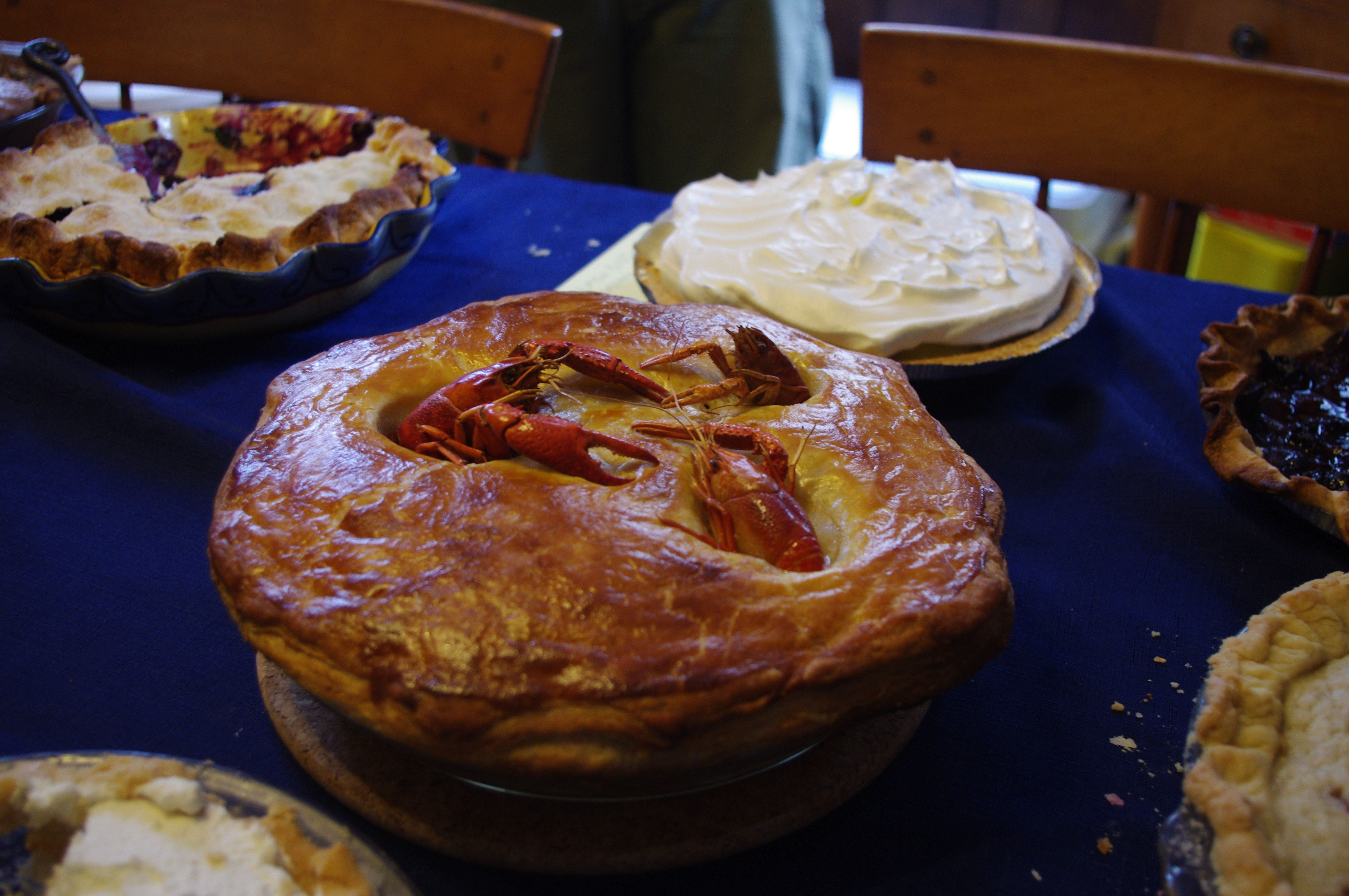
The rabbit crawfish pie was amazing, and definitely made off with the award for most interesting presentation.

You can see full pictures of the festivities here: Piemas!!!

How’s he doing?

Many of you have written or dropped a note to ask how Thane’s doing. So I figured, I’d give you all an update. For those not following along at home, Thane went to Children’s Hospital Boston for a hydrocele repair on Thursday. He was under the knife for just under an hour.

That day, we treated with alternating ibuprofen and acetaminophen, nothing stronger. He was a bit laid low that day. The next day, Friday, he was right as rain. Today, with the original dressing still on, you would never guess anything ever happened. The really hard part of this whole recovery thing is keeping him from excessive rough-housing/jumping/doing things that might split his stitches. So our regular life has more or less resumed.

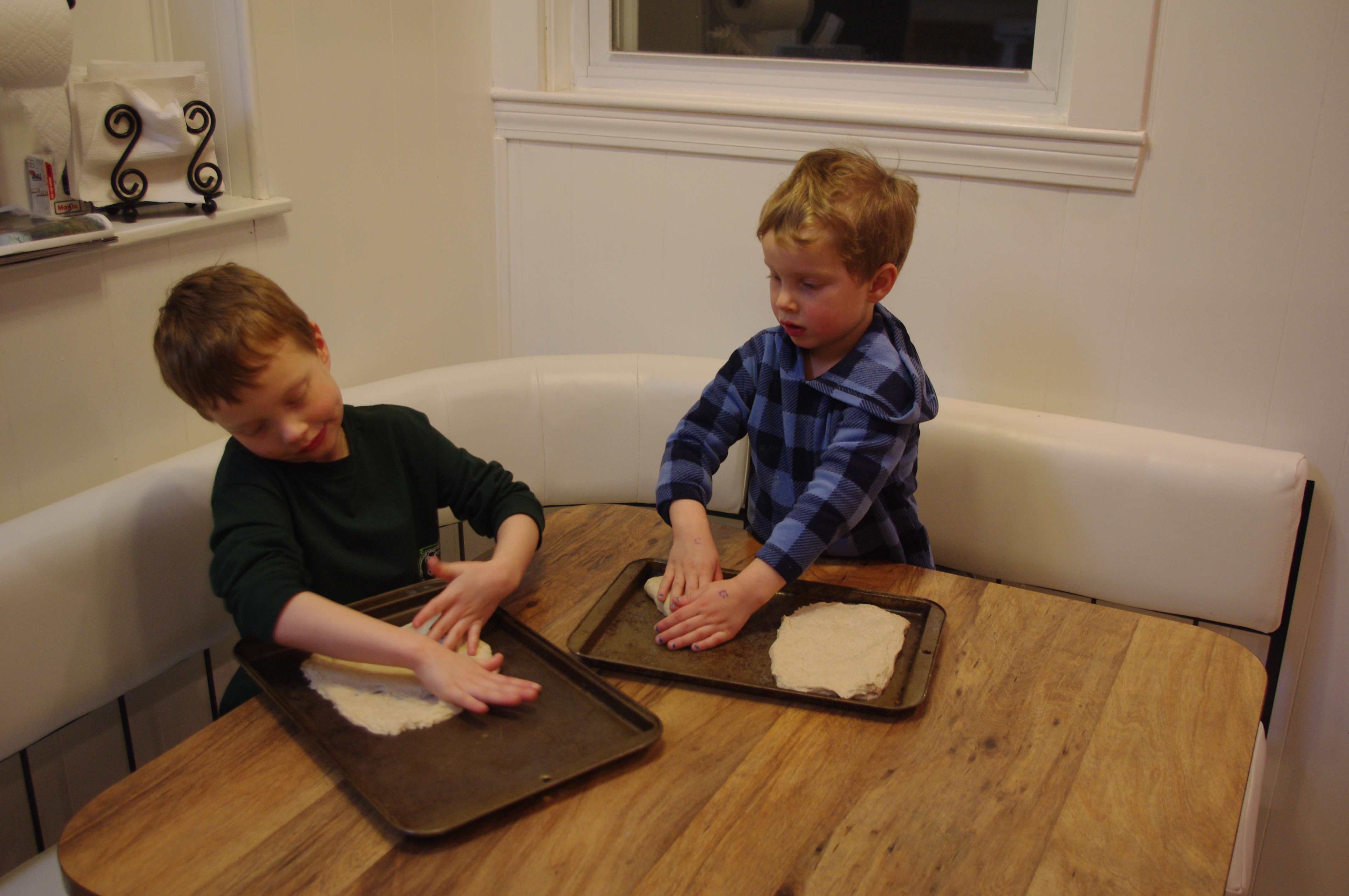
Making pizza for dinner tonight

Ground Control to Major Thane

Before launch
Before launch

Today was the day for Thane’s surgery (basically a hernia surgery with a few added complications). Last night, Pastor Rod came over with a little game of reassuring notecards for ostensibly Grey but really for me. He prayed with us prior to the surgery, and wished us well. This does give one the sense that, holy cow, surgery is tomorrow. ACK!

It wasn’t too early this morning – we got up around the usual time. The biggest difference was not yelling “eat your breakfast!” every 15 minutes. Adam and I packed our perfectly-healthy, right-as-rain kid into the car to go to surgery. Stuck in traffic on 93 South, I tried to remind myself how very, very lucky we are that our completely routine surgery would be done at Children’s Hospital – Boston one of the best pediatric hospitals in the world. (Actually, according to US News and World Reports, THE best for urology.) Thane was really quiet on the way in, just looking out the window while Adam and I chatted and listened to NPR.

The intake was uneventful. There’s a wistful look you get when you take a very healthy child into a hospital like this. The doctors and nurses see some awful, sad, horrible things and they seem to find it refreshing to watch a perfectly happy kid playing with the toys brought to him. Things really started to heat up when his surgeon arrived, with a cheerful and reassuring bedside manner. We verified that we all thought Thane was here for the same thing. After a brief clown-intermission (I kid you not – Thane kept telling them, “You look like clowns!” as they metaphorically honked their red noses), the anesthesiologist came. He leaned next to Thane and said, “Hey, I’m going on a rocket ship ride. Would you come with me on the rocket ship?” He proceeded to explain that (of course!) astronauts on rocketships have to wear masks. And sometimes they go so fast it makes them dizzy. Thane declared his intention to go to Uranus.

The entire team grabbed the successful metaphor and ran with it. I put on a scrub and hair net, and Thane and I walked hand in hand to the operating room. When we walked into the brightly lit, cold, instrument-filled room I contemplated what a good analogy the space flight was. Of course there are bright lights! (The anesthesiologist mentioned that they needed the lights because space is dark.) Of course there are complex instruments, gleaming bright! Of course there’s a big captain’s chair in the middle of the room, just waiting for Thane to pilot them all to Uranus!

Thane cheerfully sat on the chair (surgical bed), announcing he couldn’t wait. He reached for the anesthesia mask, and held it to his mouth (sitting up). They put “Boo Boo Bunny” into a captain’s seat next to him. They asked him to push buttons and squeeze things, all the while the entire assembled operating room cast shaking the table like a rocket ship taking off, making zooming noises and generally behaving like a bunch of loonies. I held his feet, and watched as the drugs took over. (He fought valiantly for consciousness, but never tried to remove the mask.) He had an increasingly goofy expression the further down he went – the further out into space. Finally he lay still on the operating table, a heart-achingly small figure with the touch of a smile still at the corners of his mouth as his surgeon leaned over his body and the door closed.

Adam and I spent an hour in a nice waiting room with free wifi while I did work (well, attempted) and he read. We discussed washing machine options. Then the surgeon brought us the good news that the procedure had been perfect, and gave us some information on what to expect. Fifteen minutes later, we were brought into the recovery room where Thane was deeply and happily asleep.

All in all, I cannot imagine how this experience could have gone better. Great team (I think I’m in love with that anesthesiologist!), great outcome (assuming we avoid infection or post-operative trauma aka rough-housing), pretty good experience. Thane was superbly behaved. And, Lord willing, in two or three weeks this will be the sort of thing you write in the baby book or no one will even remember it happened.

I do wonder, though, in that dark place of anesthesia beyond memory… did Thane go to Uranus? Did he dream of rocket ships? Or perhaps, with body and mind temporarily more separate than normal, could he see beyond the bounds of his eyes and journey to far away places? Did he, in some way, blast into space?

Ground control to Major Thane
Post op: Ground control to Major Thane

De-nial is a river in Egypt

Thane building ships

Hey, so did I mention that Thane is scheduled for surgery tomorrow?

Yeah, not so much. I was in complete denial until about, oh, yesterday at 7:30 pm. (No particular reason why then, but I finally admitted that why yes! My little baby boy was headed under the knife on Thursday.) You know the reason why, a hydrocele. It’s a pretty standardish operation, but has the usual nerves associated with general anesthesia. Also, that’s the area of the body that has a lot of blood vessels, as well as some things he may find important when he grows up.

I have no idea what to expect for a recovery. Dr. Internet varies in his estimate between 2 – 3 weeks for light activity to almost immediate. I suspect Mr. Roughhousing Is My Hobby Thane will probably be hard to keep quiet past a day or two. Tomorrow morning, at some time to be determined, I will pack Thane into the car without offering him breakfast. (He will be confused. I am adamant about breakfast.) We will take him to the hospital (how lucky we are to live close to a pediatric surgical powerhouse of excellence! In this case, Children’s Hospital). We will dress him in scrubs. I have done this before, but I’m not sure it gets easier with practice. This time, he’ll understand more.

Grey is already worried. Combined with a refresher on mortality thanks to Magic, he’s worried about his brother. He would like you to know that he is a caring person, who takes care of people who need it: even strangers. He moped through class yesterday because of this, and I got a note home from the teacher. (I WAS going to tell her the day of the surgery, since I figured he’d need support then, but I didn’t plan on sending a note today.)

I know the odds, and therefore try not to worry. But I can’t help thinking about surgical mishaps, general anesthesia, infection rates and hospital-reared super-bugs. And when I lay those aside, I worry about “preschooler without breakfast waiting in a hospital waiting room for heaven-knows-how-long” and how one takes care of said preschooler after surgery, and what exactly this is going to do to our already-rather-unsuccessful potty training progress.

Ah well. There it all is. I’ll let you know how it goes tomorrow.

Sacrificial Offerings Part II

We now interrupt this epic for some sporting news....

In my last post, I talked about how our long-suffering grandparents (and great-grandparents) dug deep to offer comfort and hope to their erstwhile WWII enemies. But the second part of my reading that really made me pause were the words “sacrificial offering”.

I’m currently reading Virgil’s Aeneid, and have recently read Homer, Herodotus & Thucydides. Basically: I’m up on my ancient Greek history right now. These ancient texts offer a different context for some of the more contemporarily mysterious passages of the Bible, especially around sacrifices. Throughout the Aeneid, offerings are made or promised. The very best of livestock are repeatedly sacrificed on alters to various gods. (My favorite was a lily white sow suckling 30 lily white piglets which he sacrifices to Juno, which was totally a waste because she has it in for him. The sow was a combination augury-fulfillment and offering.) Somehow these seafaring travellers find the ability, time after time, to come up with appropriate livestock to offer to Apollo or Venus or their ancestors.

For us, today, sacrifices and offerings are both very abstract. I, for example, have sacrificed my consumption of candy this Lent. I sacrifice three hours a Sunday to worship the Lord (and hang out at coffee hour). An offering is a slip of paper with a few numbers written on it slid into a tasteful envelope with a scripture on it. These are my sacrifices and offerings.

The sacrifices and offerings of Jesus’ world, of that Mediterranean civilization, are far more concrete. When Jesus comes of age, his parents (poor folks, not like Aeneas), sacrifice two doves (Luke 2:24). These offerings are killed and eaten by others. Hard enough. But consider that livestock were not only today’s food, but tomorrow’s hope of food. Those 30 piglets killed with their mother represent forgone bacon and ham and pork tenderloin to people who were probably constantly hungry, and for whom meat was a profound experience. They are a waste – the finest of herd stock cut short and killed simultaneously in an age with limited ability to preserve meat. Their sacrifices consume capital – like us withdrawing from our 401K and paying the penalty.

I can’t help but think this idea of sacrificial offering carries over to that early “One Great Hour of Sharing”. Those folks were rebuilding a country and economy. They were finding capital to start businesses and families, to buy houses and maybe radios, tvs and cars. Their sacrificial offering, in the spirit of the ancient Mediterranean offerings, came at the cost of some prudence.

I look around and see a society where, increasingly, capital is the way to win and being labor is the way to lose. The work of your hands can earn little compared to the work of well-managed liquid assets. In that context, the sacrifice of capital is even harder than when you could just work to make it up.

In the Aeniad, the offerings and promises of offerings often swayed the gods to listen. They did remember them in their conferences together, and when deciding whether to interfere. They did listen when someone REALLY needed to make a spear-throw count. Without this context, and with 2000 years of cultural expectation behind me, it would be hard for me to hear and understand how radical my desert God and his carpenter son really are:

The sacrifices of God are a broken spirit; a broken and contrite heart, O God, you will not despise. (Psalm 51:17)

But Samuel replied: “Does the LORD delight in burnt offerings and sacrifices as much as in obeying the voice of the LORD? To obey is better than sacrifice, and to heed is better than the fat of rams. (1 Samuel 15:22)

Sacrificial Offerings

OGHS - Haiti Response: Two years later

We just reassigned our church officer duties in January. I went from chairing the Hospitality Committee to being a part of the Stewardship Committee. As part of my new responsibilities, I needed to delivery the inaugural “Word for Children” in our big build-up to “One Great Hour of Sharing”. This is an ecumenical offering – usually coordinated with Easter/Passover. Many different denominations (and even religions) participate in One Great Hour of Sharing to support shared goals of feeding the poor, responding to disasters and helping those in poverty dig their way out.

I was doing some background reading for my big delivery, when I was struck by the story of how the offering began. The tale is this: just after the conclusion of World War II, a group of church leaders got together to discuss the plight of European and Asian countries after the complete devastation of the war. On a Saturday night, they broadcast “One Great Hour” – a call to all the American listeners to make a “sacrificial offering” in support of those in Europe and Asia who had suffered in the war. The listeners were called on to go to their churches the next morning and give their offerings.

Reading this, I was completely caught up short. There so many things in this to give pause, to cause a rethinking. I imagined what it would be like to be one of those radio listeners. It was Saturday, March 26th 1949 – 10 pm eastern – when the broadcast came over the radio 1. An appeal went out for that sacrificial offering. I think of those men and women listening. They had just emerged from what must be the hardest 20 years in our nation’s history. These were people for whom the Great Depression was no distant memory, but as far away as the ’80s are to us. During those grim years, they had been homeless, or feared homelessness. They had taken in relatives. They gathered scrap metal for sale, made a pot roast last a week, and gone hungry. They had walked the soles through on their shoes and resewn old dresses over and over to try to make them last. They cut the buttons off shirts that had truly been worn through, used the rags, and reused the buttons on a new shirt. They had made great sacrifices.

Then, with the bombing of Pearl Harbor, these same people had been pulled into the great incommunicable horror of war. They spent whatever money they had on war bonds. Sugar, silk, rubber and other commodities were rationed. Front lawns were converted to victory gardens. But this was the smallest part of the sacrifice. The greater part were the farewells to fathers, brothers, husbands, sons, cousins and friends. A generation of young men, knowing well how fatal war could be after the previous generation’s “War to end all wars” shipped out to Europe or Asia. In the best case, the sacrifice was of years of youth. In the worst cases, the ultimate sacrifice was given. And in the middle, men came back maimed and damaged, to live with their wounds for the rest of their lives.

So those radio listeners on March 26th were people who knew sacrifice, who had looked it in the face, who had watched tremendous sacrifices made by those who had not made it back to the living room for a Saturday night broadcast.
And then the civic and religious leaders had the courage – the gall – to ask these men and women who had already given so much to give a “sacrificial offering”… to benefit the very enemies whose armies had killed brother and son, husband and father. A people just emerging from want and scarcity were asked to dig deep for people they had every reason to resent.

And they did. As many as 75,000 churches participated. The sacrificial offering was made to help rebuild Europe and Asia. (An aside … we have not since had a war with Germany or Japan, and not just because we defeated them. They are our close allies and friends now because after we militarily defeated them, instead of “sowing the soil with salt” after we did in World War I, we helped them build a country worth living in.)

This is interesting thinking in our current long-running economic difficulties. How many times have we heard that this is not a good time to ask Americans for sacrifices (or tax increases or donations or special offerings). We’ve suffered too much lately. We’ve lost too much lately. It seems a pale excuse compared to what our grandparents suffered and lost. What would a sacrificial offering look like for us?